
Garlic Butter Chicken and Rice Meal Prep Bowls
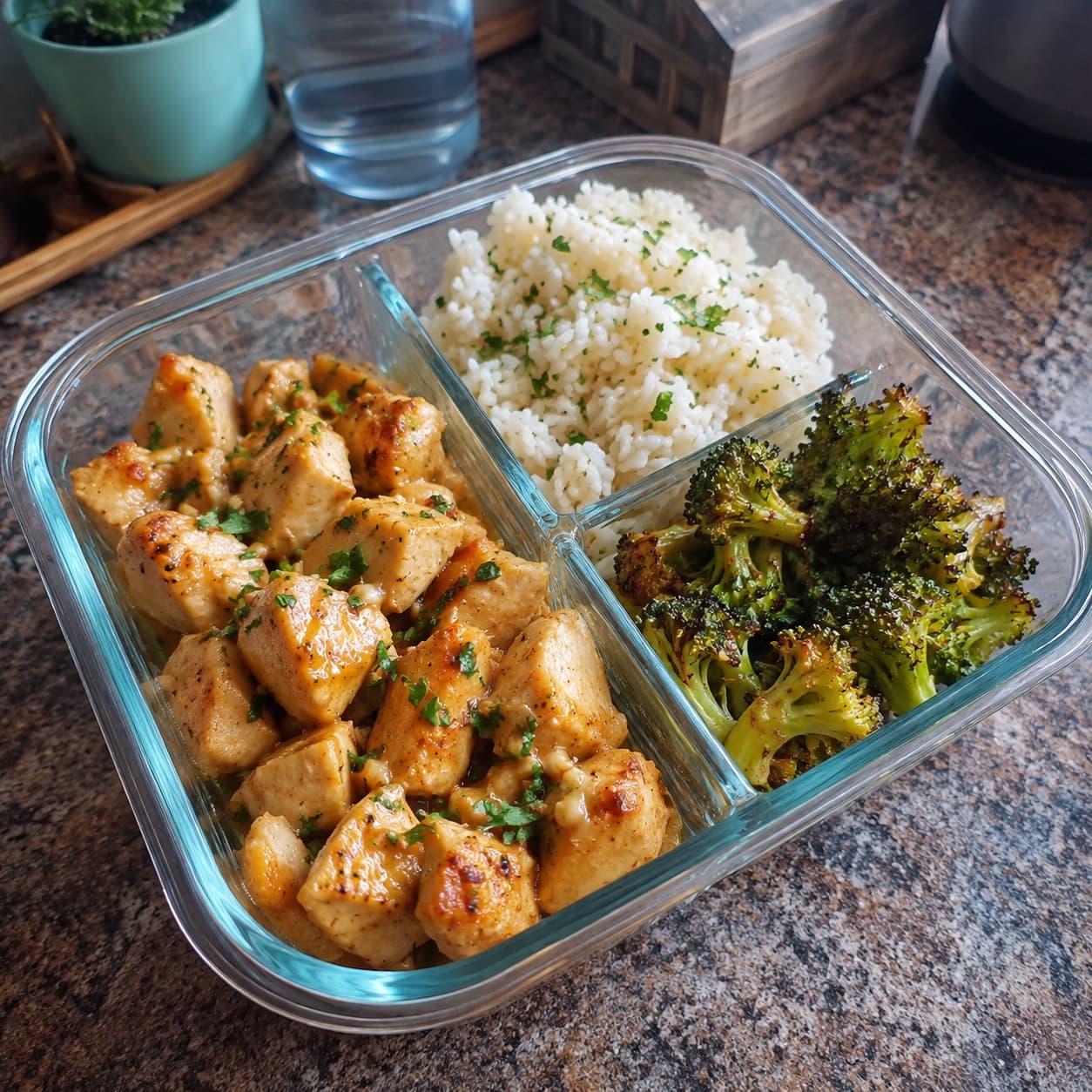
The usual failure with garlic butter chicken has nothing to do with the chicken. It’s the sauce. Drop the garlic into a pan still screaming hot from searing and it turns bitter within seconds. Melt the butter in while the burner’s still on and it separates into little pools of grease sitting on top of the rice by the time the container’s cooled. What looks like a rich, glossy sauce going into the fridge on Sunday turns into a broken, oily mess by Wednesday’s reheat — and the chicken usually gets blamed for something the pan actually caused.
The fix is two small changes in timing: the garlic goes in once the pan has cooled from searing, not while it’s still hot, and the butter that finishes the sauce goes in off the burner entirely, in cold cubes, not melted in over active heat. Get those two moments right and the sauce clings to the chicken instead of pooling, survives a microwave four days later, and the rice underneath stays fluffy instead of turning gummy. This makes four full bowls, keeps for four days in the fridge, and comes together in about 45 minutes, most of it hands-off while the rice and broccoli cook.
Quick Facts
| Prep Time | 15 minutes |
| Cook Time | 30 minutes |
| Total Time | 45 minutes |
| Servings | 4 bowls |
| Difficulty | Easy |
| Storage Life | 4 days refrigerated; up to 3 months frozen (chicken and rice) |
Why the Sauce Breaks If the Order Gets Skipped
Butter is roughly 80% fat, with the rest made up of milk solids and water, and those milk solids scorch around 300°F — well below the heat a good sear actually needs. That’s why the chicken sears in olive oil, not butter; butter only enters the picture once the pan has come down off high heat. Garlic runs on an even shorter clock than the butter does. Its natural sugars go from raw to fragrant to bitter in under a minute once real heat hits them, so garlic dropped into a pan still hot enough to sear meat burns before it ever gets a chance to flavor anything.
The final move matters just as much: pulling the pan completely off the burner before swirling in the last of the butter, still cold and cubed. Butter melted slowly, away from direct heat, forms a stable, glossy emulsion. Butter melted over an active flame breaks apart into fat and liquid and never fully recombines, even after a trip through the microwave days later.
Ingredients
For the chicken:
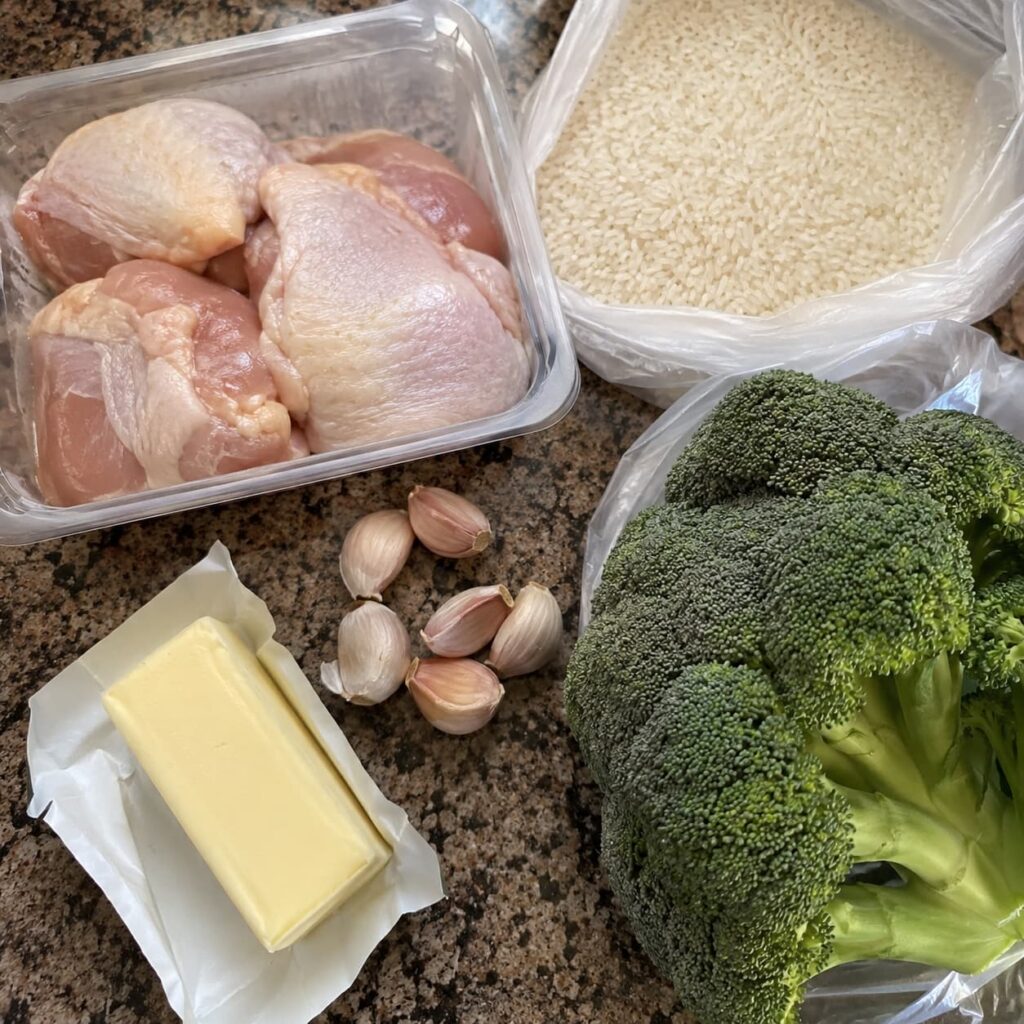
- 1½ lbs boneless, skinless chicken thighs, cut into 1-inch pieces (thighs carry enough fat to stay juicy through a reheat; boneless skinless breast works too — cut pieces slightly smaller, about ¾ inch, and pull them at 165°F, checking a few minutes earlier, since breast dries out faster than thigh once it’s past done)
- 1 tsp kosher salt
- ½ tsp black pepper
- ½ tsp smoked paprika
- 1 tbsp olive oil, for searing
For the garlic butter sauce:
- 4 tbsp unsalted butter, divided
- 4 garlic cloves, minced (about 4 tsp)
- 1 tbsp fresh lemon juice
- 2 tbsp chopped fresh parsley, divided (1 tbsp for the sauce, 1 tbsp for topping)
For the rice:
- 1½ cups long-grain white rice, rinsed until the water runs mostly clear (rinsing washes off surface starch, which keeps the grains separate instead of clumping into a solid mass after a few days in the fridge; jasmine rice works the same way here — skip short-grain or sushi rice, which turn gummy fast under reheating)
- 2½ cups low-sodium chicken broth (broth carries flavor through several days of reheating in a way plain water doesn’t; if using water instead, add an extra ¼ tsp salt to the pot)
- ½ tsp salt
For the broccoli:
- 1 lb broccoli florets (about 4 cups), cut into roughly 1½-inch pieces
- 1 tbsp olive oil
- ¼ tsp salt
What You’ll Cook This In
- A 12-inch skillet, stainless or nonstick, for searing the chicken and building the sauce
- A 2-quart saucepan with a tight-fitting lid, for the rice
- A rimmed baking sheet, for the broccoli
- An instant-read thermometer — checking the actual internal temperature is what confirms the chicken is done; color alone tends to leave it either undercooked or, more often, cooked well past the point it needed to stop
- Four 3- to 4-cup divided meal prep containers, glass or BPA-free plastic — $10 to $15 for a set of four at most big-box or warehouse stores; the dividers keep the broccoli from turning soggy against the rice
Two Things to Do Before the Pan Gets Hot
Cut the chicken into even 1-inch pieces and measure the spices into a small bowl before the stove turns on. Once the skillet’s hot, there isn’t time to still be chopping — pieces that go in at different sizes finish cooking at different rates, so the small ones dry out while the larger ones are still catching up to temperature.
The mistake that’s easy to make here is stirring the cold butter in while the pan’s still out, on the theory that it’s one less thing to remember later. It feels efficient, but it’s the shortcut that costs the most — butter added anywhere near active heat is the butter that breaks. Keep it in the fridge until the pan is fully off the burner.
The cue to watch for while searing: chicken is ready to come out once a piece resists only lightly against a fork and the surface has gone deep golden, not pale.
From Raw Chicken to Sealed Containers
Prep and preheat — 15 minutes. Preheat the oven to 425°F; it’ll be most of the way there by the time everything else is ready. Pat the chicken dry, cut it into even 1-inch pieces, and toss with the salt, pepper, and smoked paprika. Rinse the rice under cold water until it runs mostly clear, about 30 seconds, and drain. Cut the broccoli into 1½-inch florets and toss on the baking sheet with 1 tablespoon olive oil and ¼ teaspoon salt.
Roast the broccoli — 18 minutes, hands-off. Slide the sheet into the oven and set a timer. It’ll finish slightly ahead of the rice, which is fine — roasted broccoli holds well at room temperature for the few minutes it waits.
Bring the broth to a boil — 5 minutes. In the saucepan, bring the broth and ½ teaspoon salt to a boil over medium-high heat.
Simmer the rice — 15 minutes, covered. Stir in the rinsed rice, reduce the heat to low, and cover tightly. Simmer 15 minutes without lifting the lid — every peek lets out steam the rice needs to finish cooking evenly.
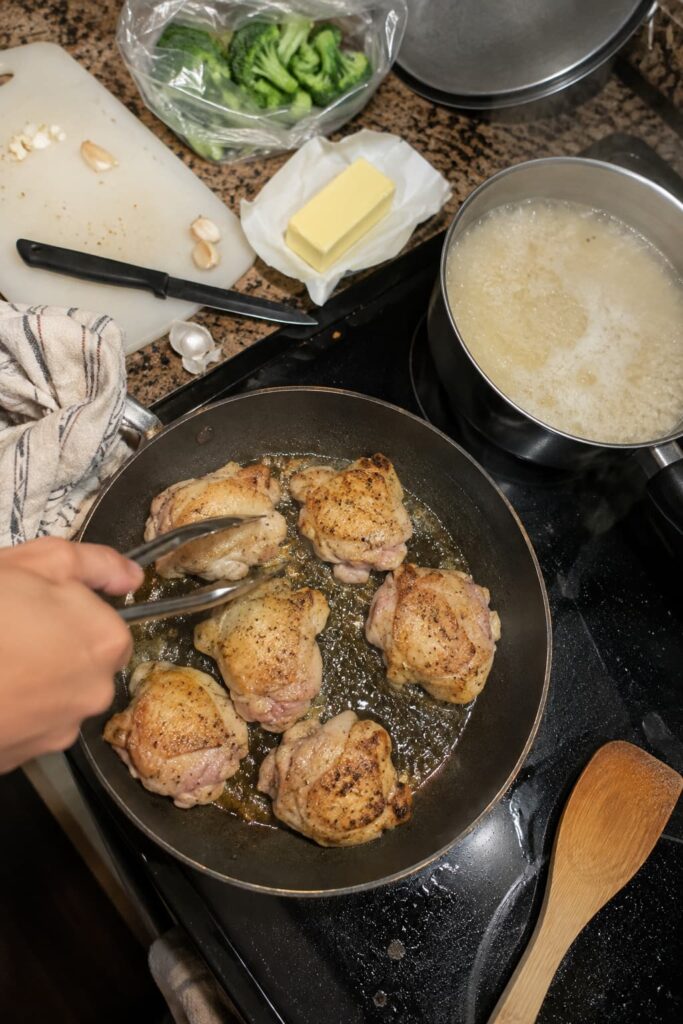
Sear the chicken — 10 minutes, while the rice simmers. Heat the olive oil in the skillet over medium-high until it shimmers, about 1 minute. Add the chicken in a single layer, working in two batches so the pieces sear instead of steam. Cook each batch about 5 minutes total, turning once, until deep golden and the internal temperature reads 165°F. Move each batch to a plate as it finishes. Crowding the pan drops its temperature and the chicken releases liquid instead of browning, which is why this runs in two batches rather than one.
Build the garlic butter — 2 minutes, still inside the rice’s simmer window. Reduce the heat to medium-low. Melt 2 tablespoons of the butter in the same skillet, add the garlic, and cook 30 to 45 seconds, stirring constantly, until fragrant and just pale gold at the edges — any longer and it turns bitter. Return the chicken and its juices to the skillet and toss for 1 minute to coat.
Rest the rice, off heat — 5 minutes. Turn off the heat under the rice and let it sit, covered, for 5 minutes before fluffing.
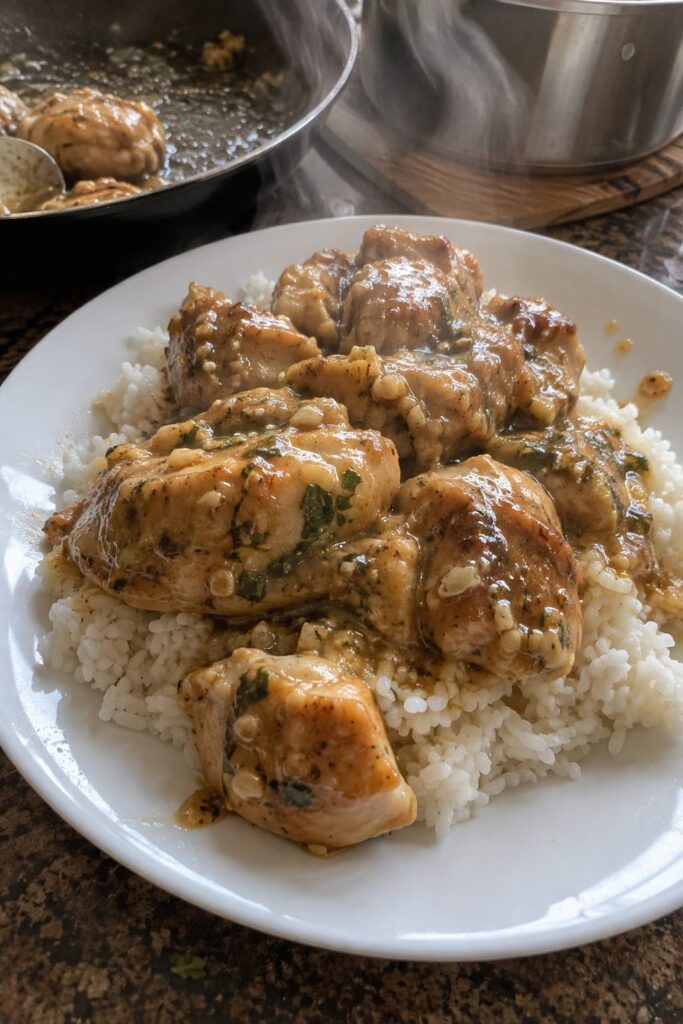
Finish the sauce off heat — 1 minute. Pull the skillet completely off the burner. Add the remaining 2 tablespoons of cold, cubed butter, the lemon juice, and 1 tablespoon of the parsley. Swirl the pan gently until the butter melts into a glossy sauce that coats the chicken rather than pooling as fat at the edges. Doing this step over active heat is the single most common reason the sauce breaks.
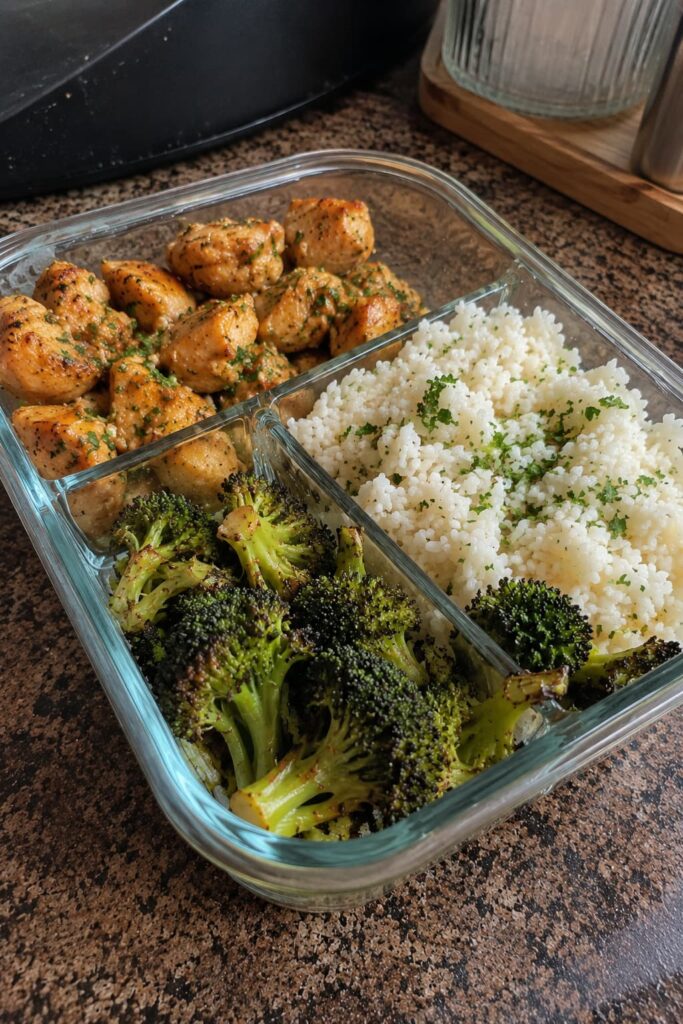
Assemble — 5 minutes. Fluff the rice with a fork and divide it evenly among the four containers, about 1 cup per bowl. Top with the garlic butter chicken and roasted broccoli. Sprinkle the reserved parsley over each bowl right before sealing.
Storing, Freezing, and Reheating Without Losing the Sauce
Cool everything to room temperature before sealing the containers, no more than 2 hours after it comes off the heat — USDA guidance advises against leaving cooked food out longer than that, and sealing it hot traps steam that turns the rice slightly gummy by day three.
These bowls keep 4 days in the refrigerator. For longer storage, freeze the chicken and rice for up to 3 months — skip freezing the broccoli, since it turns watery once thawed, and roast a fresh batch instead when you’re ready to eat it.
Reheat from the fridge, in the microwave. Cover and heat at 70% power for 2 minutes, stir, then continue in 30-second bursts until steaming throughout and the center reads 165°F.
Reheat from the fridge, on the stove. A skillet over medium-low heat with 1 to 2 tablespoons of water or broth, covered, for 5 to 6 minutes, stirring once, keeps the sauce smoother than the microwave does.
Reheat from frozen. Thaw overnight in the fridge and reheat the same way, or microwave from frozen at 50% power for 5 to 6 minutes, stirring every 90 seconds, until it reaches 165°F throughout.
Four Ways to Change the Bowl
Spicier: Add ¼ teaspoon red pepper flakes along with the garlic in Step 6, and swap the smoked paprika for hot smoked paprika in the chicken seasoning.
Different protein: Swap the chicken for 1½ lbs large shrimp (21–25 count), peeled and deveined. Sear just 60 to 90 seconds per side — pull them the moment they curl into a loose “C,” since a tight “O” shape means they’ve gone past done.
Lower-carb: Swap the rice for 4 cups riced cauliflower. Sauté it in a hot, dry skillet for 5 to 6 minutes instead of simmering — it releases water as it cooks, so it needs an uncovered pan and frequent stirring rather than a lid.
Different vegetable: Swap the broccoli for 1 lb trimmed green beans, roasted at the same 425°F for 18 minutes, or asparagus at 12 minutes, since thinner spears cook through faster.
Garlic Butter Bowl Questions, Answered
Can I use chicken breast instead of thighs?
Yes — cut the pieces slightly smaller, about ¾ inch, and start checking the temperature a couple of minutes early. Breast has less fat than thigh, so it dries out fast if it sits even a minute past 165°F.
Why did my sauce turn greasy instead of glossy?
The pan was still too hot when the cold butter went in. Pull it fully off the burner first — heat is what breaks the emulsion, not the butter itself.
Can I make this dairy-free?
Swap the butter 1:1 for a plant-based butter stick, not a tub spread — the extra water in spreads keeps the sauce from coming together the same way.
How long do these bowls really last in the fridge?
Four days, as long as they’re cooled and sealed within about 2 hours of cooking, per USDA guidance for cooked poultry and grains.
Can I double this recipe?
Yes — sear the chicken in three or four batches instead of two, and use at least a 4-quart pot so 3 cups of dry rice has room to simmer without boiling over.
Is it safe to reheat the rice?
Yes, as long as it was cooled within 2 hours the first time and gets reheated until steaming hot all the way through, not just warm at the edges.
Can this last longer than a week in prep?
Freeze it. The chicken and rice hold well in the freezer for up to 3 months — the fridge is only good for the 4 days above.
Worth the Forty-Five Minutes
These bowls earn their spot in the fridge because the sauce doesn’t quit by Wednesday the way most garlic butter recipes do once they’re reheated a few times. Keep the sequence even if everything else about the dish changes: sear in oil, add the garlic once the pan’s cooled down, finish with cold butter off the heat. That order is what separates a sauce that survives a microwave from one that turns into a puddle of grease by the third day. Once it’s part of how the pan gets used here, it carries over into any other butter sauce worth prepping ahead.
