
Creamy Garlic Parmesan Chicken Recipe
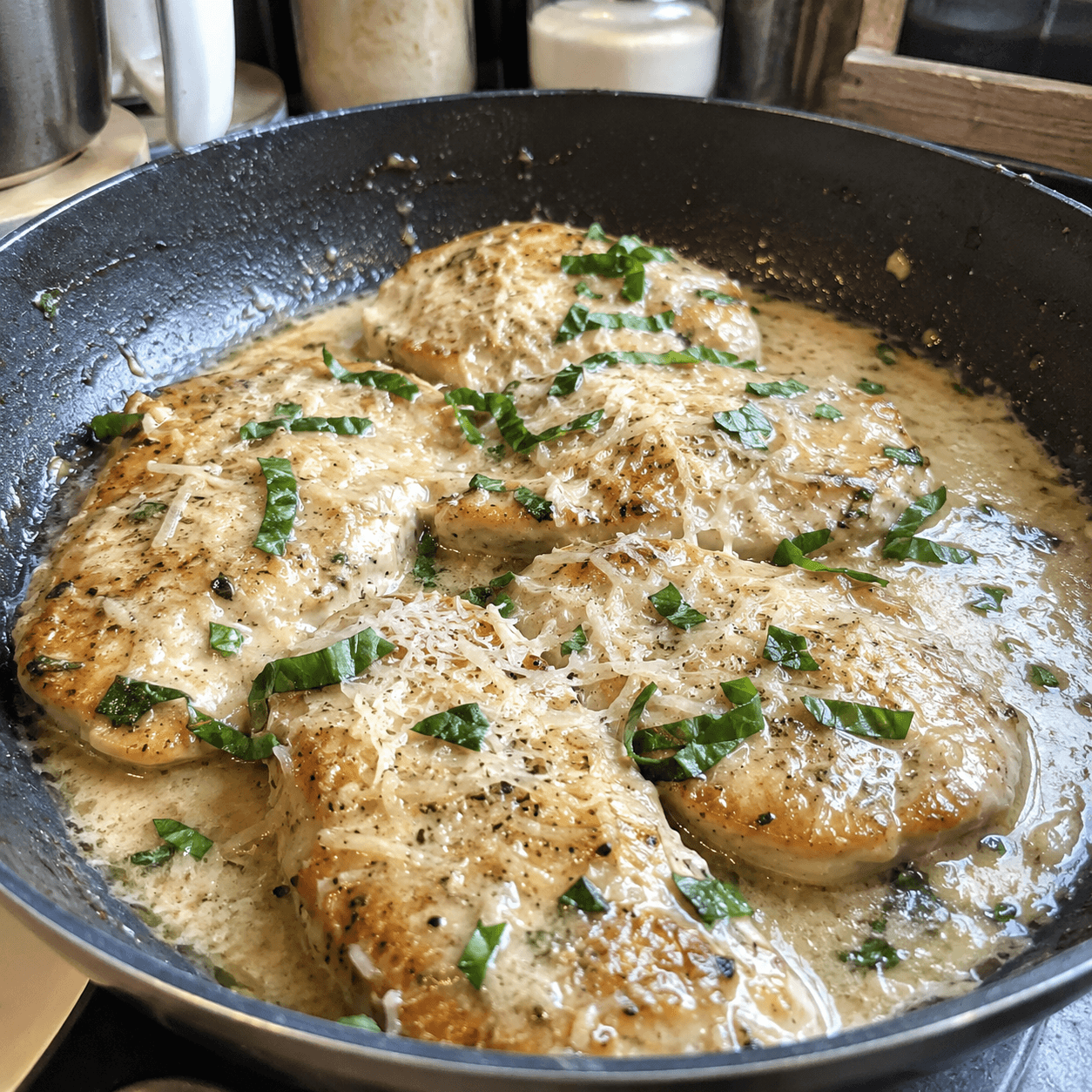
Most cream sauces don’t fall apart on the stove. They fall apart on day three, sitting in the fridge, and the person reheating them usually assumes it’s just what happens to leftovers instead of something that could’ve been prevented. A parmesan cream sauce is an emulsion — fat, dairy proteins, and melted cheese all held together by heat and motion — and that structure gets a little more fragile every time it’s cooled down and heated back up. The first night, it barely matters. By the third day, the fat has had time to fully re-solidify in the fridge, and a fast reheat pulls it apart instead of bringing it back together, leaving a thin greasy layer floating over grainy curds. None of that is inevitable. It comes down to two things: what kind of parmesan goes in on night one, and how patiently the sauce gets reheated on the days after.
Quick Facts
| Prep Time | 12 minutes |
| Cook Time | 18 minutes |
| Total Time | 30 minutes |
| Servings | 4 |
| Difficulty | Easy |
| Storage Life | Up to 4 days refrigerated, best texture in the first 2 |
The Night You Make It
What’s in the pan
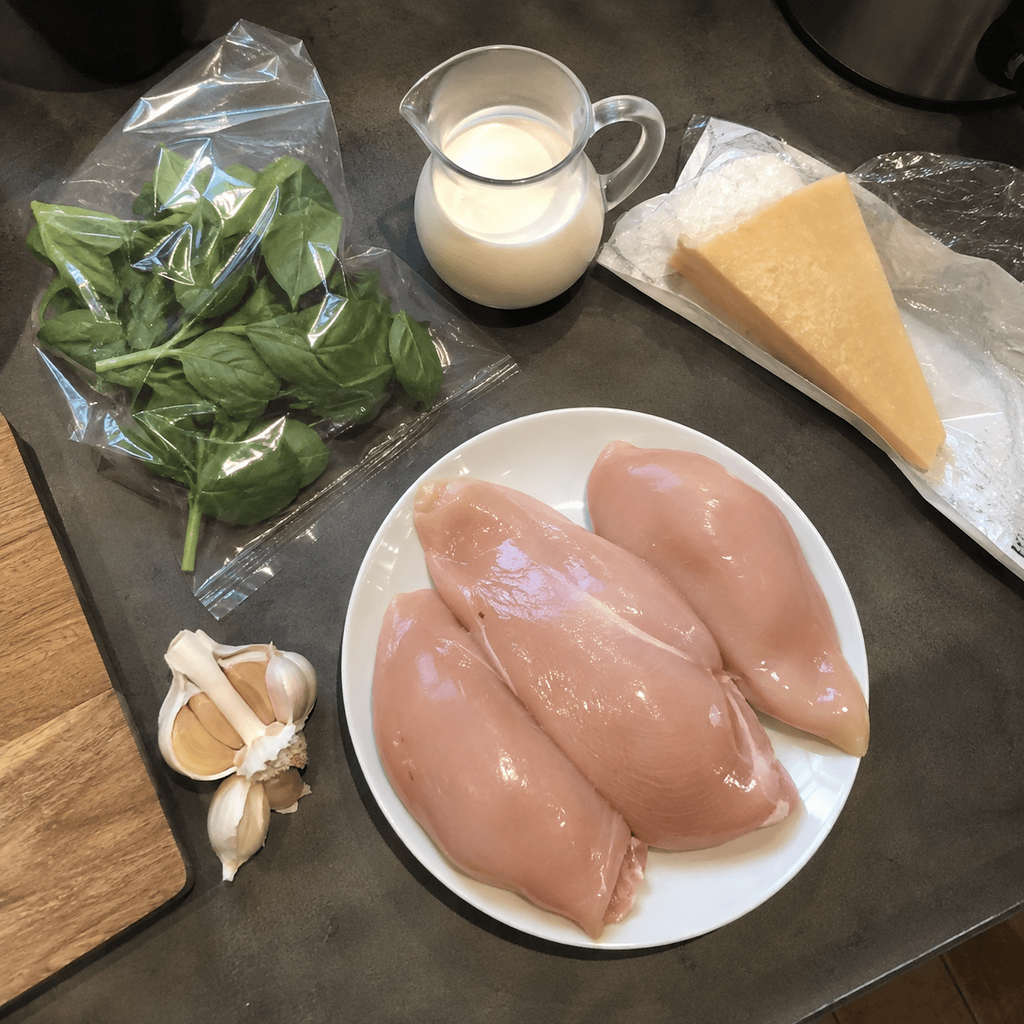
- 2 large boneless, skinless chicken breasts, sliced horizontally into 4 thin cutlets, about ½ inch thick
- ¾ tsp kosher salt
- ½ tsp black pepper
- ½ tsp garlic powder
- 2 tbsp olive oil
- 2 tbsp unsalted butter
- 4 cloves garlic, minced
- ½ cup low-sodium chicken broth
- 1 cup heavy cream
- ½ tsp Italian seasoning
- ¾ cup parmesan, freshly grated from a block — not the shelf-stable shaker kind, which contains anti-caking additives that keep it from melting smoothly
- Fresh basil or parsley, chopped, for serving
Slicing the chicken into thin, even cutlets instead of cooking whole breasts is what keeps this to a real 30 minutes — a whole breast needs close to 10 minutes a side to cook through, while a ½-inch cutlet is done in about 7 minutes total. The parmesan matters just as much as the cutting board work. Shelf-stable canister parmesan is coated in cellulose to keep it from clumping in the container, and that same coating keeps it from melting cleanly into a sauce — no amount of stirring dissolves it once it’s already grainy.
- Season the cutlets with the salt, pepper, and garlic powder on both sides.
- Heat the olive oil in a 12-inch skillet over medium-high heat. Sear the chicken for about 4 minutes on the first side, until deep golden, then flip and cook 3 to 4 minutes more, until an instant-read thermometer reads 165°F. Move to a plate and tent loosely with foil.
- Melt the butter in the same pan over medium heat, about 30 seconds. Add the garlic and stir for 30 seconds, just until fragrant.
- Pour in the chicken broth, scraping up the browned bits from the bottom of the pan, and let it simmer for about 1 minute.
- Add the cream and Italian seasoning. Bring it to a gentle simmer — small bubbles breaking at the edges, not a rolling boil — and let it cook for about 4 minutes, until it thickens enough to coat the back of a spoon. A hard boil here is the first place the sauce can start to break, since cream’s fat and proteins separate under too much direct heat — the same failure that shows up again later in the week if it’s reheated the same way.
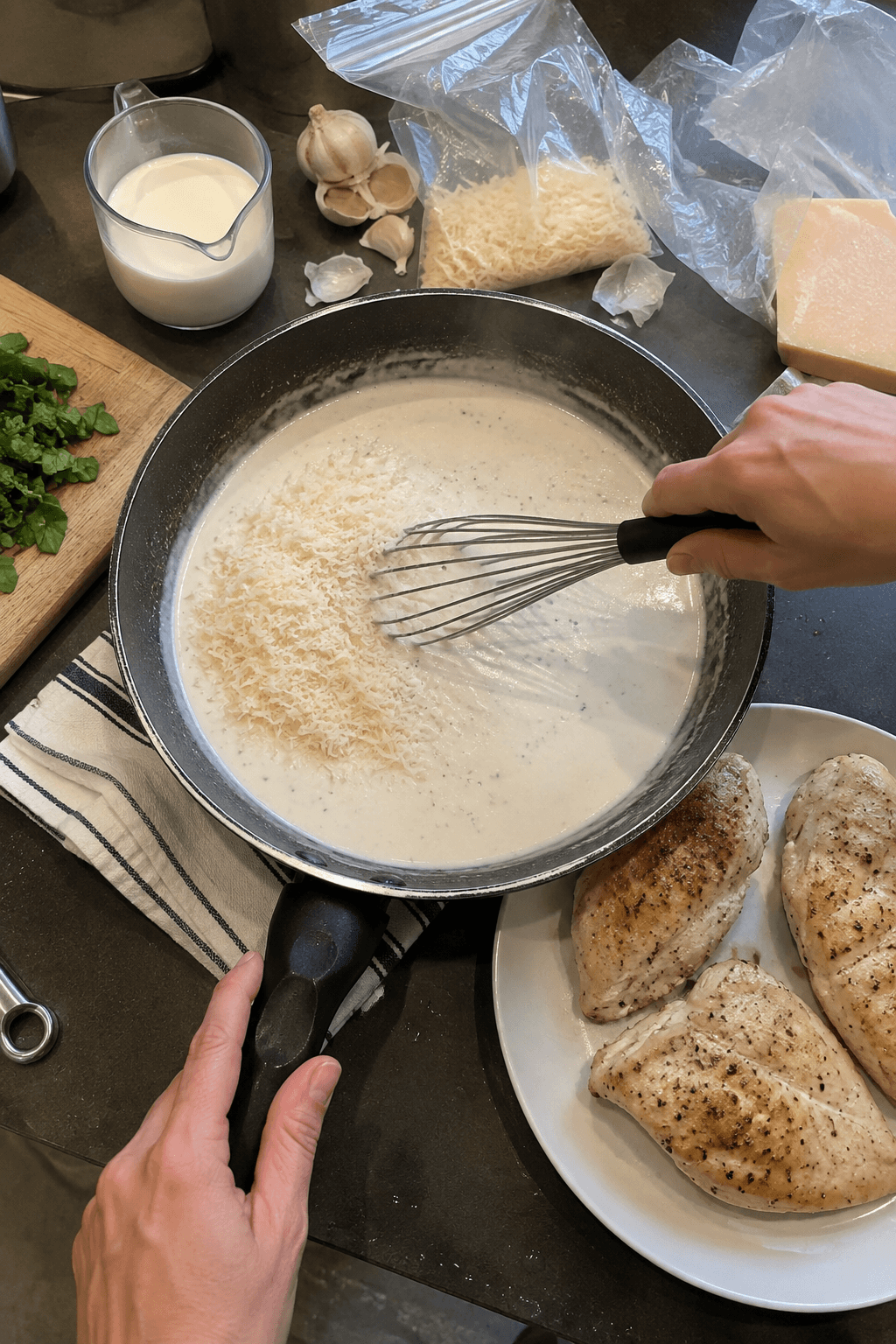
- Take the pan completely off the heat and whisk in the parmesan a handful at a time, letting each addition melt in before adding the next. Mixing it in off the heat, gradually, is what keeps the sauce silky — dumping all the cheese in at once, especially over direct heat, makes the proteins in it seize into small rubbery clumps instead of melting smoothly.
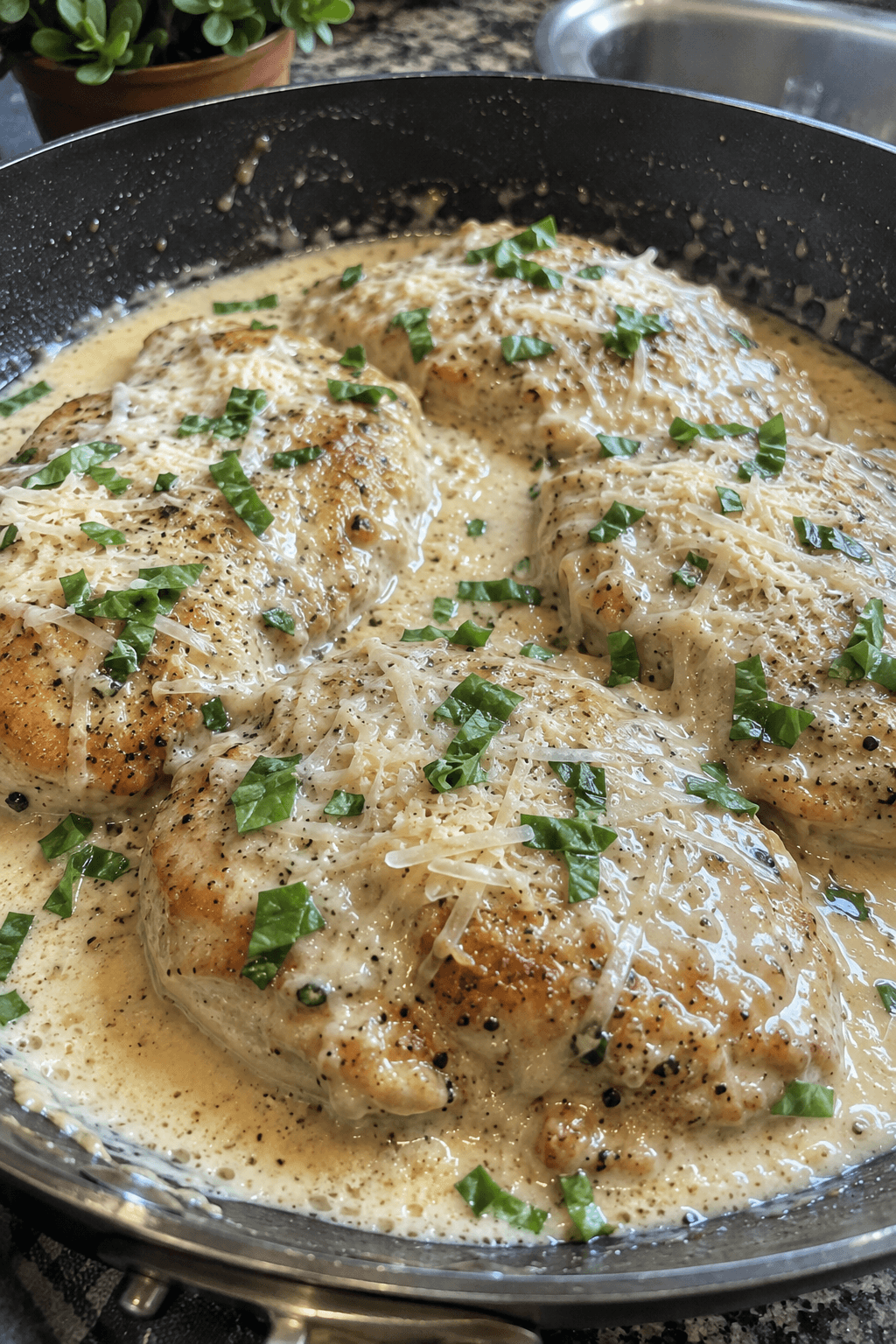
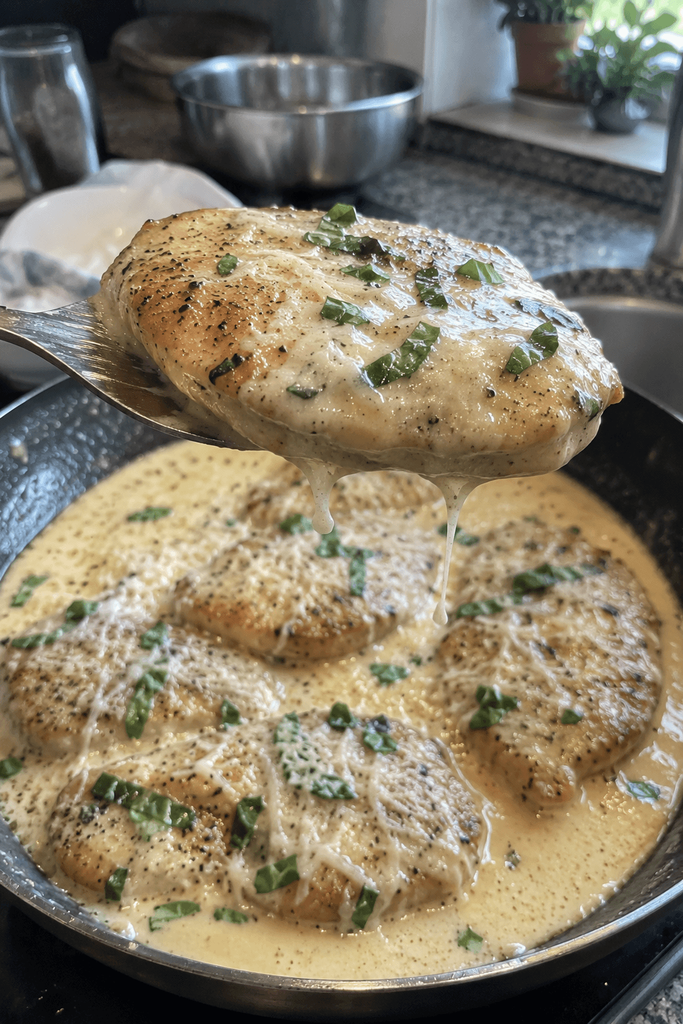
- Return the chicken to the pan, spoon the sauce over the top, and let it warm through for about 2 minutes. Finish with fresh basil or parsley.
What’s Still True on Day Two
Refrigerated in an airtight container, the sauce is still close to fully intact the next day. Reheat it in a skillet over medium-low heat for about 5 minutes, stirring occasionally, or in the microwave at 50% power in 45-second bursts. Both keep the temperature climbing slowly enough that the emulsion doesn’t have to survive a sudden jump — which is really the entire challenge with any cream sauce, on any day.
Where Day Three Starts to Slip
By the third day, the fat in the sauce has had another full day to fully re-solidify in the fridge, and it separates from the dairy proteins around it more readily than it did on day two. A fast reheat pulls the two further apart instead of bringing them back together, which shows up as a thin greasy layer on top with small curds underneath.
The fix is a splash of fresh dairy — about 1 tablespoon of cream or whole milk per serving — whisked in while reheating over low heat. That gives the fat something fresh to re-emulsify into, instead of trying to force cream that’s already partway broken back together on its own. Reheat slowly, whisking as it warms, and most of the original texture comes back.
What’s Not Worth Trying to Save
Cream-and-parmesan sauces generally don’t freeze back into anything close to their original texture — the dairy fully separates on thawing in a way no amount of stirring corrects. If freezing is genuinely necessary, freeze the chicken and the base sauce (the butter, garlic, and broth, before the cream and parmesan go in) and make the dairy portion fresh after reheating the base.
By day 4, even refrigerated, this is right at the edge of USDA’s 3-to-4-day window for cooked poultry and cream-based sauces — worth finishing by then rather than pushing it further, on both a safety and a texture basis.
Four Ways to Change This Without Losing the Sauce
- Swap the protein. Boneless, skinless chicken thighs work in place of breast and are more forgiving of a slightly-too-hot pan, since they carry more fat of their own.
- Lighten the sauce. Swap half the heavy cream for whole milk, and whisk in 1 teaspoon of cornstarch along with it — milk alone won’t reduce and thicken the way cream does on its own.
- Add vegetables. Stir 2 cups baby spinach into the sauce during the last minute of step 7, or add ¼ cup chopped sun-dried tomatoes along with the garlic in step 3 for a Tuscan-style version.
- Turn up the heat. Add ¼ teaspoon red pepper flakes along with the Italian seasoning in step 5.
Questions About Keeping the Sauce Smooth
Why did my sauce turn out grainy right away, not even after storing it? Almost always the parmesan. Shelf-stable shaker parmesan is coated with anti-caking additives that never fully melt into a sauce, no matter how long it simmers or how well it’s stirred.
Can I use pre-shredded parmesan from a bag instead of grating my own block? Refrigerated bagged parmesan works reasonably well — it has a much lighter anti-caking coating than the shelf-stable kind. Grating a block yourself still gives the smoothest result, since there’s no coating at all.
Why did my sauce break the first time I reheated it? Most likely a fast reheat over high heat, or the microwave run at full power. See the Day Three section above for the slower approach and the splash of fresh dairy that brings it back.
Can this be frozen? Not well as a finished dish — the dairy separates on thawing. Freezing the chicken and base sauce separately from the cream and cheese, as described above, is the workaround.
Can I make the sauce a day ahead and add freshly cooked chicken later? Yes. The sauce holds up fine made in advance on its own; reheat it gently in a skillet before adding freshly seared chicken.
What should I serve this with? Pasta, mashed potatoes, rice, or crusty bread all work well underneath the sauce, and all reheat fine alongside it if there are leftovers.
Is heavy cream necessary, or can I use half-and-half? Half-and-half works but produces a noticeably thinner sauce, since it has less fat to help it reduce. Letting it simmer an extra 2 minutes in step 5 helps make up the difference.
This dish is really two techniques stacked on top of each other: building a sauce that’s smooth the first night, and treating it gently enough on the second and third night that it stays that way. Grate real parmesan, keep the cream below a hard boil, and slow the reheat down as the week goes on, and there’s very little difference between the bowl plated on night one and the one eaten on Wednesday. A sauce that falls apart by day three almost always went wrong at the stove the first time, not in the fridge later.
