
Marry Me Chicken Meal Prep
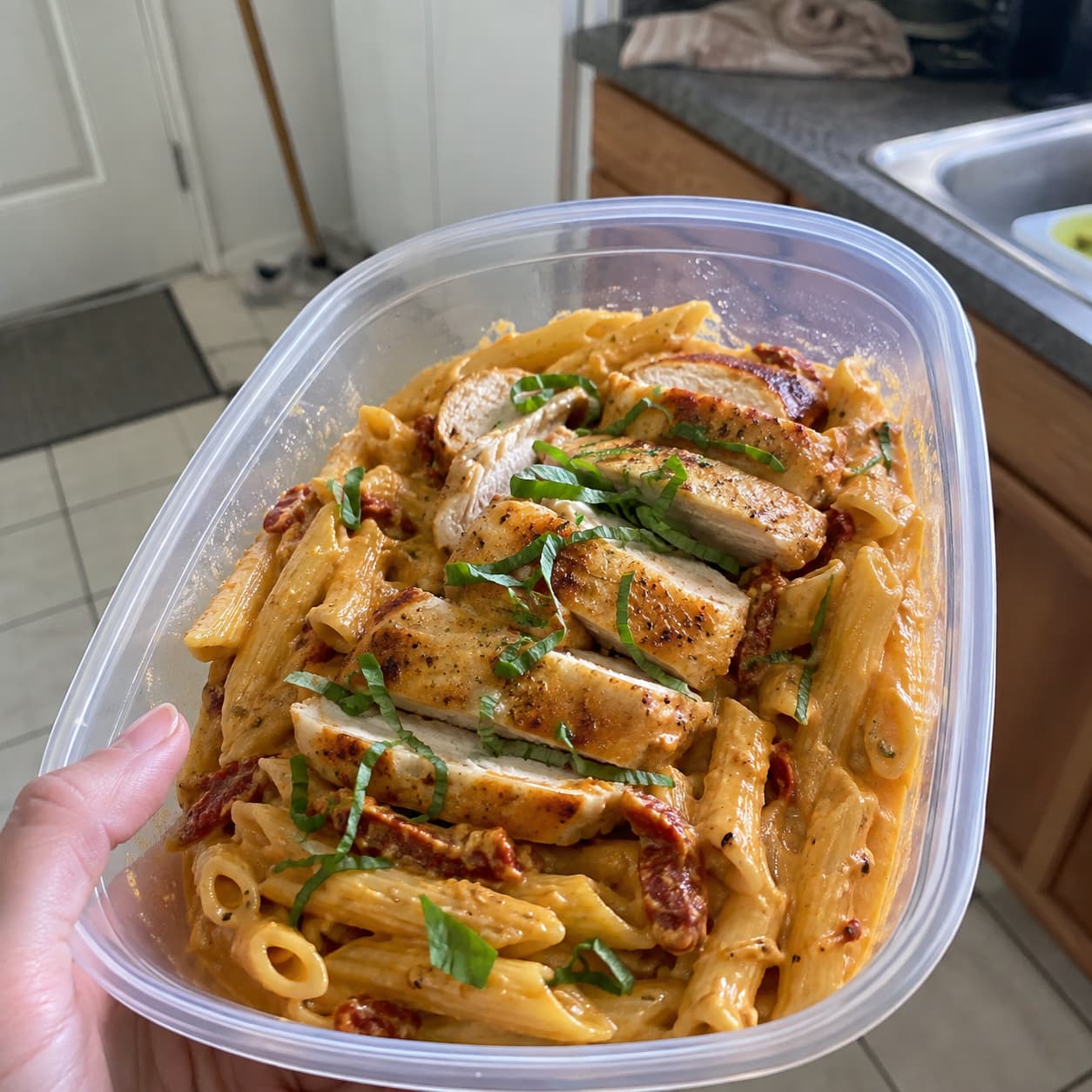
Marry Me Chicken gets its name from the sauce, not the chicken — a creamy parmesan and sun-dried tomato sauce rich enough that the story goes someone proposed over it. Turned into meal prep, that same sauce is also the part most likely to fail by Wednesday: cream sauces built with hard cheese either break into a thin, oily liquid or turn grainy and stringy on reheat, and once that happens, no amount of reheating time brings it back. The chicken almost never gets blamed correctly — it’s the sauce that goes wrong, and it goes wrong at two specific, avoidable moments.
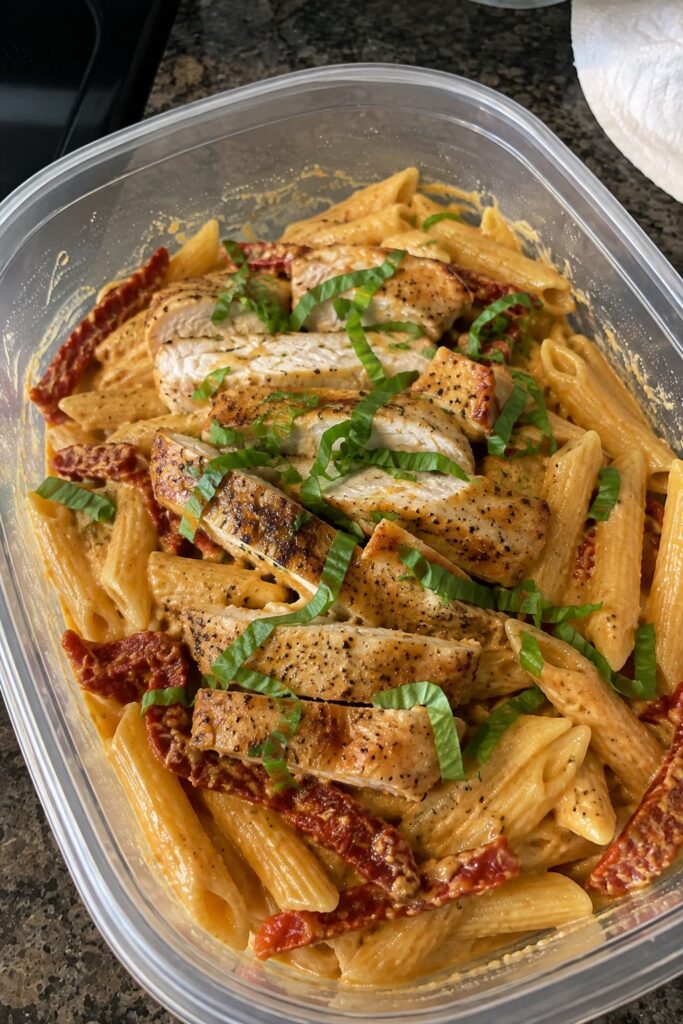
The fix comes down to heat control in those two moments: keeping the cream at a bare simmer instead of a boil once it hits the pan, and adding the parmesan gradually instead of all at once. Get those two details right and the sauce stays glossy and smooth through four days of reheats, the chicken finishes cooking gently inside it instead of drying out on its own, and pasta tossed in slightly undercooked holds its texture instead of turning to mush by Thursday. This makes four full bowls, keeps 3 to 4 days in the fridge, and comes together in 45 minutes.
Quick Facts
| Prep Time | 15 minutes |
| Cook Time | 30 minutes |
| Total Time | 45 minutes |
| Servings | 4 bowls |
| Difficulty | Easy to moderate |
| Storage Life | 3–4 days refrigerated; chicken and sauce freeze for up to 2 months (pasta doesn’t freeze well) |
Why the Cream Sauce Splits, and the Two Moves That Stop It
A cream sauce fails in one of two ways, and both come down to heat. Boil heavy cream hard and its fat and proteins separate instead of staying blended, which is why a sauce that looked glossy going onto the stove can come off it looking thin and slightly oily. Parmesan causes a second, separate problem — it’s a low-moisture, aged cheese, and dumped into liquid that’s too hot, it seizes into stringy clumps instead of melting in. Neither issue shows up right away. A sauce built too fast can still look fine in the pan on Sunday and only reveal the damage once it’s reheated a few days later, cold and under pressure from a microwave.
Both fixes are about slowing down at the exact right moment. The cream goes in over medium-low heat, at a bare simmer — small, lazy bubbles, never a rolling boil. The parmesan goes in a handful at a time, stirred until each addition melts before the next one hits the pan. Neither change adds real time to the recipe. They just move two ingredients from “dumped in fast” to “added with fifteen extra seconds of attention,” which is the entire difference between a sauce that holds and one that breaks.
Ingredients
For the chicken:
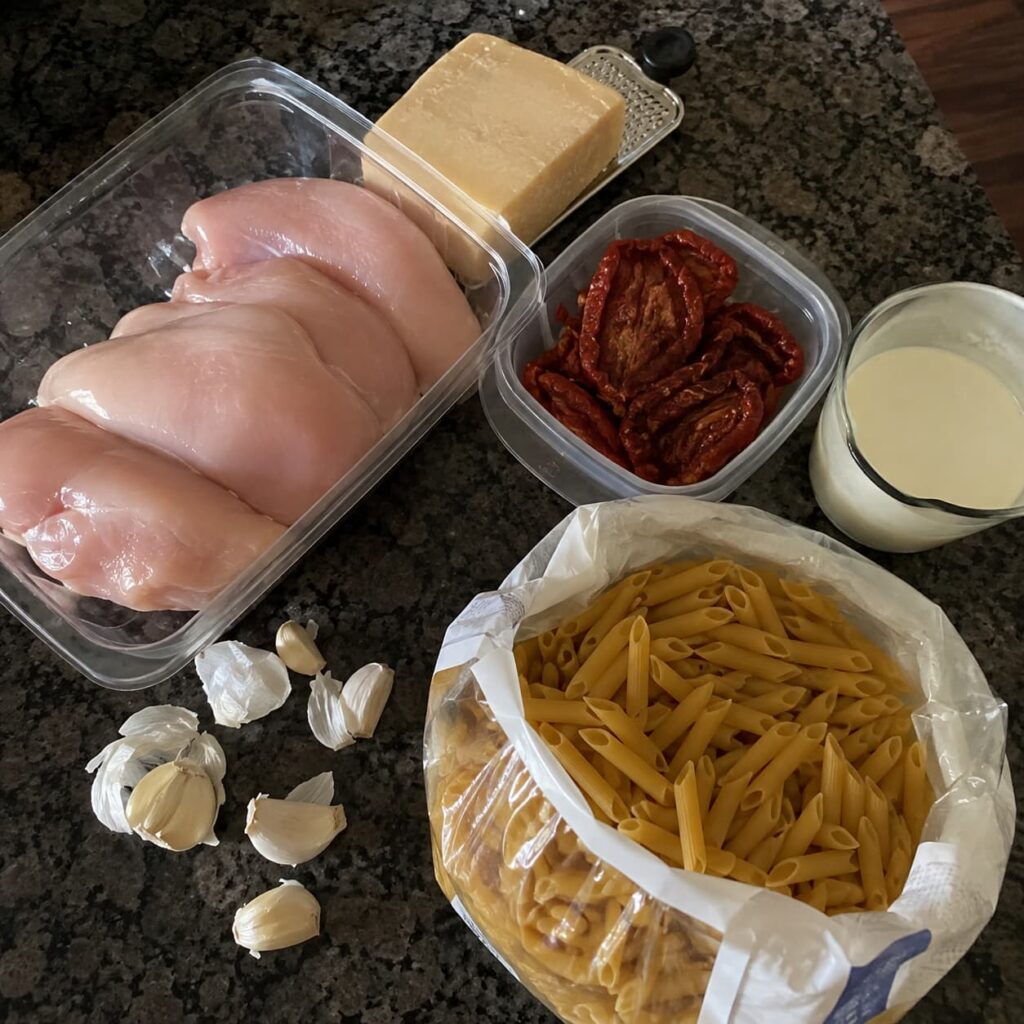
- 4 boneless, skinless chicken breasts (about 2 lbs total), halved horizontally into thin cutlets — 8 pieces total. Thin cutlets sear fast and finish gently inside the simmering sauce, instead of needing to be fully cooked before the sauce is even built.
- 1 tsp kosher salt
- ½ tsp black pepper
- ½ tsp Italian seasoning
- 2 tbsp olive oil, for searing
For the sauce:
- 2 tbsp butter
- 5 garlic cloves, minced (about 5 tsp)
- ⅔ cup jarred sun-dried tomatoes in oil, drained and roughly chopped, 2 tablespoons of the oil reserved
- 1 cup low-sodium chicken broth
- 1 cup heavy cream
- ¾ cup finely grated parmesan (grated from a block, not the pre-shredded kind, which is coated in anti-caking starch that keeps it from melting smoothly)
- 1 tsp Italian seasoning
- ¼ tsp red pepper flakes, optional
- 2 cups fresh baby spinach
- ¼ cup fresh basil, torn, reserved for serving day
For the base:
- 12 oz penne pasta — yields about 6 cups cooked, roughly 1½ cups per bowl
What You’ll Cook This In
- A 12-inch skillet, for searing the chicken and building the sauce in the same pan
- A large pot, for the pasta
- An instant-read thermometer — the sauce hides visual doneness cues, so checking 165°F directly is more reliable than judging by color
- Four 3- to 4-cup meal prep containers, $10–$15 for a set of four
Get These Three Things Ready First
Halve the chicken breasts, mince the garlic, and drain and chop the sun-dried tomatoes before the stove turns on — once the skillet’s hot, there’s no good window to still be chopping without the garlic or the searing chicken getting away from you.
Grate the parmesan from a block rather than reaching for a bag of the pre-shredded kind. The starch coating on shredded cheese is what causes clumping instead of melting, and in a sauce this size, that’s the difference between smooth and grainy before the parmesan even hits the pan.
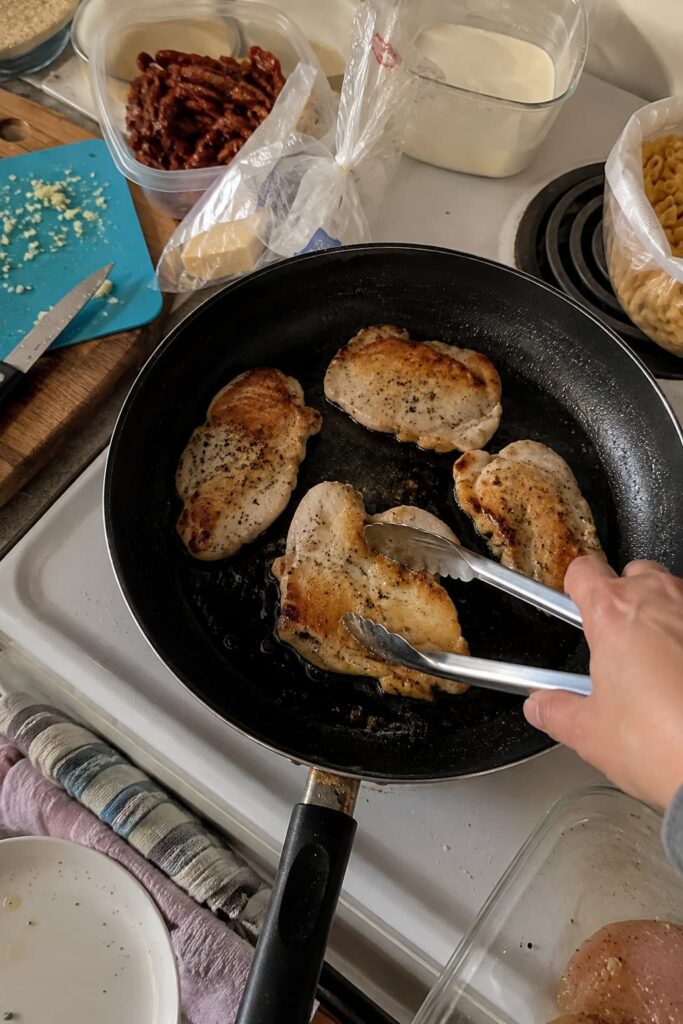
The chicken doesn’t need to look fully cooked when it comes out of the sear — it’s browning for color at that stage, not finishing. It goes back into the sauce a few minutes later and cooks the rest of the way there, gently, which is part of what keeps it from drying out.
Building the Bowls, Start to Finish
Prep and start the pasta water — 15 minutes. Halve the chicken breasts into cutlets and season with the salt, pepper, and Italian seasoning. Mince the garlic, drain and chop the sun-dried tomatoes, and grate the parmesan. Bring a large pot of salted water to a boil.
Cook the pasta — about 10 minutes, in the separate pot. Boil the penne until just shy of al dente, roughly a minute less than the package directs. Starting it slightly firm matters here — pasta keeps absorbing liquid in the fridge over the next few days, and a minute of built-in firmness is what keeps day-four pasta from turning to paste. Reserve ½ cup of the pasta water, then drain and toss the pasta with a teaspoon of olive oil so it doesn’t clump while it waits.
Sear the chicken — 8 minutes, for color only. Heat the olive oil in the skillet over medium-high until shimmering. Working in two batches, sear the cutlets about 2 minutes per side, until deep golden. They won’t be cooked through yet — that’s correct at this stage. Move each batch to a plate as it finishes.
Build the sauce base — 4 minutes. Reduce the heat to medium. Melt the butter in the same skillet, scraping up the browned bits left from searing. Add the garlic and the reserved sun-dried tomato oil, and cook 30 seconds until fragrant. Stir in the sun-dried tomatoes and the chicken broth, and simmer 3 minutes to reduce slightly.
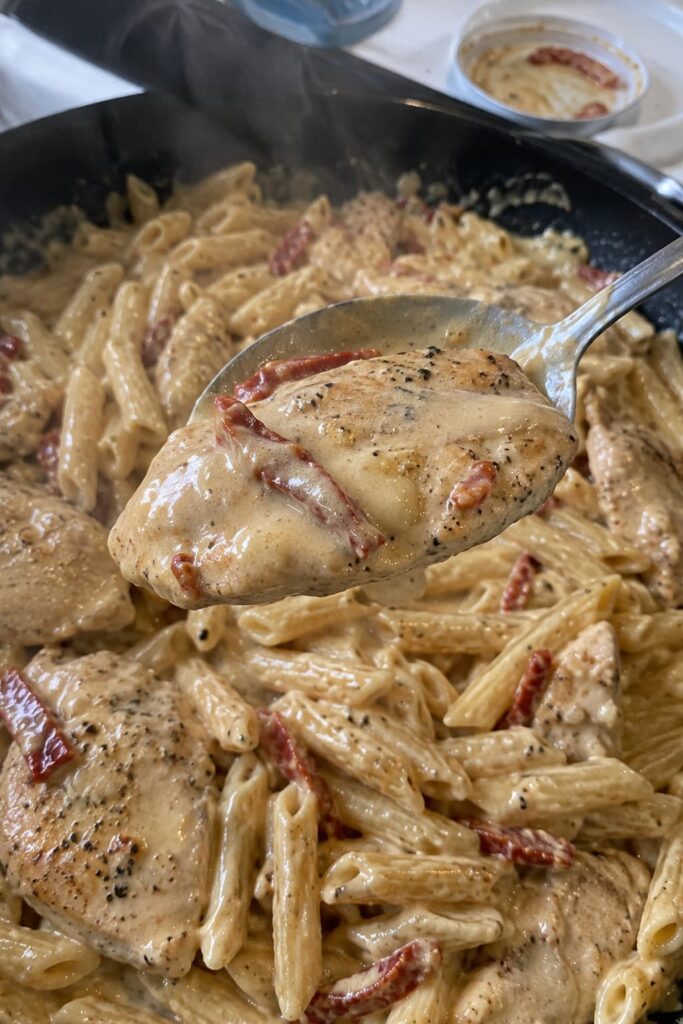
Add the cream, then finish the chicken in the sauce — 13 minutes. Lower the heat to medium-low and pour in the cream. Bring it to a bare simmer — small, lazy bubbles, not a boil. Add the parmesan a handful at a time, stirring until each addition melts before adding the next, along with the Italian seasoning and red pepper flakes. Return the chicken and any collected juices to the skillet, spoon the sauce over the top, and simmer gently until the internal temperature reads 165°F, 5 to 6 minutes depending on how thick the cutlets are. Stir in the spinach for the final minute, just until wilted.
Assemble — 5 minutes. Divide the pasta among four containers, about 1½ cups each, loosening it with a splash of the reserved pasta water if it’s clumped together. Top with the chicken and sauce. Hold the basil back for the day you actually eat it — it darkens and turns bitter well before Wednesday.
Keeping the Sauce Together Through Friday
Cool everything to room temperature before sealing, no more than 2 hours after it comes off the heat — USDA guidance advises against leaving cooked poultry out longer than that, and sealing it hot traps steam that softens the pasta further than it already will on its own.
These bowls keep 3 to 4 days in the refrigerator. For longer storage, freeze the chicken and sauce separately from the pasta for up to 2 months — pasta turns mushy and waterlogged once frozen and thawed, so cook a fresh batch on the day you’re ready to eat a frozen portion instead.
Reheat from the fridge, in the microwave. Cover and heat at 50–60% power in 1-minute bursts, stirring between each, until steaming throughout — full power heats the parmesan faster than it can re-melt smoothly, which is the most common reason reheated sauce turns grainy.
Reheat from the fridge, on the stove. A skillet over medium-low with a splash of broth or reserved pasta water, covered, for 5 to 6 minutes, stirring once, keeps the sauce smoother than the microwave does.
Reheat from frozen. Thaw the chicken and sauce overnight in the fridge, then reheat on the stove with a splash of broth, whisking gently if the sauce looks slightly separated — it usually pulls back together with heat and a little agitation.
Where This Slips Between Monday and Friday
Pasta soaks up all the visible sauce by day 3. Pasta keeps absorbing liquid in the fridge even after it’s cooked, so a bowl that looked saucy Monday can look nearly dry by midweek. Fix: hold back 2 to 3 tablespoons of sauce per portion in a small separate container, and stir it in at reheating along with a splash of broth.
The sauce turns grainy on reheat. Almost always a full-power microwave problem — the parmesan re-melts unevenly under fast, high heat. Fix: reheat at 50–60% power in short bursts, stirring between each.
The chicken dries out by the third reheat. Thin cutlets are lean and overcook fast on a second pass through heat. Fix: reheat covered, with the reserved sauce spooned directly over the chicken before it goes in.
Spinach turns into a dark, slick clump. It’s already been through one cook cycle, and a second or third heating breaks it down further. Fix: stir in a small handful of fresh spinach at reheating instead of relying entirely on what was wilted in on Sunday.
Basil added at assembly turns black and bitter. Cut herbs oxidize fast and don’t hold up to days of storage. Fix: keep it whole and dry in a separate bag, and tear it fresh the morning you eat.
Four Swaps Worth Trying
Different pasta shape: Bowtie or rigatoni work in place of penne at roughly the same cook time — check a minute early either way.
Lower-carb: Serve over cauliflower rice or spiralized zucchini instead of pasta, portioned the same way; skip the “cook it slightly underdone” step since neither has pasta’s fridge-absorption problem.
Vegetarian: Swap the chicken for two 15-oz cans of white beans, drained, added at the same point the chicken goes back in — they only need to heat through, not cook, so give them 2 to 3 minutes in the sauce rather than the full simmer time.
Spicier: Double the red pepper flakes to ½ teaspoon.
Marry Me Chicken Meal Prep, Answered
Can I use chicken thighs instead of breast?
Yes — boneless, skinless thighs work well and are more forgiving on reheat since they carry more fat. Skip halving them; trim and sear them whole, and expect them to need a minute or two longer in the sauce to reach 165°F.
Why is my sauce thin instead of thick?
Usually the broth didn’t reduce enough before the cream went in, or the cream simmered too briefly afterward. Let it go a minute or two longer, uncovered, before returning the chicken to the pan.
Is it safe to freeze the cream sauce?
Yes, though the texture can separate slightly on thaw. Reheat it gently and whisk as it warms — it typically comes back together with a little heat and agitation. Freeze it without the pasta.
Can this be made dairy-free?
Swap the heavy cream for full-fat coconut cream and use a dairy-free parmesan alternative. The flavor shifts noticeably, since real parmesan’s saltiness is central to the dish, but the technique stays the same.
What if I don’t have sun-dried tomatoes?
Stir in a tablespoon of tomato paste with the garlic instead. It won’t taste identical — sun-dried tomatoes bring a concentrated sweet-tangy note tomato paste doesn’t fully replicate — but it keeps the color and a version of the flavor.
How long do these bowls actually last in the fridge?
Three to four days, per USDA guidance for cooked poultry and cream-based sauces, as long as they’re cooled and sealed within about 2 hours of cooking.
Worth Cooking Once, Eating Four Times
The sauce is the whole reason this dish has a name people remember, and it’s also the one part of the recipe that decides whether meal prep is worth doing at all. Keep the cream at a simmer, not a boil, and let the parmesan melt in gradually instead of all at once, and the sauce that goes into the fridge Sunday is close to the same sauce that comes out of the microwave on Thursday. Everything else — the chicken, the pasta, the spinach — is just there to hold it.
