
Cajun Shrimp and Rice Meal Prep Bowls
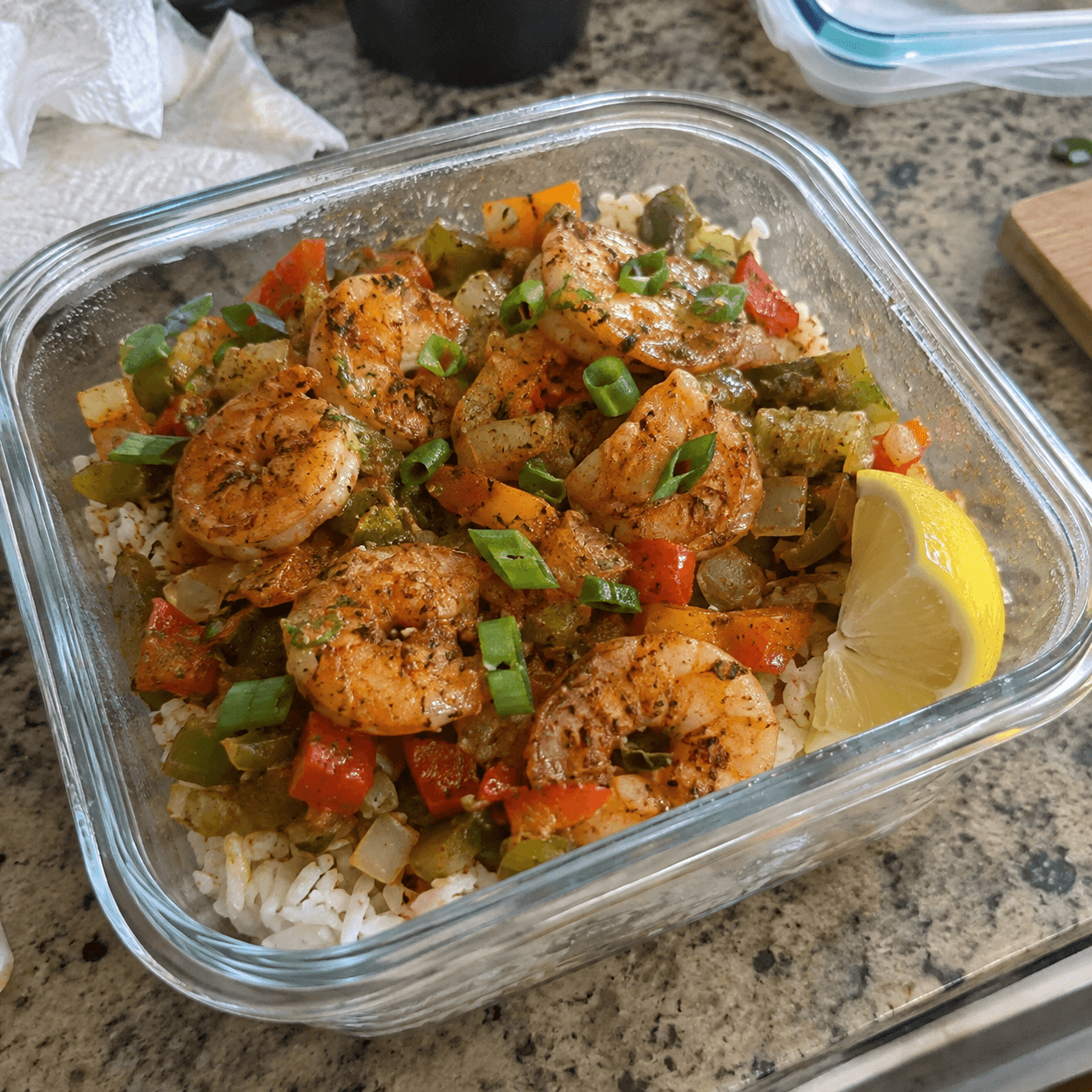
Cajun cooking starts with three vegetables, not a spice blend. Onion, celery, and bell pepper, cooked down together until soft, are the base almost every dish in the tradition builds on — cooks call it the holy trinity, and skipping it for a spice packet is the fastest way to end up with shrimp that tastes seasoned on the outside and bland everywhere else. The second thing most home versions get wrong is treating this as one dish instead of three components with three different storage personalities. Rice holds up fine for days. Sautéed vegetables hold up fine too. Shrimp does not — it’s the most reheat-sensitive protein in regular rotation, and it punishes a hard microwave blast faster than chicken or beef ever will.
Building this as three components, cooked in the right order and stored with shrimp’s short patience in mind, is what keeps Thursday’s bowl tasting like it was made Thursday. This makes 4 bowls, keeps 3 to 4 days refrigerated, and comes together in about 40 minutes.
Quick Facts
| Prep Time | 15 minutes |
| Cook Time | 25 minutes |
| Total Time | 40 minutes |
| Servings | 4 bowls |
| Difficulty | Easy |
| Storage Life | 3 to 4 days refrigerated; freezing isn’t recommended — shrimp turns tough and rubbery after a freeze-thaw-reheat cycle |
Why the Trinity Matters More Than the Spice Blend
A Cajun spice mix — paprika, garlic powder, cayenne, thyme, oregano — is what most people reach for first, and it’s genuinely important, but it only seasons the surface of whatever it touches. The holy trinity does something a dry rub can’t: cooked slowly enough to soften and release their own natural sugars, onion, celery, and bell pepper build a savory base that seasons the dish from the inside, the same way a soup base works. Skip the trinity and rely on spice alone, and the shrimp tastes seasoned while the rice underneath tastes like nothing. Cook the trinity properly and even a light spice hand tastes full, because the base is doing real work.
One more distinction worth knowing: this is a Cajun bowl, not a Creole one, and the difference is tomatoes. Cajun cooking, rooted in rural Louisiana, traditionally skips tomatoes; Creole cooking, with its New Orleans city roots, usually includes them. This recipe stays tomato-free on purpose — it keeps the rice from taking on extra liquid over a few days in the fridge, which matters more here than the flavor difference does. A Creole variation with tomatoes is covered below if that’s the direction you’d rather go.
Ingredients
For the shrimp:
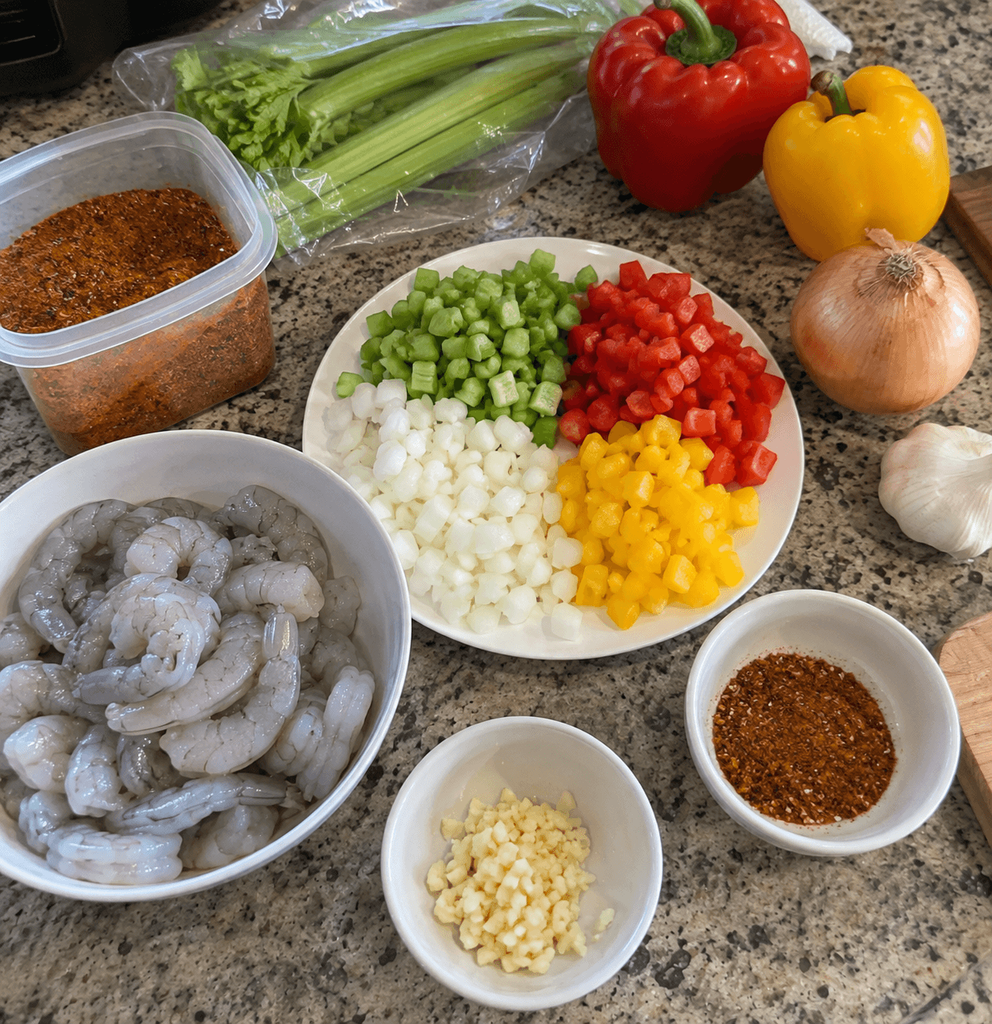
- 1½ lbs large shrimp (21 to 25 count), peeled and deveined, tails off
- 1½ tbsp Cajun seasoning, store-bought or homemade (1 tsp each: smoked paprika, garlic powder, onion powder, dried thyme; ½ tsp each: dried oregano, cayenne, black pepper; ¼ tsp salt)
- 1 tbsp neutral oil
For the trinity and rice:
- 1 cup diced yellow onion
- ½ cup diced celery
- 1 cup diced bell pepper, mixed colors
- 3 garlic cloves, minced
- 2 tbsp butter
- 1½ cups long grain white rice, rinsed until the water runs mostly clear
- 2¼ cups low sodium chicken broth
- ½ tsp salt
- 2 green onions, thinly sliced, for topping
- 1 lemon, cut into wedges, for serving
What You’ll Cook This In
- A 12-inch skillet, used in sequence for the trinity and then the shrimp
- A 2-quart saucepan with a lid, for the rice
- A small bowl, for tossing the shrimp with seasoning before it hits the pan
- An instant-read thermometer — shrimp is safe at 145°F, and while most cooks judge doneness by color and shape, a thermometer removes the guesswork the first few times you make this
- Four 3- to 4-cup meal prep containers
Season the Shrimp Before Anything Else Heats Up
Toss the shrimp with the Cajun seasoning in a small bowl and let it sit at room temperature while you prep the trinity — 10 to 15 minutes is enough for the spices to cling and start working without the shrimp sitting out long enough to matter for food safety. Dice the onion, celery, and bell pepper to a similar size, roughly ¼-inch pieces, so they cook at the same rate; a chunk of celery still crunchy while the onion has gone translucent means the whole trinity got pulled off the heat too soon to season evenly.
Building the Bowls, Component by Component
Start the rice — 2 minutes to get it going. Bring the broth and salt to a boil in the saucepan, stir in the rinsed rice, cover, and reduce to low. It needs about 15 minutes, timed to run alongside everything else.
Cook the trinity, onion and celery first — 5 minutes. Melt the butter in the skillet over medium heat. Add the onion and celery and cook, stirring occasionally, until the onion turns translucent and starts to soften at the edges — celery takes slightly longer than onion to lose its crunch, which is why both go in together rather than staggered.
Add the bell pepper and garlic — 3 minutes. Stir in the diced bell pepper and cook until it softens slightly but still holds a little bite, about 3 minutes. Add the garlic for the final 30 seconds, just until fragrant. Transfer the whole trinity to a bowl and set aside.
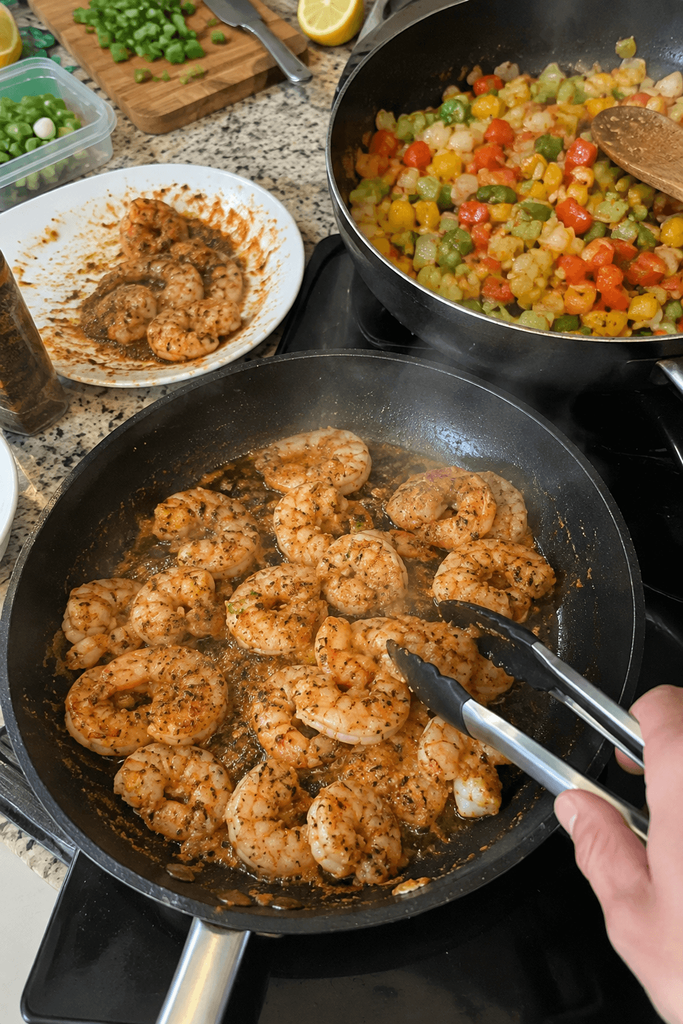
Sear the shrimp — 4 minutes. Wipe the skillet if needed and heat the oil over medium-high until shimmering. Add the shrimp in a single layer, working in two batches if the pan is crowded, and sear 90 seconds per side, until each piece turns pink and opaque and curls into a loose “C” shape — a tight “O” shape means it’s gone past done. Confirm with a thermometer the first time: 145°F at the thickest point.
Combine and rest — 2 minutes. Return the trinity to the skillet with the shrimp and toss gently just to combine and warm through. Pull it off the heat immediately — the shrimp is already cooked, and any extra time in a hot pan is time spent overcooking it.
Rest the rice, off heat — 5 minutes. Once the rice has absorbed the broth, turn off the heat and let it sit, covered, before fluffing with a fork.
Assemble — 5 minutes. Divide the rice among four containers, about 1 cup each. Top with the shrimp and trinity mixture. Hold back the green onions and lemon wedges — both go on fresh, right before eating, not packed in from Sunday.
Storing and Reheating Without Turning the Shrimp to Rubber
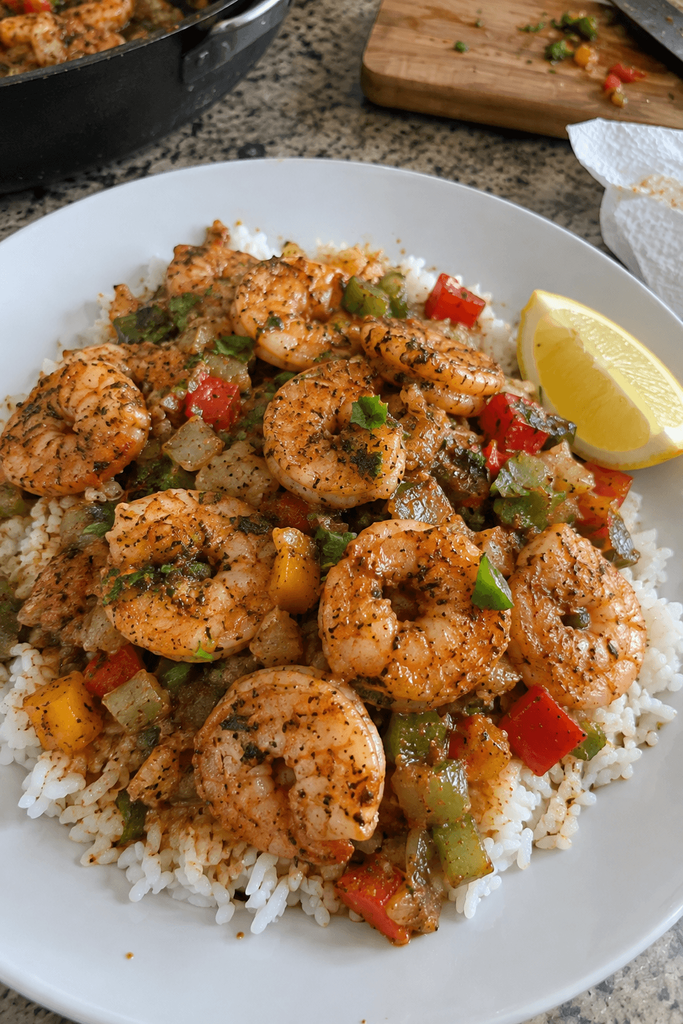
Cool everything to room temperature before sealing, no more than 2 hours after cooking, per USDA guidance for cooked shrimp. These bowls keep 3 to 4 days refrigerated. Freezing isn’t recommended here — shrimp that’s already been cooked once loses too much texture on a freeze-thaw-reheat cycle to be worth it, and the trinity vegetables turn watery on thaw as well.
Reheat from the fridge, in the microwave. Cover and heat at 50% power in 30-second bursts, checking between each, until steaming throughout — full power is what pushes already-cooked shrimp past its safe texture window and turns it tough.
Reheat from the fridge, on the stove. A skillet over medium-low with a teaspoon of water, covered, for 3 to 4 minutes, stirring once, keeps the shrimp gentler than the microwave.
Add the green onions and a fresh squeeze of lemon only after reheating — cooked-in citrus turns slightly bitter over several days, and fresh green onion brightens the bowl in a way a wilted, days-old topping can’t.
Where This Goes Wrong Between Monday and Friday
The shrimp turns rubbery by day two. Almost always a full-power microwave reheat, or the shrimp sat a minute too long in the pan after the trinity went back in at Step 5. Fix: reheat gently, and pull the whole skillet off heat the moment everything’s combined, not a minute later.
The rice tastes bland even though the shrimp is well seasoned. The trinity didn’t cook long enough to actually soften and release its flavor into the dish. Fix: give the onion and celery the full 5 minutes — a slightly translucent, softened trinity carries far more flavor into the rice than a barely-warmed one.
The bell pepper turns mushy by Wednesday. It was cooked too long in the initial sauté, since it continues softening slightly with each reheat. Fix: pull it while it still holds a little bite — it finishes further in the fridge and on reheat.
The Cajun flavor tastes weaker by the end of the week. Spice blends mellow over several days in the fridge, which is normal, not a storage failure. Fix: keep a pinch of extra Cajun seasoning on hand to refresh a bowl at reheating if it tastes flat.
Rice underneath the shrimp turns soggy. This usually means the shrimp and trinity went onto the rice while still warm and steaming. Fix: let the shrimp mixture cool for a few minutes on a plate before portioning, so less residual steam gets trapped under the lid.
Four Ways to Change the Bowl
Creole style, with tomatoes: Stir in one 14.5-ounce can of diced tomatoes, well-drained, along with the garlic in Step 3. Expect the rice to soften faster over the week because of the added moisture — plan to eat this version within 3 days rather than 4.
Spicier: Increase the cayenne in the seasoning blend to a full teaspoon, or add a diced jalapeño to the trinity along with the bell pepper.
Different protein: Swap the shrimp for 1½ lbs boneless, skinless chicken thighs, cut into 1-inch pieces — sear 6 to 8 minutes total instead of 4, until the internal temperature reaches 165°F.
Lower-carb: Swap the rice for 4 cups riced cauliflower, sautéed 5 to 6 minutes in a dry skillet instead of simmered, since it releases its own water as it cooks.
Cajun Shrimp Bowl Questions, Answered
Why does Cajun cooking skip tomatoes when Creole cooking includes them?
The two traditions come from different roots in Louisiana — Cajun from rural, French-Acadian country cooking, and Creole from New Orleans’ city kitchens, which blended in more Spanish and Caribbean influence, tomatoes included. Neither is more “correct”; they’re just different starting points.
How long does this actually last in the fridge?
Three to four days, refrigerated at or below 40°F, as long as it was cooled and sealed within 2 hours of cooking, per USDA guidance for cooked shrimp.
Can I use frozen shrimp instead of fresh?
Yes — thaw it fully in the fridge overnight first. Searing shrimp that’s still partly frozen cooks unevenly, browning the outside before the center catches up.
Is it safe to reheat shrimp more than once?
It’s safest to reheat only the portion you’re about to eat, once, rather than reheating the whole batch repeatedly. Each additional reheat pushes the texture further toward tough.
Can I make this without a thermometer?
Yes, once you’ve learned the visual cue — shrimp is done the moment it turns fully pink and opaque and curls into a loose “C” shape. A thermometer is just the fastest way to build that visual confidence the first few times.
Why does my trinity taste bitter instead of sweet?
The garlic likely went in too early and browned instead of just turning fragrant. Garlic added in the final 30 seconds of the trinity’s cook time avoids this; added any earlier, it scorches and turns bitter.
Can I double this recipe for a bigger household?
Yes — sear the shrimp in three or four batches rather than crowding the pan, since overcrowded shrimp steams instead of searing, and use a wider skillet or two pans for the trinity.
Three Components, One Bowl, Zero Guesswork
The trinity does the quiet work of seasoning this dish from the inside, and treating the shrimp as the fast, reheat-sensitive piece it actually is — cooked last, stored gently, reheated low and slow — is what keeps this bowl tasting like Monday all the way through Thursday. None of it takes longer than a regular weeknight dinner would. It just asks that each part get treated according to what it actually needs, rather than everything getting cooked, stored, and reheated the same way out of habit.
