
Lemon Herb Chicken Meal Prep Bowls
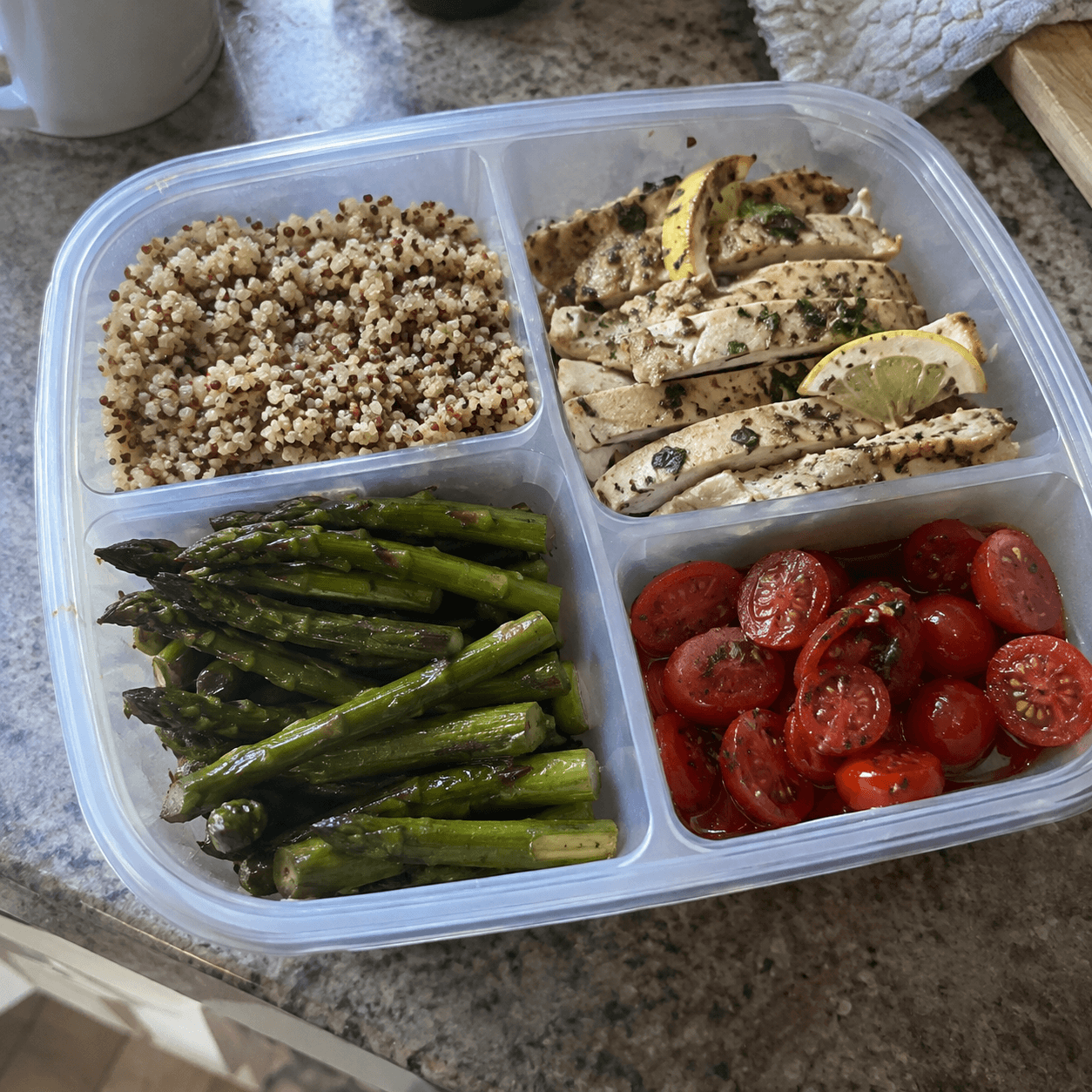
The advice to marinate chicken as long as possible is backwards for a lemon-based marinade, and it’s the reason so many lemon herb chicken meal preps come out with a strange, mushy edge instead of a tender bite. Lemon juice is acidic enough to start breaking down the surface of the meat, the same reaction that turns raw fish opaque in ceviche — useful for the first couple of hours, and actively working against the chicken after that. Marinate overnight the way a lot of recipes suggest, and the texture pays for it later in the week, not just on day one.
Thirty minutes to two hours is the real window, and it’s paired here with a food-safety habit that also happens to fix a flavor problem: half the marinade gets set aside before the chicken ever touches it, so there’s a truly fresh lemon-herb drizzle to finish the bowls with, days later. This makes four bowls, keeps four days in the fridge, and comes together in about an hour, most of it hands-off.
Before You Start: The Time and the Yield
| Prep Time | 15 minutes |
| Cook Time | 50 minutes (includes a hands-off 30-minute marinate) |
| Total Time | 1 hour 5 minutes |
| Servings | 4 bowls |
| Difficulty | Easy |
| Storage Life | 4 days refrigerated; up to 3 months frozen (chicken and quinoa) |
Why the Marinade Has a Time Limit
Most recipes treat marinating like a “more is better” situation — the longer it sits, the more flavor gets in, so why not go overnight? With a lemon-based marinade, that logic backfires. Lemon juice is acidic enough to start denaturing the proteins on the surface of the meat, the same reaction that turns raw fish opaque in ceviche. For the first 30 minutes to 2 hours, that’s useful — the surface tenderizes and the flavor moves in. Past 2 hours, the same reaction keeps going, and the outer layer turns mushy and stringy instead of tender, no matter how good it smells going into the pan.
Zest solves a different problem: flavor that fades. Lemon juice’s brightness comes from volatile acids that cook off within a day or two in the fridge. Zest carries the same citrus oils in a far more stable form, which is why it holds its punch through several days of reheating in a way straight juice doesn’t.
The reserved half of the marinade covers two things at once. Marinade that’s touched raw chicken can carry bacteria from the meat, so using it as a finishing sauce is a real risk unless it’s boiled first. Splitting it before the chicken goes in — and keeping half untouched the whole time — skips that step entirely, and it means the drizzle at the end tastes like fresh lemon and herbs instead of a boiled-down marinade.
Everything in the Bowl, and Why It’s There
Chicken and lemon herb marinade
- 4 boneless, skinless chicken breasts (about 1½ lbs total), pounded to an even ½-inch thickness (thighs work too — skip the pounding, since they’re naturally thinner, and pull them at the same 165°F)
- ⅓ cup olive oil, plus 1 tbsp for the pan
- 1 large lemon, zested and juiced (about 1 tablespoon zest, 3 tablespoons juice)
- 3 cloves garlic, minced
- 2 tbsp chopped fresh parsley
- 1 tbsp chopped fresh dill (or 1 tsp dried)
- 1 tsp dried oregano
- 1 tsp kosher salt
- ½ tsp black pepper
Quinoa
- 1 cup quinoa, rinsed (rinsing washes off the natural coating, called saponin, that tastes bitter and soapy if it’s skipped)
- 2 cups low-sodium chicken broth (vegetable broth works for a vegetarian-friendly base; water works too, with an extra ⅛ tsp salt to cover the flavor broth would have added)
- ¼ tsp salt
Asparagus
- 1 lb asparagus, tough ends trimmed (bend a spear near the base and it snaps naturally where the tough part starts, usually the bottom 1½ inches)
- 1 tbsp olive oil
- ¼ tsp salt
For serving
- 1 cup cherry tomatoes, halved
- ¼ cup crumbled feta
- 1 lemon, cut into wedges
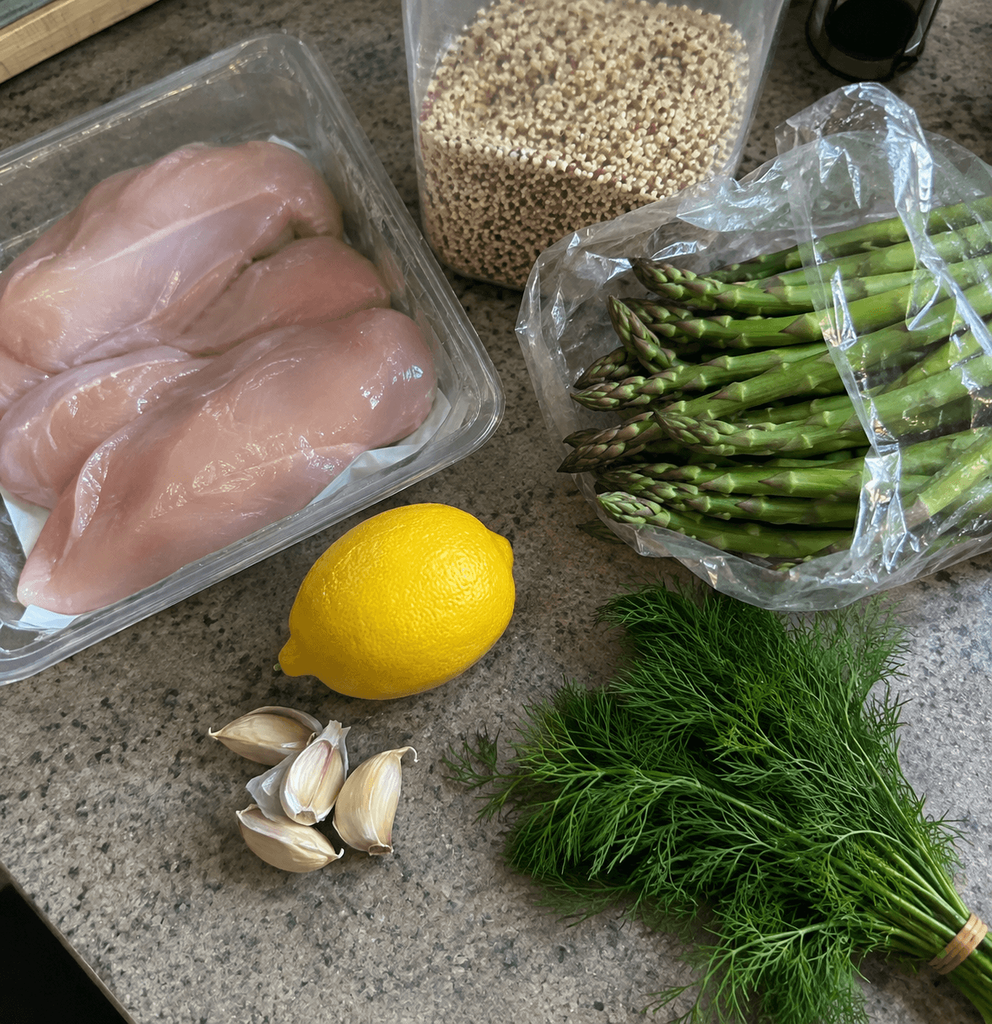
What’s Actually on the Counter for This One
- A meat mallet or rolling pin, for pounding the chicken to an even thickness
- A large zip-top bag or sheet of plastic wrap, to pound the chicken between
- A 12-inch skillet
- A 2-quart saucepan with a tight-fitting lid, for the quinoa
- A rimmed sheet pan, for the asparagus
- An instant-read thermometer, for checking doneness
- Four 4-cup (32-oz) containers, plus small lidded cups for the tomatoes and feta — a 4-pack of the larger ones runs about $12 to $18 at most big-box or warehouse stores
Set a Timer the Moment the Chicken Goes In
Pound the chicken to an even thickness before it touches the marinade. A breast with a thick end and a thin end finishes cooking at two different times, so the thin part is already dry by the time the thick part hits 165°F.
Then set a timer the moment the chicken goes into the marinade. Under 30 minutes and the flavor barely gets past the surface. Past about 2 hours, the lemon juice starts breaking down the texture instead of just seasoning it. Thirty minutes to two hours is the real window — not “the longer the better.”
How the Hour Breaks Down, Step by Step
- Make the marinade and pound the chicken — 15 minutes. Preheat the oven to 400°F. Whisk together the olive oil, lemon zest, lemon juice, garlic, parsley, dill, oregano, salt, and pepper — this makes about ½ cup total. Measure out half (about ¼ cup) into a separate container and refrigerate; this portion never touches raw chicken and becomes the finishing drizzle. Place the chicken between sheets of plastic wrap and pound to an even ½-inch thickness. Add it to the remaining marinade, turning to coat.
- Marinate — 30 minutes, hands-off. Let the chicken sit at room temperature for at least 30 minutes and no more than 2 hours. Use this window for steps 3 and 4.
- Cook the quinoa — about 25 minutes, during the marinate window. Bring the broth and salt to a boil in the saucepan over medium-high heat, about 5 minutes. Stir in the rinsed quinoa, reduce the heat to low, cover, and simmer 15 minutes, until the liquid is absorbed. Turn off the heat and let it rest, covered, 5 minutes, then fluff with a fork.
- Roast the asparagus — 12 minutes, during the marinate window. Toss the asparagus with the olive oil and salt on a sheet pan. Roast 12 minutes, until the tips are lightly browned and a spear bends without snapping.
- Sear the chicken — 15 minutes. Heat 1 tablespoon olive oil in the skillet over medium-high heat. Remove the chicken from the marinade, letting the excess drip off, and discard the marinade it sat in. Working in two batches keeps space around each piece, so it browns instead of steaming in its own juices — cook 3 to 4 minutes per side, until golden and the internal temperature reads 165°F at the thickest part. Move each batch to a plate as it finishes.
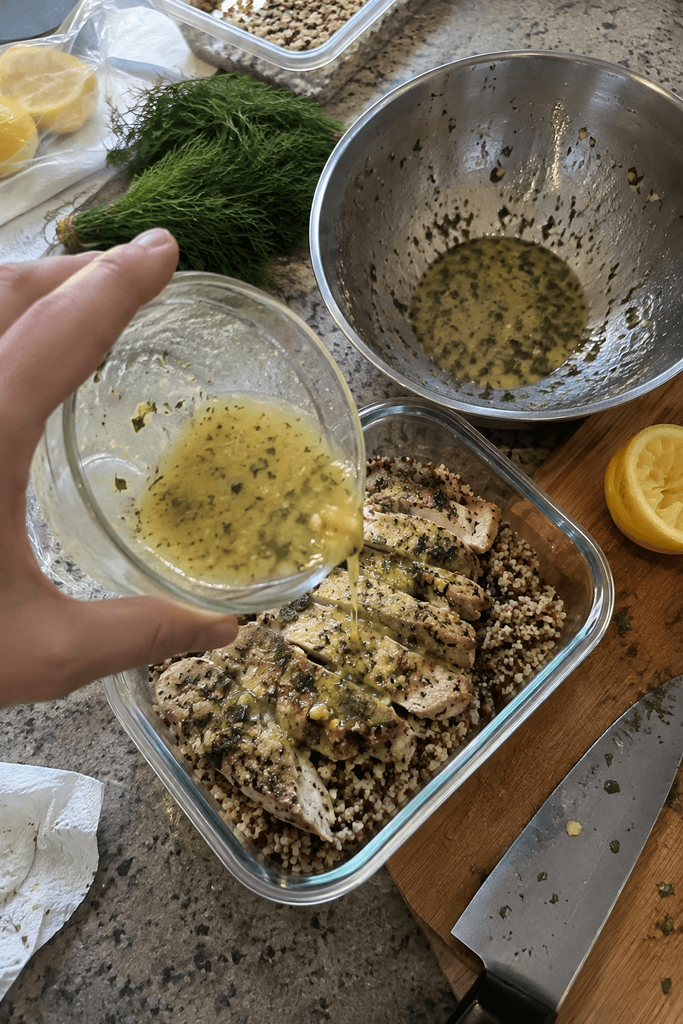
- Rest, slice, and assemble — 5 minutes. Tent the chicken loosely with foil and let it rest 5 minutes — this keeps the juices in the meat instead of on the cutting board. While it rests, divide the quinoa among four containers, about ¾ cup each, and top with the asparagus. Slice the chicken, add it to each bowl, and drizzle with the reserved marinade. Keep the tomatoes and feta in small separate containers to add fresh each day.
Keeping These Bowls Fresh Through Friday
Divide the quinoa and chicken evenly across four containers — about ¾ cup quinoa and one sliced chicken breast (about 5 ounces) per bowl — along with the roasted asparagus. Keep the tomatoes and feta in small separate containers and add them fresh each day; both turn watery and lose their texture sitting against warm quinoa for four days. Cool everything before sealing, within about 2 hours of cooking.
These bowls keep 4 days in the refrigerator. The chicken and quinoa both freeze well, up to 3 months — the asparagus doesn’t hold up frozen and reheated, so leave it out of any batch headed for the freezer and roast a fresh bunch instead.
To reheat, microwave the quinoa and chicken together, covered, for 1½ to 2 minutes at 70% power, adding the asparagus for the last 30 seconds only — it turns limp and gray if it reheats the whole time. On the stovetop, warm everything in a covered skillet over medium-low with a splash of broth or water, about 4 minutes, adding the asparagus in the last minute. From frozen, thaw overnight before reheating either way.
Drizzle with the reserved marinade, then top with the cold tomatoes and feta right before eating — that’s what keeps this tasting like a fresh bowl instead of a five-day-old reheated one.
Ways to Make These Bowls Your Own
- Dairy-free: Skip the feta, or swap in a few sliced Kalamata olives for salty contrast instead.
- Different grain: Swap the quinoa for 1 cup couscous — no simmering needed, just stir it into 1¼ cups just-boiled broth, cover, and let it sit off heat for 5 minutes before fluffing.
- Grilled instead of pan-seared: Grill the pounded chicken over medium-high heat, 3 to 4 minutes per side, for a smokier version — the same 165°F target applies.
- Different vegetable: Swap the asparagus for 1 lb zucchini, sliced into half-moons, roasted at the same 400°F for 12 minutes.
What People Actually Ask About This Recipe
Can I marinate the chicken overnight for more flavor? No — past about 2 hours, the lemon juice starts breaking down the chicken’s surface texture, turning it mushy instead of tender. Thirty minutes to 2 hours is the real window.
Is it safe to use the marinade as a sauce? Only the half that never touched raw chicken. The portion the chicken sat in has to be discarded, or boiled for at least a minute before it’s used for anything else.
Can I use chicken thighs instead of breasts? Yes — skip the pounding, since thighs are naturally thinner and more forgiving, and pull them at the same 165°F; they’ll take about the same 3 to 4 minutes per side.
Why does my asparagus turn gray when I reheat it? It’s been microwaved too long. Asparagus loses its color fast with extra heat, so adding it in the last 30 seconds of reheating, instead of the whole time, keeps it green.
How long do these bowls last in the fridge? Four days, as long as everything’s cooled and sealed within about 2 hours of cooking.
Can I make this ahead for more than a week? Freeze the chicken and quinoa for up to 3 months; skip freezing the asparagus, tomatoes, and feta, and add fresh versions of those after reheating instead.
Can I make this without dairy? Yes — leave out the feta. A few olives or an extra pinch of salt on the tomatoes covers the saltiness it would have added.
The One Rule Worth Keeping
The instinct to marinate as long as possible makes sense for most marinades — it just doesn’t hold for one built on lemon juice. Thirty minutes to two hours gets the chicken seasoned all the way through without the acid working against the texture, and the zest and reserved drizzle carry the citrus flavor through four days of reheating in a way the juice alone can’t. Once that timing clicks, it’s worth applying to any citrus marinade in the rotation — a steak marinade, a shrimp skewer, whatever’s next. The lemon isn’t the problem. Leaving it in too long is.
