
High-Protein Hot Honey Chicken Bowl Recipe
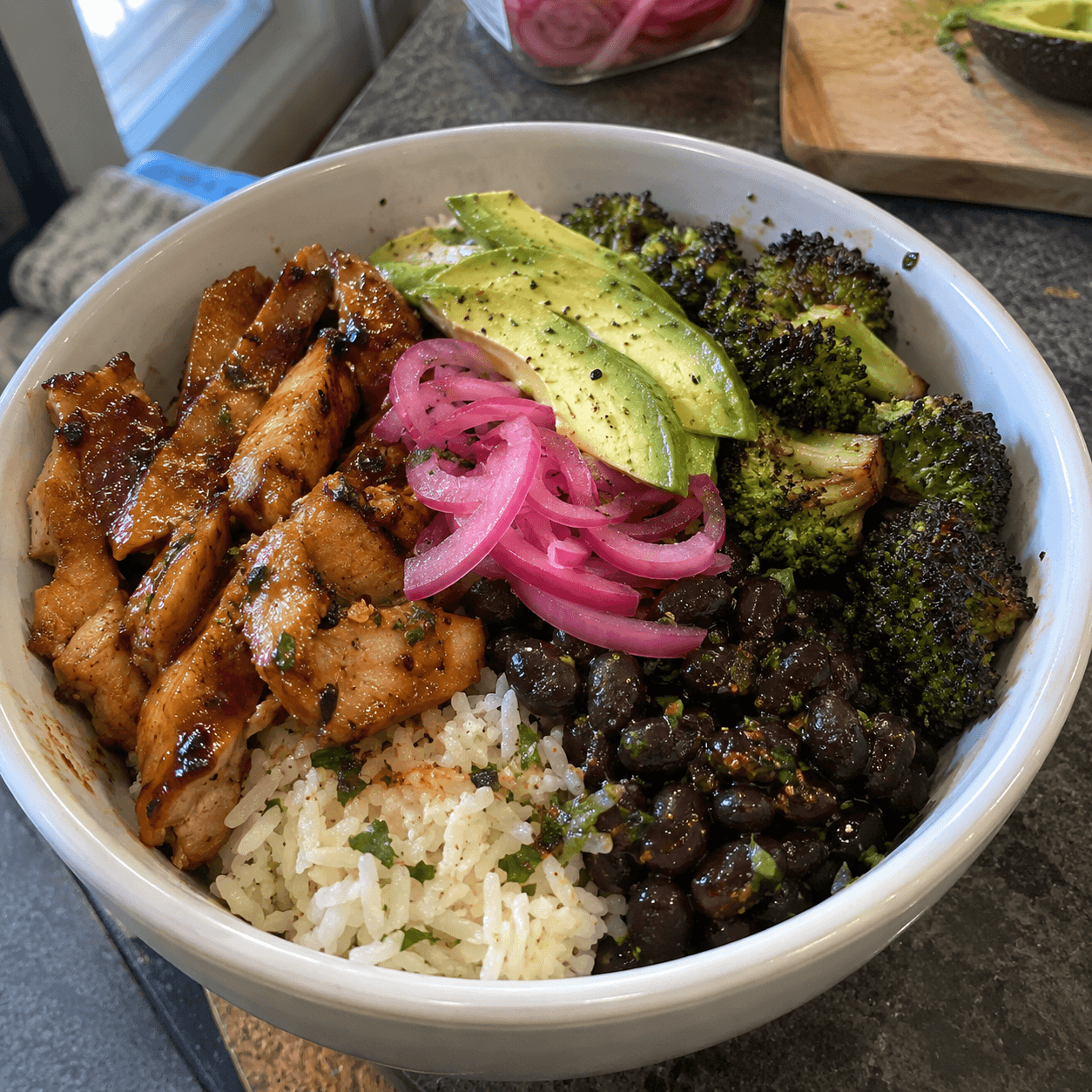
One bowl of this gets you close to 45 grams of protein before you’ve touched a scoop of powder or torn open a bar wrapper. That’s chicken, black beans, and a spoonful of Greek yogurt doing the work quietly in the background. The part most versions of this bowl get wrong is the honey. Treat a hot honey glaze like a marinade and brush it on before the chicken hits the pan, and it either slides off into the skillet or scorches, because honey is mostly sugar and sugar burns fast once a pan gets past medium heat. The fix isn’t a different ingredient — it’s timing. The glaze goes on after the chicken comes out of the pan, in its own two-minute pass over low heat, which is the difference between a bowl that tastes like a restaurant special and one that tastes like burnt sugar with regret. Every other piece of this bowl is built to hold up in the fridge through the week. Only one part isn’t, and it’s not the chicken.
Quick Facts
| Prep Time | 15 minutes |
| Cook Time | 25 minutes |
| Total Time | 40 minutes |
| Servings | 4 bowls |
| Difficulty | Easy to moderate |
| Storage Life | Up to 4 days refrigerated, stored by component |
Where the Protein Count and the Heat Actually Come From
The protein math isn’t a trick. Six ounces of raw chicken breast per serving cooks down to roughly 35 grams of protein on its own, and a half cup of black beans adds another 7 to 8 grams. The lime crema on top, made from Greek yogurt instead of sour cream, quietly contributes 2 to 3 more grams for almost no extra work. None of it depends on a supplement aisle.
The heat side runs on a different mechanism. A hot honey glaze is mostly sugar syrup, and sugar syrup caramelizes around 320°F, then turns acrid within about 30 seconds past that. A hot skillet that just seared chicken easily carries residual heat well above that mark, so building the glaze in that same pan over low heat — not medium, not high — keeps it under the threshold where it turns bitter. The vinegar in both the hot sauce and the added splash of apple cider vinegar does double duty: it balances the sweetness so the glaze doesn’t taste like candy, and it keeps the sugar in liquid form instead of crystallizing the way straight honey can after time in a jar.
What Goes Into Each Part
The chicken
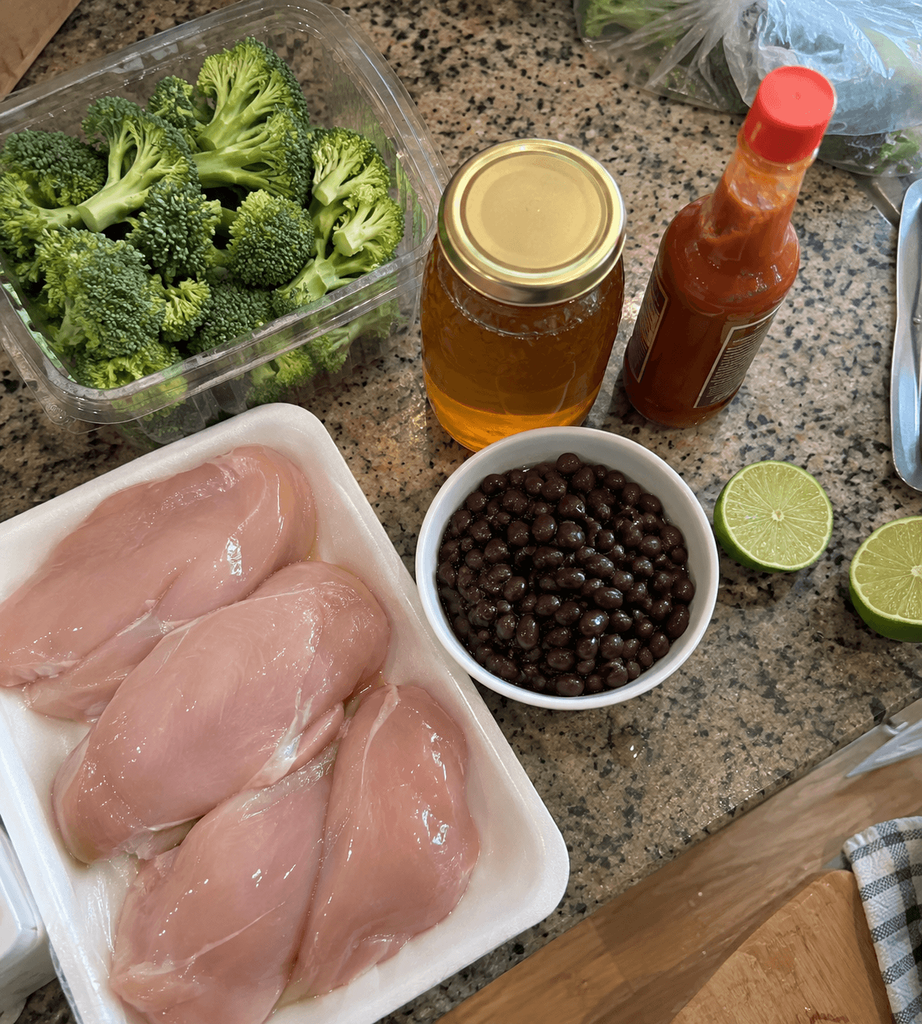
- 1½ lbs boneless, skinless chicken breasts (about 3 medium), pounded to an even ¾-inch thickness
- 1 tbsp olive oil
- ¾ tsp kosher salt
- ½ tsp black pepper
- ½ tsp garlic powder
- ½ tsp smoked paprika
Pounding to an even thickness matters more than the seasoning does. A breast that’s 1½ inches thick on one end and ½ inch on the other cooks unevenly no matter what’s on it — the thin end is dry before the thick end hits a safe temperature.
The hot honey glaze
- ⅓ cup honey
- 2 tbsp hot sauce (Frank’s RedHot or a similar cayenne-based sauce)
- 1 tbsp unsalted butter
- 1 tsp apple cider vinegar
- Pinch of kosher salt
Cayenne-based hot sauces like Frank’s are mostly vinegar, which is why they blend smoothly into the honey instead of turning it grainy. A thicker sauce like sriracha works but needs an extra teaspoon of water whisked in, or the glaze turns gluey instead of pourable.
The grain and beans
- 1 cup long-grain white rice, rinsed
- 1½ cups water or low-sodium chicken broth
- ¼ tsp kosher salt
- 1 (15-oz) can black beans, drained and rinsed
Broth over water adds flavor for free. Swapping the rice for quinoa is covered in the variations below, along with the protein bump that comes with it.
The vegetables
- 1 lb broccoli florets (1 large head, cut into 1½-inch pieces)
- 1 tbsp olive oil
- ¼ tsp kosher salt
- ¼ tsp black pepper
The toppings
- ½ small red onion, thinly sliced
- ¼ cup apple cider vinegar
- 1 tbsp sugar
- ½ cup plain Greek yogurt (2% or whole milk)
- Juice of 1 lime (about 2 tbsp)
- 2 tbsp water, to thin
- 1 large avocado, sliced just before serving
- 2 scallions, thinly sliced
What’s Actually on the Counter for This
- A large skillet, 10 to 12 inches — cast iron or stainless holds heat evenly enough for a real sear, which a nonstick pan doesn’t do as well
- A medium saucepan with a lid, for the rice
- A rimmed sheet pan, for the broccoli
- A meat mallet, or a small heavy skillet, to pound the chicken
- An instant-read thermometer — this one isn’t optional. Guessing at doneness is how chicken ends up either dry or unsafe
Before Anything Goes in a Pan
Preheat the oven to 425°F before doing anything else, so it’s ready by the time the broccoli needs it. While it heats, combine the sliced red onion, ¼ cup apple cider vinegar, 1 tablespoon sugar, and a pinch of salt in a small bowl or jar. It needs at least 15 minutes to turn bright pink and taste properly pickled, so starting it now means it’s ready by the time the bowl is assembled. Whisk together the Greek yogurt, lime juice, a pinch of salt, and water — a tablespoon at a time — until it’s pourable but not watery, about 2 tablespoons of water total.
Pat the chicken fully dry with a paper towel before seasoning it. Wet chicken steams in the pan instead of searing, and a steamed piece never develops the brown crust the glaze needs something to cling to.
Building the Bowl in the Order That Actually Works
- Cook the rice first, since it takes the longest. Combine the rinsed rice, water or broth, and ¼ teaspoon salt in the saucepan. Bring to a boil, cover, reduce the heat to low, and simmer for 15 minutes without lifting the lid — every peek lets out steam the rice needs to finish cooking evenly. Turn off the heat and let it sit covered for 5 more minutes, then fluff with a fork.
- While the rice simmers, roast the broccoli. Toss the florets with the olive oil, salt, and pepper directly on the sheet pan, then spread them out in a single layer with space between pieces — crowd the pan and they steam instead of char. Roast for 18 to 20 minutes, flipping once at the 10-minute mark, until the edges are deep brown and a fork slides into the stems easily.
- Season the chicken on both sides with the salt, pepper, garlic powder, and smoked paprika.
- Sear the chicken. Heat the olive oil in the large skillet over medium-high heat until it shimmers, about 1 minute. Add the chicken and leave it alone — no moving it around — for 5 to 6 minutes per side, until a deep golden crust forms and an instant-read thermometer reads 160°F at the thickest point. Pull it at 160°F, not 165°F. The temperature keeps climbing while it rests.
- Rest the chicken. Move it to a cutting board and tent loosely with foil for 5 minutes. This is when it finishes climbing to a safe 165°F, and when the juices that would otherwise pool on the cutting board reabsorb into the meat instead.
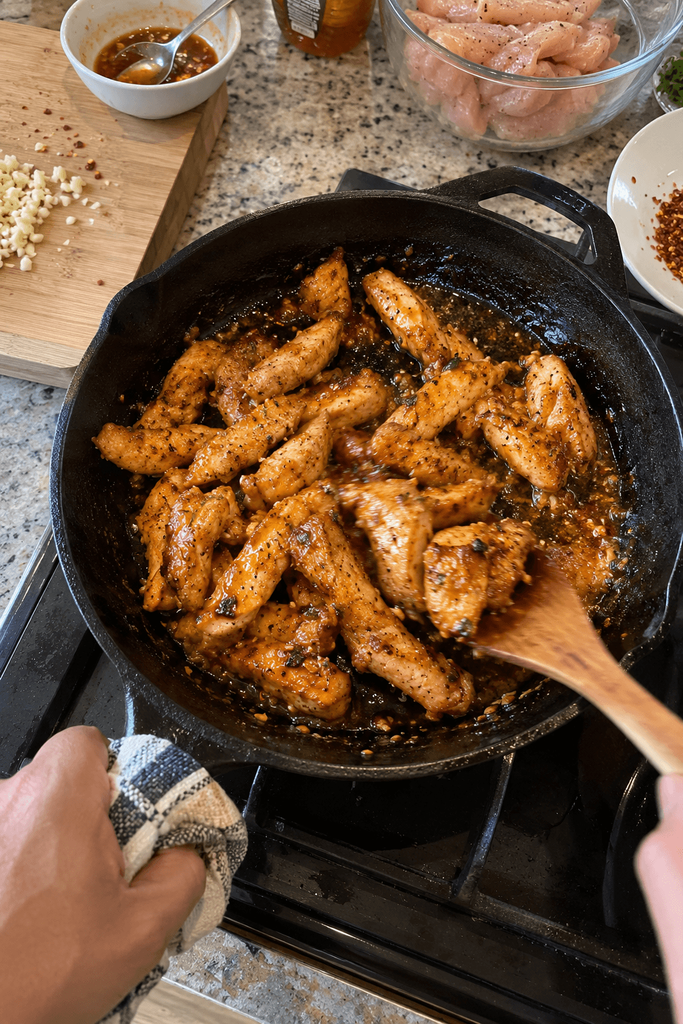
- Make the glaze while the chicken rests. Wipe the skillet mostly clean and set it back over low heat. Add the honey, hot sauce, butter, vinegar, and a pinch of salt. Stir constantly for about 2 minutes, just until the butter melts in and the sauce turns glossy and slightly thickened. Pull it the second it starts to bubble at the edges — past that point, it turns bitter within about 30 seconds.
- Slice and glaze. Cut the rested chicken against the grain into ½-inch strips, then toss the strips in the warm glaze until every piece is coated.
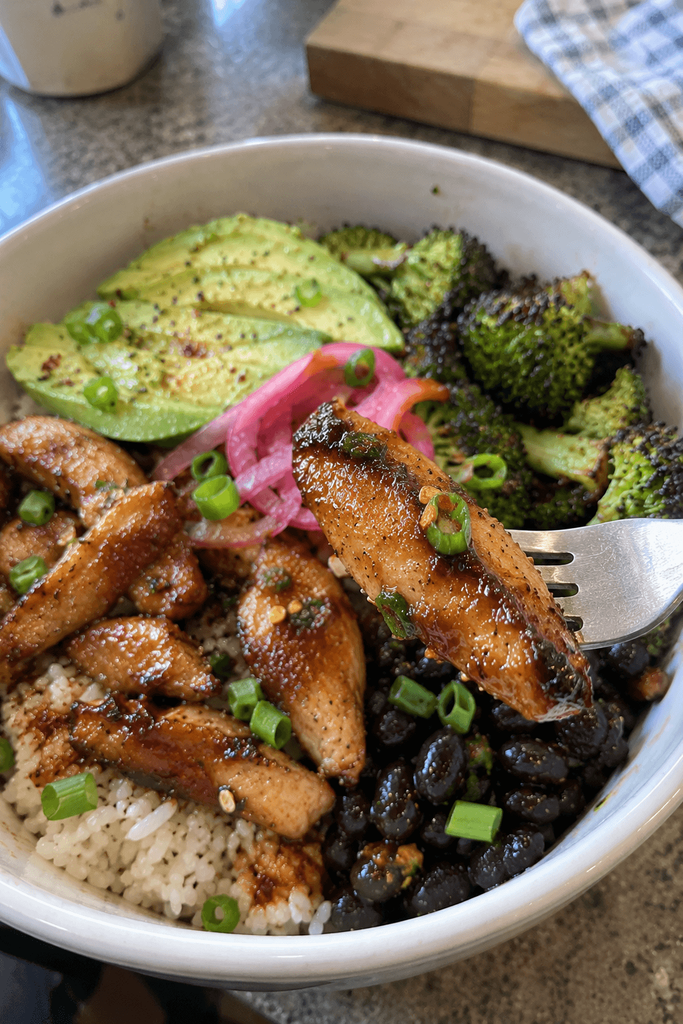
- Assemble. Warm the black beans in a small pot or the microwave for 1 to 2 minutes. Divide the rice, beans, and roasted broccoli among four bowls. Top each with glazed chicken, pickled onion, a few slices of avocado, a drizzle of lime crema, and scallions.
How Each Piece Holds Up After Sunday
Rice and beans keep in an airtight container up to 4 days refrigerated, or up to 3 months frozen. Reheat together in the microwave for 60 to 90 seconds, or in a skillet over medium heat for 3 to 4 minutes with a splash of water so the rice doesn’t dry out.
Glazed chicken keeps up to 4 days refrigerated, or up to 3 months frozen, though the glaze softens slightly on thawing. Reheat gently — microwave at 50% power for 90 seconds, or a covered skillet over low heat for 3 to 4 minutes. Full-power microwaving or high stovetop heat scorches the sugar in the glaze the same way rushing step 6 does.
Roasted broccoli keeps 4 days but turns soft in a standard microwave reheat. For real texture back, use an air fryer at 375°F for 3 to 4 minutes, or an oven at 400°F for 5 to 6 minutes.
Pickled onion keeps up to 2 weeks refrigerated in its own liquid — it’s the one component worth making a double batch of.
Lime crema keeps 4 days but thickens in the fridge. Whisk in a teaspoon of water before serving to loosen it back up.
Avocado is the exception. It browns within a couple of hours even with lime juice on it. Slice it fresh at serving time — this one doesn’t go on the Sunday prep list at all.
Four Ways to Change This Without Losing What Makes It Work
- Swap the protein. Boneless, skinless chicken thighs sear more forgivingly than breasts — they can take an extra minute or two per side without drying out, and they’re done at the same 165°F.
- Swap the grain. Cook 1 cup quinoa in 2 cups water, simmered covered for 15 minutes, instead of rice. It adds about 4 extra grams of protein per bowl and a firmer bite.
- Turn the heat down or up. For a milder glaze, cut the hot sauce to 1 tablespoon and add an extra teaspoon of honey. For more heat, add ¼ teaspoon cayenne pepper along with the hot sauce.
- Make it dairy-free. Replace the lime crema with 2 tablespoons tahini whisked together with 1 tablespoon lime juice and water until pourable — similar tang, no yogurt involved.
What People Usually Ask Before Making This
Can I make the hot honey glaze ahead of time? Yes. It keeps in a sealed jar in the fridge for up to 2 weeks. Warm it gently in a saucepan over low heat, or in 10-second microwave bursts, before tossing it with the chicken — it firms up when cold.
Will the glaze crystallize like plain honey does? Not likely. The vinegar and hot sauce in it are mostly water, which keeps the sugar from crystallizing the way pure honey sometimes does after weeks in the pantry. If it does firm up oddly, a few seconds of gentle heat brings it right back.
Can I use a rotisserie chicken instead of cooking my own? Yes. Shred about 3 cups of rotisserie chicken, warm it briefly in a skillet, and toss it in the glaze the same way — just skip the seasoning and searing steps entirely.
Is this actually high in protein, or is that just marketing? A full bowl runs close to 45 grams of protein, with the chicken alone contributing roughly 35 grams. That’s a real number built from the ingredients, not a rounding trick.
Can I prep this completely for the whole week on Sunday? Mostly. Rice, beans, chicken, pickled onion, and lime crema all hold for 4 days. Broccoli holds too, but softens. Avocado is the one piece to slice fresh each day instead.
What can replace the black beans? Chickpeas work at the same 15-ounce can amount, with about a gram less protein per half cup. Edamame is a lower-carb swap at roughly the same protein level.
Why did my chicken come out dry? Almost always one of two things: it went past 165°F internal before resting, or it wasn’t pounded to an even thickness, so the thin edges overcooked while the center was still catching up.
This bowl earns a spot on a Sunday prep list because five of its six parts genuinely wait for you — it’s only the avocado that won’t. Keep the glaze in its own jar, keep the rice and beans together, and build the bowl fresh each morning in under two minutes flat. The protein number holds up, the heat scales to what you actually want, and the one skillet doing double duty for both the chicken and the glaze means less to scrub at the end of it. That’s the whole trick.
