
Greek Chicken Meal Prep Bowls with Tzatziki
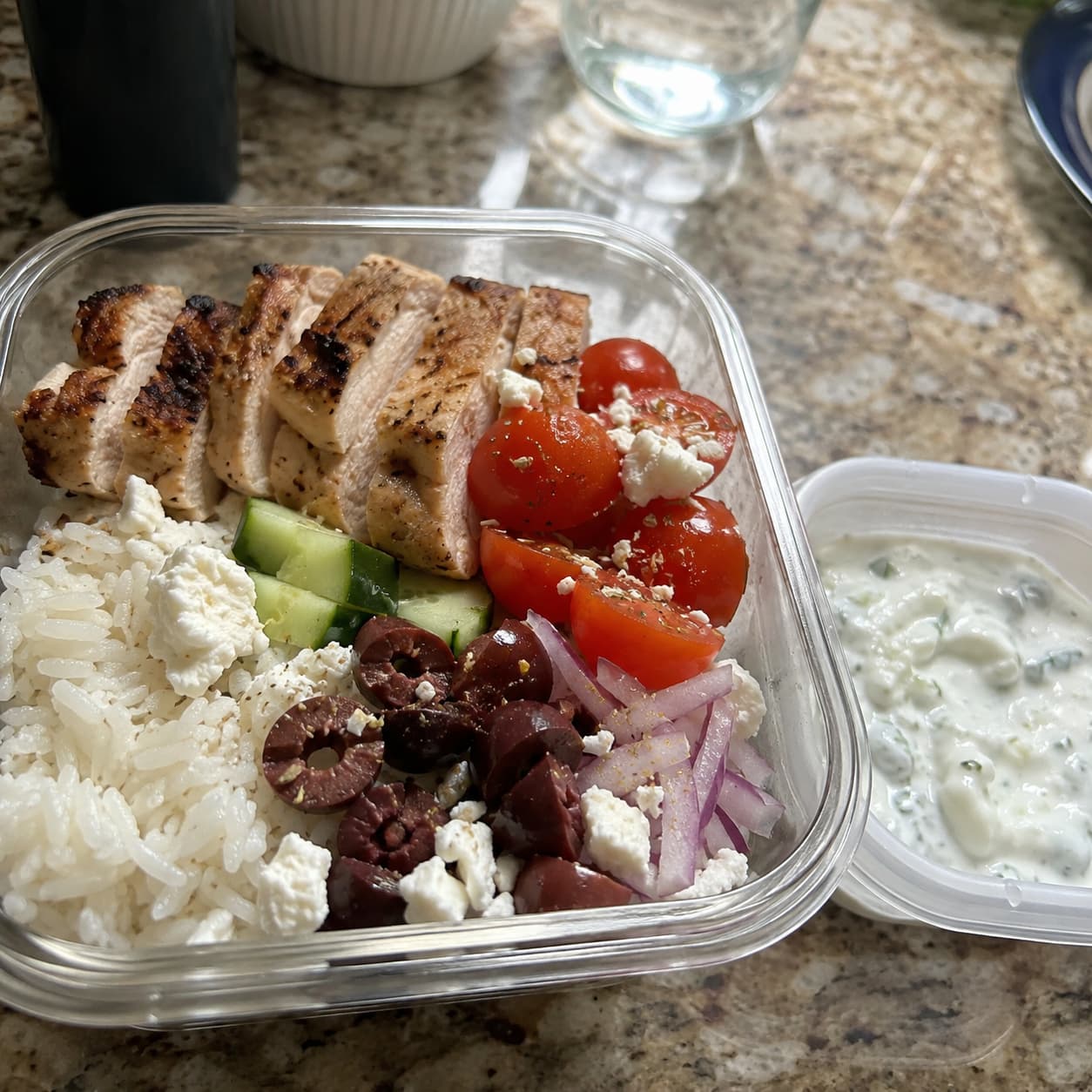
This bowl isn’t really one recipe — it’s five separate components that happen to share a container, and each one has its own rules for meal prep. Treating it as a single dish, cooked and assembled once, is how most homemade versions go wrong. The chicken needs time in a marinade before it ever sees heat. The tzatziki is built on raw cucumber, which is about 95% water and will turn the whole sauce watery if it isn’t handled first. The fresh vegetables belong nowhere near the fridge until the day they’re eaten. None of that is complicated, but skipping any one of the five steps below is exactly where a Greek bowl that tasted great on Sunday starts falling apart by Wednesday.
Quick Facts
| Prep Time | 20 minutes, plus at least 30 minutes marinating (up to 24 hours ahead) |
| Cook Time | 20 minutes |
| Total Time | About 40 minutes active, plus marinating time |
| Servings | 4 bowls |
| Difficulty | Easy |
| Storage Life | Chicken and rice: 3–4 days refrigerated. Tzatziki: 4 days. Fresh vegetables: added the day of eating |
Component 1 — The Chicken and Why the Marinade Can Go Long
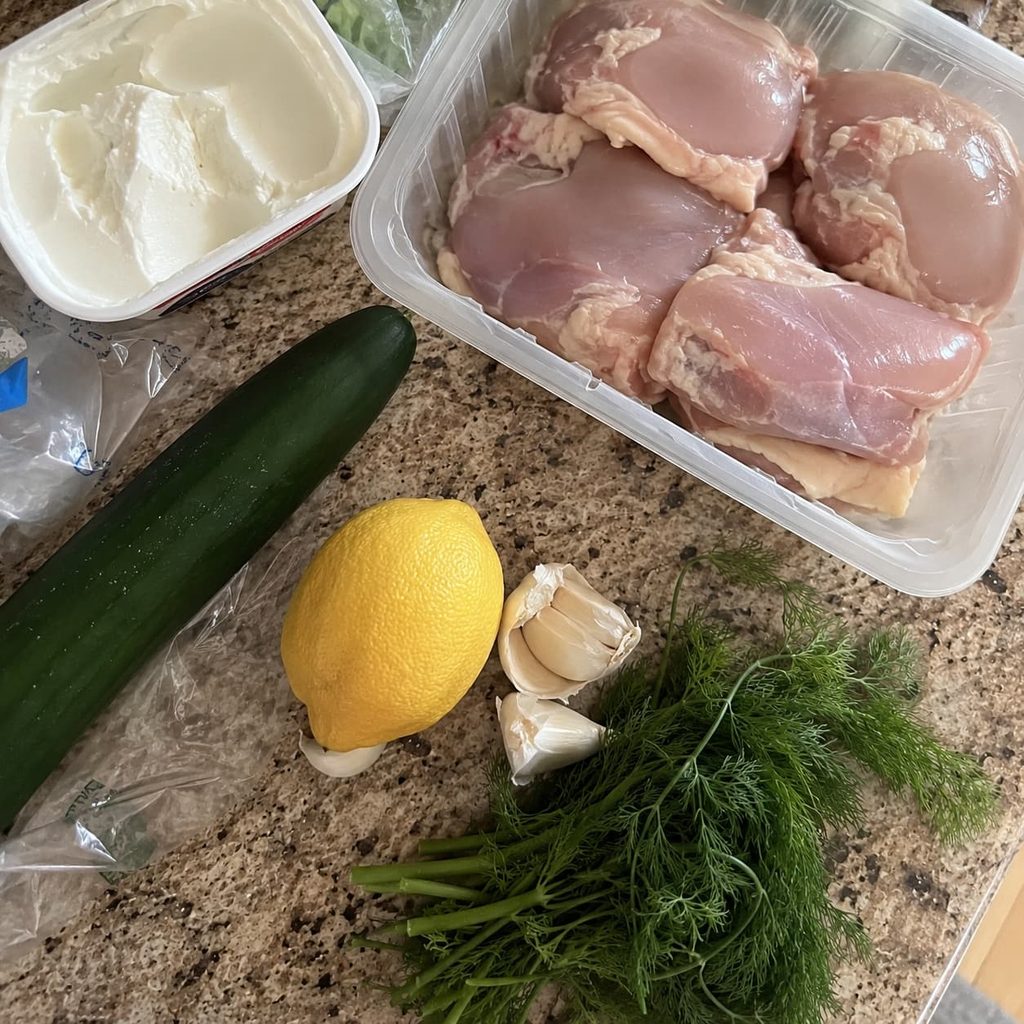
- 1½ lbs boneless, skinless chicken thighs
- ½ cup plain Greek yogurt
- 2 tbsp olive oil
- 2 tbsp fresh lemon juice
- 3 garlic cloves, minced
- 1½ tsp dried oregano
- ¾ tsp kosher salt
- ¼ tsp black pepper
Most marinades built on straight acid — lemon juice or vinegar alone — start breaking down surface proteins into a mushy, mealy texture if the meat sits in them more than an hour or two. A yogurt-based marinade doesn’t have that same failure point. The yogurt’s fat and protein structure buffer the acid’s effect on the meat, which is why this one can go a full 24 hours in the fridge without turning the chicken’s texture unpleasant — genuinely useful for a Sunday prep session, since the marinating itself needs no attention once it’s mixed.
Whisk the yogurt, olive oil, lemon juice, garlic, oregano, salt, and pepper together, add the chicken, and turn to coat. Refrigerate at least 30 minutes, ideally several hours or overnight.
Component 2 — The Tzatziki, and the Cucumber Problem
- 1 cup grated cucumber (about ½ a large cucumber), salted and drained
- 1½ cups plain Greek yogurt
- 2 tbsp olive oil
- 1 tbsp fresh lemon juice
- 2 garlic cloves, finely grated or minced
- 2 tbsp finely chopped fresh dill
- ½ tsp kosher salt
Cucumber is almost entirely water, and grated raw into yogurt without any prep, that water migrates straight into the sauce over the next few days — the tzatziki that started thick on Sunday is soup by Wednesday. Grate the cucumber, toss it with ½ teaspoon salt, and let it sit in a fine-mesh strainer for 15 to 20 minutes. Press firmly with the back of a spoon or squeeze it in a clean kitchen towel to remove as much liquid as possible before it goes anywhere near the yogurt.
Combine the drained cucumber with the yogurt, olive oil, lemon juice, garlic, dill, and salt. Store this separately from every other component — tzatziki added to a warm bowl or mixed in ahead of time softens everything underneath it.
Component 3 — The Grain Base
- 1½ cups long-grain white rice, rinsed until the water runs mostly clear
- 2¼ cups water
- ½ tsp kosher salt
- 1 tbsp olive oil, stirred in after cooking
Bring the rinsed rice, water, and salt to a boil, then cover and reduce to low for 15 minutes. Rest off heat for 5 minutes before fluffing with a fork and stirring in the olive oil, which keeps the grains from clumping together as they cool. Orzo works as a swap here at the same approximate cook time — check the package for the exact water ratio, since it varies by brand.
Component 4 — What Goes In Fresh, Not Ahead
- 1 cup cherry tomatoes, halved
- 1 cup diced cucumber (a different portion from the tzatziki cucumber, kept whole and un-grated)
- ¼ cup thinly sliced red onion
- ½ cup pitted kalamata olives
- ½ cup crumbled feta
None of these five items get prepped into the Sunday batch. Tomatoes and cucumber both release water once cut, the same mechanism causing the tzatziki problem above, and sitting mixed into a warm bowl for days turns them soft and watery well before the chicken or rice shows any sign of age. Store them together in one container, uncut where practical, and slice or halve what’s needed the morning each bowl gets eaten.
What You’ll Cook This In
- A large bowl or zip-top bag, for marinating
- A 12-inch skillet or a grill pan, for the chicken
- A 2-quart saucepan with a lid, for the rice
- A fine-mesh strainer, for draining the tzatziki cucumber
- An instant-read thermometer
- Four 3- to 4-cup meal prep containers, plus small separate containers for the tzatziki and fresh vegetables
Cooking the Chicken and Bringing It Together
Sear the marinated chicken — 12 to 15 minutes. Remove the chicken from the marinade, letting excess drip off (discard the used marinade — it’s held raw chicken and isn’t safe to reuse as a sauce). Heat a skillet or grill pan over medium-high with a light coating of oil. Cook the chicken thighs 6 to 7 minutes per side, until the internal temperature reaches 165°F and the outside has a deep golden char in spots.
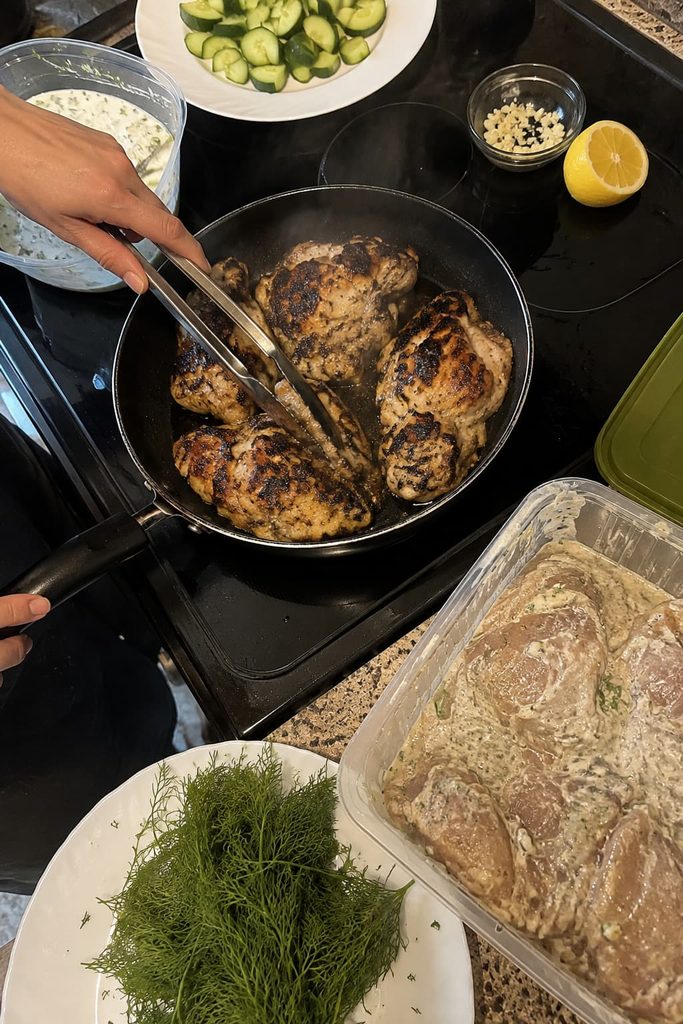
Rest, then slice — 5 minutes. Let the chicken rest 5 minutes before slicing against the grain into strips — cutting immediately releases the juices onto the board instead of back into the meat.
Cool everything separately before portioning — 20 to 30 minutes. Spread the sliced chicken and the cooked rice out to cool to room temperature. USDA guidance allows up to 2 hours at room temperature before refrigeration is required, which comfortably covers this cooling window.
Portion into containers. Divide the rice and chicken across the four containers. Keep the tzatziki and the fresh vegetable mix in their own separate small containers — nothing from Components 2 or 4 goes into the main container until the day of eating.
Assembling a Bowl on a Weekday
Reheat the chicken and rice together — covered, at 70% power in the microwave for 2 minutes, stirring once, or in a skillet over medium-low with a splash of water for 4 to 5 minutes. Once hot, top with the fresh vegetable mix straight from the fridge and a generous spoonful of cold tzatziki. The contrast between warm chicken and rice against cold tzatziki and crisp vegetables is part of what makes the bowl work — nothing here needs to be uniformly hot.
Where Each Component Actually Fails
The tzatziki turns watery by day two, even after draining the cucumber. Some liquid separation is normal for yogurt sitting several days in the fridge. Fix: give it a firm stir before serving, and drain the cucumber more aggressively next time — a full 20 minutes under pressure, not a quick squeeze.
The rice underneath tastes waterlogged. The tzatziki or fresh vegetables were added to the container ahead of time instead of kept separate. Fix: this is the one rule that can’t bend — both stay in their own containers until the morning of eating.
The chicken is dry by the third reheat. Likely cooked past 165°F during the initial sear, or reheated at full microwave power. Fix: pull it right at temperature, and reheat at reduced power in a covered container.
The feta tastes chalky and dried out. Pre-crumbled feta sitting loose in a container dries at the edges faster than feta cut fresh from a block. Fix: buy a block and crumble it fresh each morning if this keeps happening.
The onion overwhelms the bowl by Wednesday. Raw red onion sliced days ahead sharpens rather than mellows sitting dry in a container — it needs an acid to mellow, which it isn’t getting stored separately. Fix: slice it thinner, or give it a quick 10-minute soak in water right before adding it to the bowl.
Adjusting the Components
Vegetarian: Swap the chicken for the same weight of extra-firm tofu, marinated the same way — press it for 15 minutes first so it absorbs the marinade instead of sitting on the surface.
Dairy-free: Swap the Greek yogurt in both the marinade and the tzatziki for a plain unsweetened coconut or almond-based yogurt alternative — the tenderizing mechanism in the marinade relies on the acid and fat more than the dairy specifically, so the swap holds up reasonably well.
Lower-carb: Swap the rice for the same volume of riced cauliflower, sautéed 5 to 6 minutes in a dry skillet instead of simmered.
Bigger household: Double the chicken and marinate it in a large zip-top bag rather than a bowl, which makes it easier to turn and coat evenly without extra dishes.
Greek Bowl Questions, Answered
Can the chicken marinate for a full 24 hours without the texture suffering?
Yes — that’s specifically why a yogurt-based marinade is used here instead of a straight lemon or vinegar one. The yogurt’s fat and protein buffer the acid, which is what lets it go significantly longer than an acid-only marinade without turning the meat mushy.
Why does my tzatziki keep turning watery even after I drain the cucumber?
Some separation is normal over several days regardless of prep, since yogurt itself releases whey as it sits. Draining the cucumber thoroughly — a full 15 to 20 minutes under pressure — minimizes it, but a quick stir before serving handles what’s left.
How long does the tzatziki actually keep in the fridge?
About 4 days. It’s a fresh dairy sauce with raw garlic and cucumber in it, which sets a shorter window than the cooked chicken and rice.
Can I freeze any part of this?
The chicken freezes well on its own for up to 3 months. The rice can be frozen too, though texture holds up slightly better fresh. Tzatziki and the fresh vegetables should never be frozen — both break down badly on thaw.
Is it safe to reuse the marinade as a sauce after the chicken comes out?
No. It’s held raw chicken and needs to be discarded, not repurposed, unless it’s boiled for several minutes first specifically to kill off any bacteria — simpler to just make a small extra batch of tzatziki instead.
What if I don’t have fresh dill for the tzatziki?
Dried dill works at about a third of the amount — 2 teaspoons in place of 2 tablespoons fresh — though the flavor is noticeably milder. Fresh mint is a reasonable substitute if dill isn’t available at all.
Can this be made ahead for more than four days?
Freeze the chicken and rice separately if it needs to last longer than the fridge window. Make a fresh batch of tzatziki and fresh vegetables closer to when the frozen portions get used, rather than trying to stretch either one past its own storage limit.
Five Components, One Bowl, Zero Guessing
Nothing about this bowl is difficult on its own — a marinade that sits while the rest of the week happens anyway, a sauce that needs fifteen minutes of draining, vegetables that get cut the morning they’re eaten instead of five days ahead. What makes it work as meal prep is treating those as five separate decisions instead of one recipe assembled once and left to sit. Keep the components apart until the container actually gets opened, and this holds up as well on Friday as it did the day the chicken came off the grill.
