
How to Organize Your Refrigerator by Zones
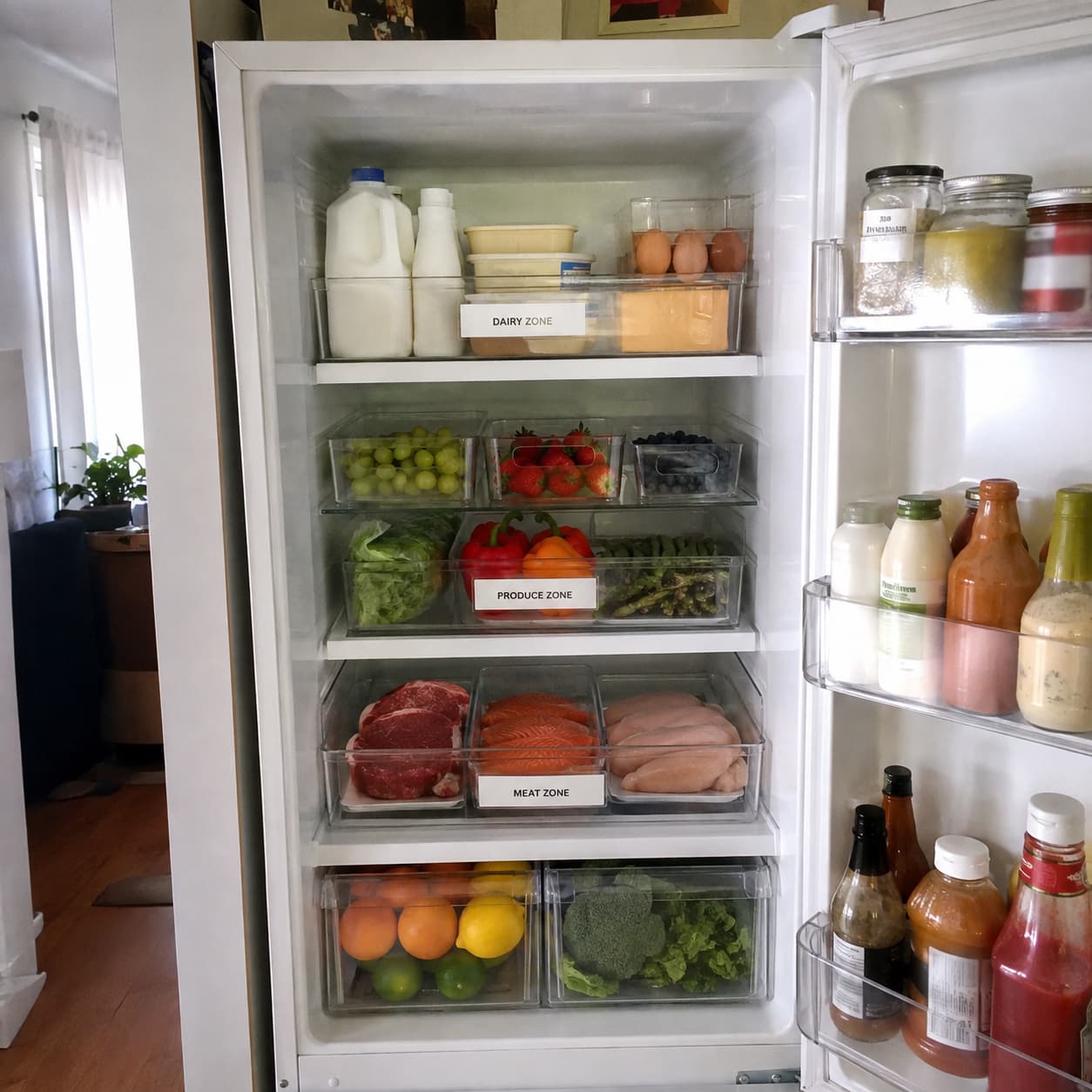
Almost every refrigerator ships with a dairy bin and an egg tray built into the door, which is exactly backward. The door is the warmest zone in the fridge, running about 5 to 10°F warmer than the back of the middle shelf, because it loses its cold air every time the fridge opens. Milk and eggs are two of the more temperature-sensitive items in the kitchen, and the manufacturer-built spot for them is the one place inside the fridge least able to hold a steady temperature. Organizing a fridge by zones means matching what actually varies inside it — a bottom shelf that runs colder, a door that runs warmer, two crisper drawers with different humidity needs — to what each food actually requires, instead of following the shape the appliance happened to be molded into. Once the zones are mapped to temperature and humidity instead of habit, food stops spoiling early and stops getting lost behind something else.
| Time required | 45–60 minutes for a full reset: emptying, wiping down, and remapping |
| Difficulty | Easy |
| Cost range | $20–$50 for a thermometer, bins, and a drip tray (optional beyond the thermometer) |
| What you’ll need | Fridge thermometer, clear bins, a lipped tray for raw meat, a look at the crisper humidity sliders |
| Who this is for | Anyone whose fridge gets organized by whatever fits, not by what each zone actually holds temperature-wise |
Why the Fridge’s Own Design Works Against You
A refrigerator needs to hold 40°F or below throughout to keep food safe, but “throughout” hides a real range. Cold air sinks, so the bottom shelf typically runs closest to 34 to 36°F — the coldest spot in the whole unit. The door swings open several times a day and loses cold air each time, which is why it can run 5 to 10°F warmer than the back of a middle shelf even on a fridge set correctly. The dial or digital setting most fridges use — a number from 1 to 5, or Low to High — doesn’t correspond to a specific degree across brands, so two fridges set to the same dial position can actually run several degrees apart. Organizing around where food “seems like it should go” instead of where the temperature actually sits is the reason milk goes off early and produce wilts even in a fridge that looks perfectly tidy.
What Actually Helps Map the Zones
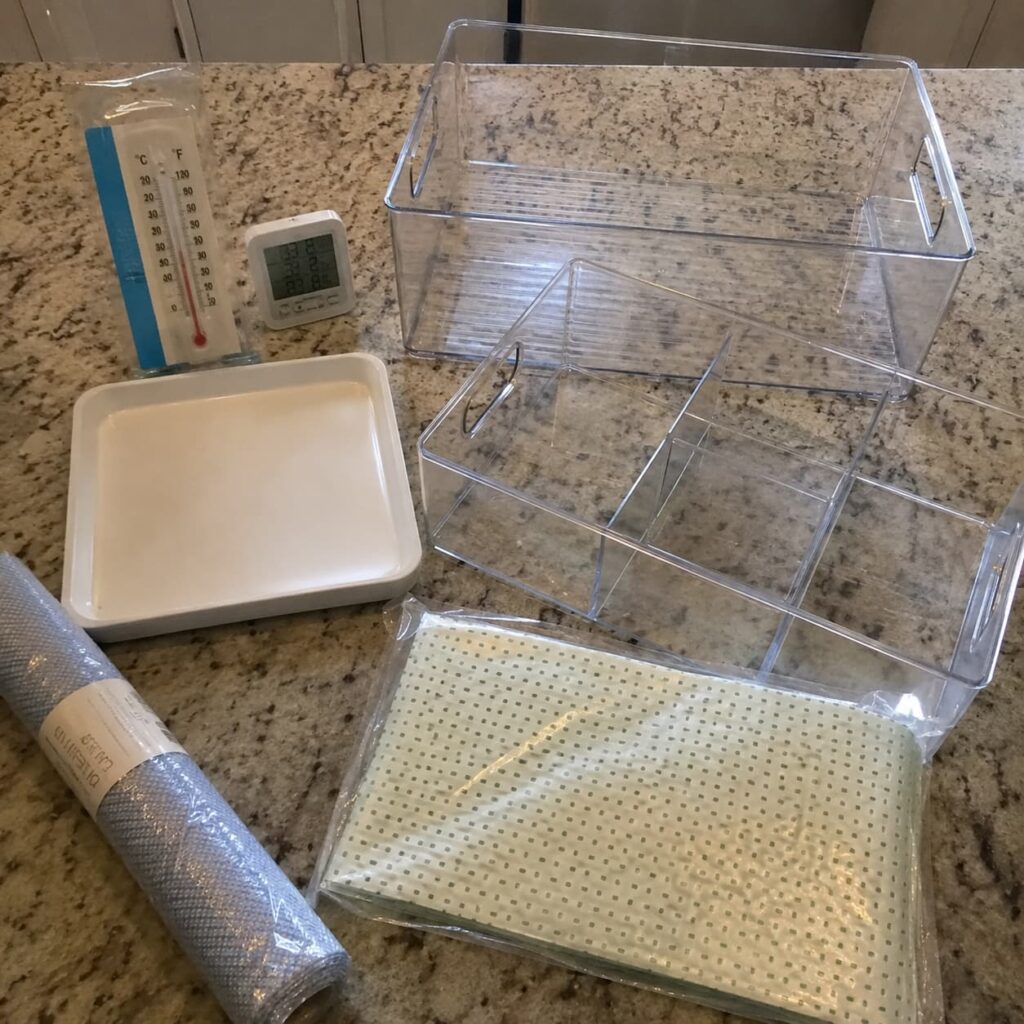
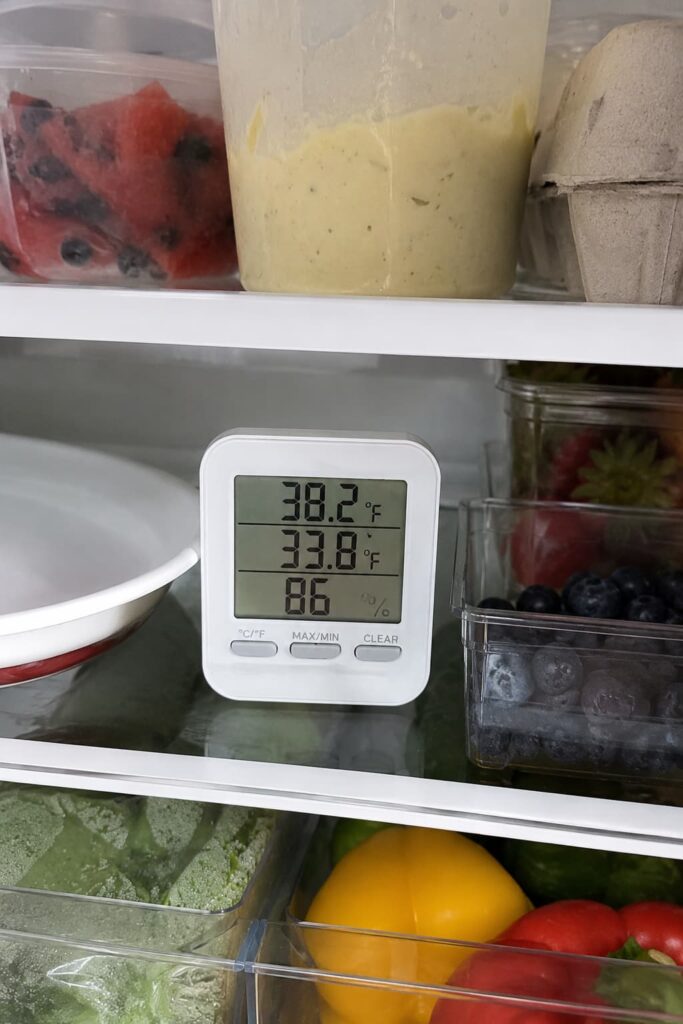
- A fridge thermometer, $5–$15. The only way to confirm actual zone temperatures instead of guessing from the dial. Leave it in the fridge for 24 hours before trusting any reading, since temperature swings with each time the door opens.
- Clear bins, various sizes, $10–$25 for a set. Turns each zone into a labeled, pull-forward section instead of a wall of stacked containers hiding what’s behind them.
- A lipped tray for raw meat, $5–$10. Catches drips before they reach anything on the shelf below — a rimmed sheet pan works as well as anything sold specifically for this.
- A look at the crisper humidity sliders — no cost. Most fridges made in the last 15 years have a slider on each crisper drawer; confirm both actually move before assuming they’re working.
Skip buying a full matching bin system before checking the crisper sliders and running the thermometer for a day. The zone map should follow the actual readings in this specific fridge, not a photo from somebody else’s kitchen.
Mapping Six Zones to What They’re Actually For
Zone 1 — The door (warmest, 5–10°F above the back of the middle shelf). Holds condiments, sauces, and anything shelf-stable enough to only need “cool,” not “cold” — ketchup, mustard, salad dressing. Done right, nothing here needs to survive more than an occasional swing up toward 45 to 50°F. The mistake: parking milk or eggs here just because the door has a bin shaped for them.
Zone 2 — The top shelf (moderate, the most stable temperature in the fridge). Ready-to-eat food — leftovers, drinks, deli meat — things meant to be grabbed without any more prep. Done right, nothing raw sits here. The mistake: overpacking this shelf so airflow gets blocked, which creates warm pockets even in a fridge that’s otherwise set correctly.
Zone 3 — The middle shelf. This is where milk, yogurt, and cheese actually belong, not the door — the middle shelf runs a steadier 36 to 38°F rather than swinging with every door open. Done right, dairy items sit toward the back of this shelf, the coolest and most stable part of it.
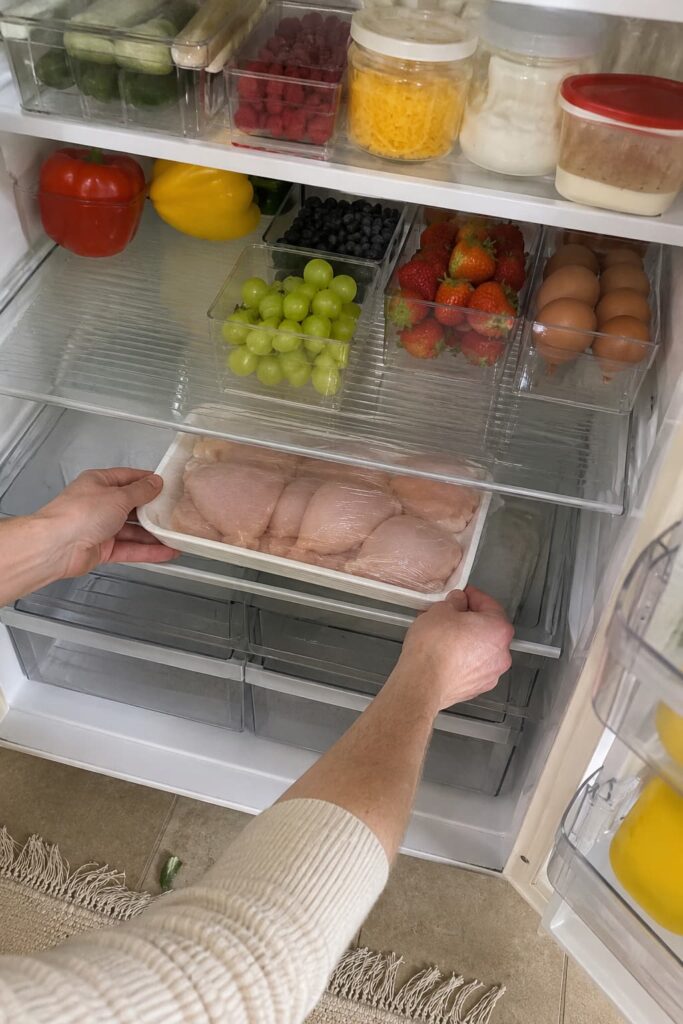
Zone 4 — The bottom shelf (coldest, 34–36°F). Raw meat, poultry, and fish, kept in a lipped tray or on a plate to catch drips. This zone is both the coldest spot, which slows bacterial growth, and the lowest position, so nothing below it can be contaminated by a drip. Raw poultry keeps for about 1 to 2 days here before it needs to be cooked or frozen; raw beef, pork, or lamb keeps for about 3 to 5 days. The mistake: keeping raw meat on a middle or upper shelf for convenience, where a drip can land directly on ready-to-eat food stored underneath.
Zone 5 — The high-humidity crisper drawer. Set the slider to high humidity, or closed vent, for leafy greens, herbs, broccoli, and carrots. Trapping moisture keeps these from wilting — lettuce typically lasts about 7 to 10 days in this drawer versus 3 to 4 days loose on an open shelf.
Zone 6 — The low-humidity crisper drawer. Set the slider to low humidity, or open vent, for fruit like apples, pears, and stone fruit. Letting moisture and ethylene gas escape keeps fruit from over-ripening or molding faster in a sealed space. Keeping high-ethylene fruit like apples in this drawer, rather than in with the leafy greens, also keeps those greens from wilting faster than they would otherwise.
Where the Zone Map Drifts After a Few Grocery Trips
The setup above solves the first week. These are the spots where it usually slips after that.
- Milk goes back in the door after a busy shopping trip, out of habit. Fix: repurpose the door dairy bin permanently for condiments so the middle shelf becomes the only obvious spot left for milk.
- The raw meat tray overflows when a bigger cut — a whole chicken, a roast — comes home. Fix: size the tray to the largest realistic cut; a rimmed sheet pan holds more than a small dedicated meat tray does.
- Crisper sliders get bumped during a big grocery unload and nobody notices for weeks. Fix: a small label right at the slider as a reminder of which setting belongs on which drawer.
- The thermometer reading drifts warmer over a few months as door seals wear or the fridge simply gets fuller than it was during the first check. Fix: recheck the thermometer monthly, especially after a day when the door got left open longer than usual.
- Leftovers sit on the top shelf past the safe window because nothing marks when they went in. Fix: a strip of masking tape with the date, applied the moment food lands in Zone 2, not found later during a cleanout.
Adjusting the Zones for a Different Household or Fridge
Smaller fridge — apartment-size, dorm, mini. The warm-door, cold-bottom gradient still exists even in a compact unit. Keep raw meat on the literal bottom shelf regardless of how small the whole fridge feels, and still reserve the door for condiments only.
Bigger household. Designate one “grab zone” — often one specific shelf, separate from the working zones — for kid snacks and drinks, so daily grabbing doesn’t disturb where the dairy and raw meat actually need to sit.
French door or bottom-freezer models. These tend to run a little more evenly since the compressor sits near the bottom-mounted freezer, but the door-is-warmest and bottom-is-coldest principles still apply. Check with the thermometer rather than assuming the layout is different.
Renters with an older fridge. An older unit can run 5 to 8°F warmer overall at the same dial setting as a newer one. Check with a thermometer before trusting any zone assumption, and consider setting the dial one notch colder than whatever’s marked as the middle setting.
Tight budget. Skip the bin system entirely. The food-safety benefit comes from where things sit, not from matching containers — a five-dollar thermometer and the zone map above cover the part that actually matters.
Fridge Questions Worth Settling Once
Why shouldn’t milk go in the door if that’s where the bin is built? The door runs 5 to 10°F warmer than the rest of the fridge because it loses cold air every time it opens. The middle shelf holds a steadier temperature, closer to 36 to 38°F, which is better suited to dairy.
What temperature should the fridge actually be set to? At or below 40°F throughout, confirmed with a thermometer — the dial numbers don’t map to a specific degree consistently across brands.
How long does raw chicken last on the bottom shelf before it needs to be cooked or frozen? About 1 to 2 days, per USDA guidance for raw poultry. Raw beef, pork, or lamb cuts last a bit longer, around 3 to 5 days.
What’s the real difference between the two crisper drawer settings? High humidity traps moisture for leafy greens and vegetables that wilt easily. Low humidity lets ethylene gas and excess moisture escape, which suits fruit that over-ripens or molds faster in a sealed environment.
Does it matter which fruits and vegetables get mixed together in the same drawer? Yes — some fruits, like apples and pears, release ethylene gas that speeds up ripening and spoilage in nearby produce. Keeping high-ethylene fruit separate from the leafy green drawer extends the life of both.
How often should the zones actually get checked or reset? A quick thermometer check once a month and a full wipe-down and remap every three months keeps the map accurate as the fridge’s fullness and door seals change the real temperatures over time.
The Cold Doesn’t Sit Where the Bins Suggest
A refrigerator’s built-in door bins were designed around what fits, not around what actually survives being 5 to 10 degrees warmer several times a day. Mapping zones by real temperature and humidity instead of the shape molded into the door is the one change that keeps milk from going off early and lettuce from wilting by Wednesday. None of it requires new appliances or an afternoon of matching containers — a five-dollar thermometer and twenty minutes moving things to where the cold actually is does most of the work. Check the zones once a month, and the map holds even as the fridge fills back up.
