
Philly Cheesesteak Meal Prep Bowls
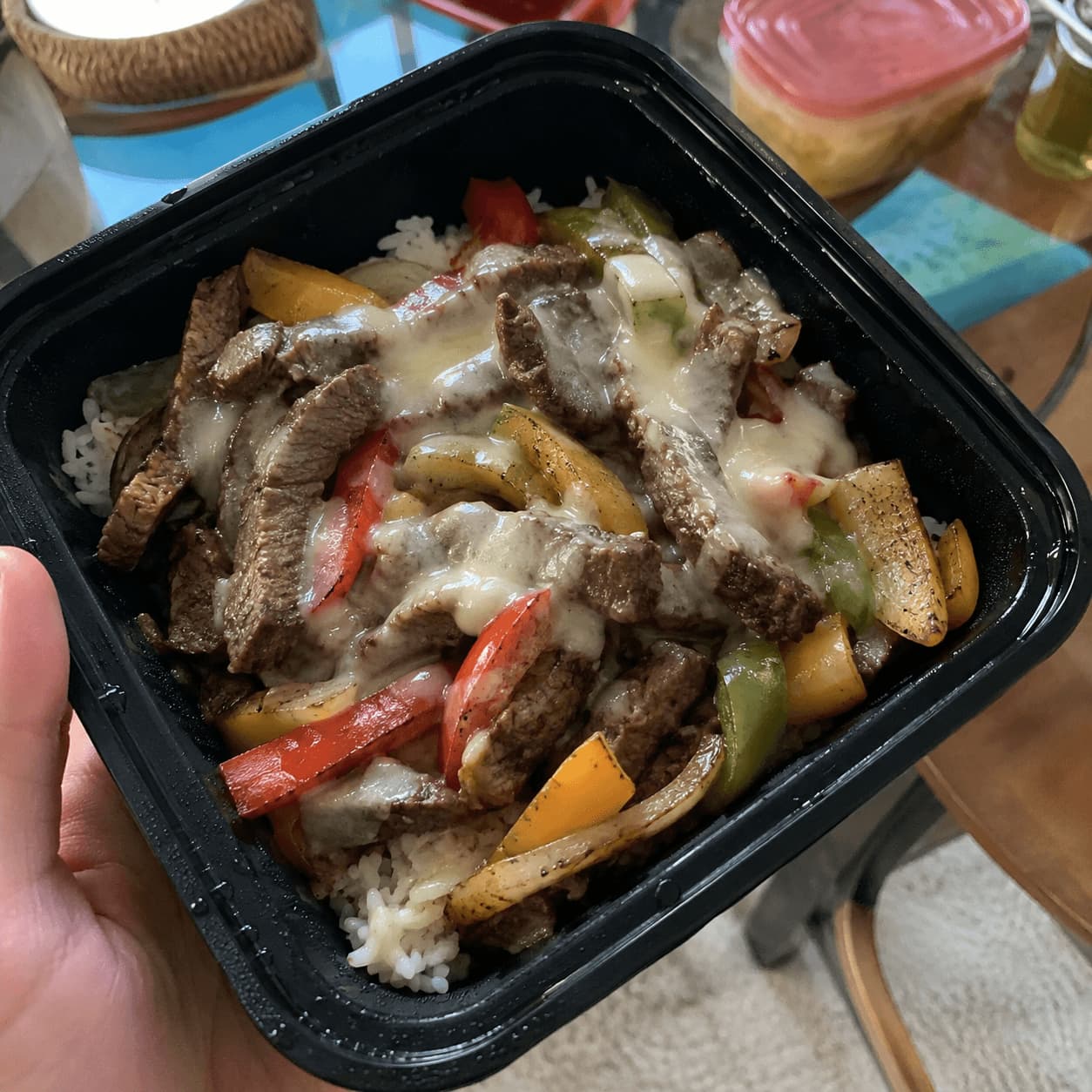
A Philly cheesesteak is built to be eaten in about ninety seconds, straight off the griddle, while the cheese is still pulling in long strings and the bread is still warm enough to slightly soften around the edges. None of that survives a container. Reheated the next day, a wrapped cheesesteak sandwich turns into a soggy roll around meat that’s gone gray and rubbery, with cheese that’s separated into an oily layer instead of staying melted through. This isn’t really about the sandwich failing at meal prep. It’s that a sandwich was never the right format to begin with.
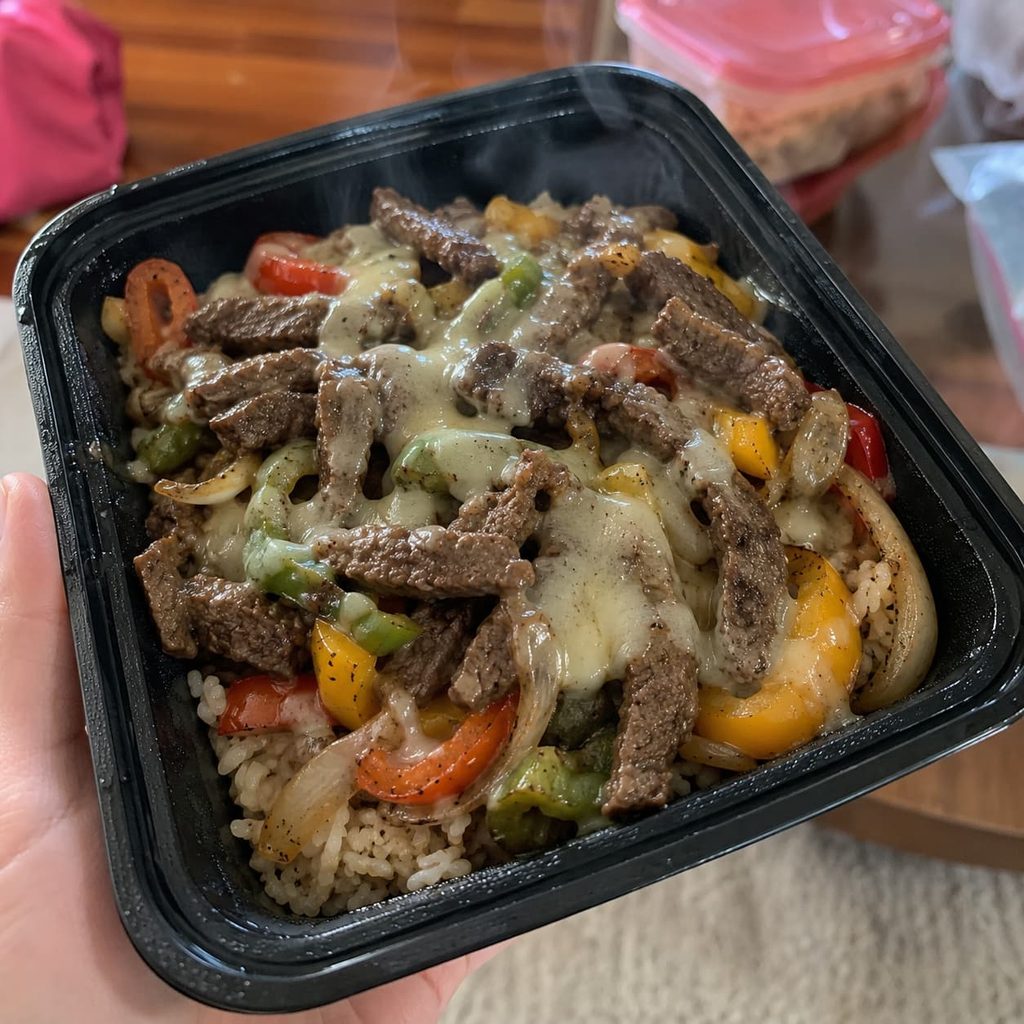
Taking the bun out of the equation changes everything. Thinly sliced steak, peppers, and onions hold up fine in a container on their own, and provolone melts back into a smooth layer with the right reheating method instead of the wrong one. Swap the roll for rice, and the whole dish becomes something that was actually built to survive four days in a fridge, not just tolerate it. This makes 4 bowls, keeps 3 to 4 days refrigerated, and comes together in about 35 minutes.
Quick Facts
| Prep Time | 15 minutes |
| Cook Time | 20 minutes |
| Total Time | 35 minutes |
| Servings | 4 bowls |
| Difficulty | Easy |
| Storage Life | 3 to 4 days refrigerated; steak and rice freeze for up to 3 months |
Why the Sandwich Version Never Makes It to Wednesday
Two separate things go wrong with a stored cheesesteak, and neither one is really about the beef. The bread is the first casualty. A hoagie roll starts absorbing the meat’s juices and the melted cheese the moment it’s wrapped, and by the time it’s reheated, the bottom half has gone from soft to structurally gone. The second problem is the cheese itself. Provolone melted once, cooled, then blasted back to temperature in a microwave tends to separate, since fast, uneven heat pushes the fat and protein in the cheese apart instead of letting it re-melt smoothly. A bowl format sidesteps both issues at once: there’s no bread to turn to mush, and a gentler reheat, applied directly to the cheese at the end, brings it back to a smooth melt instead of a greasy mess.
Ingredients
For the steak:
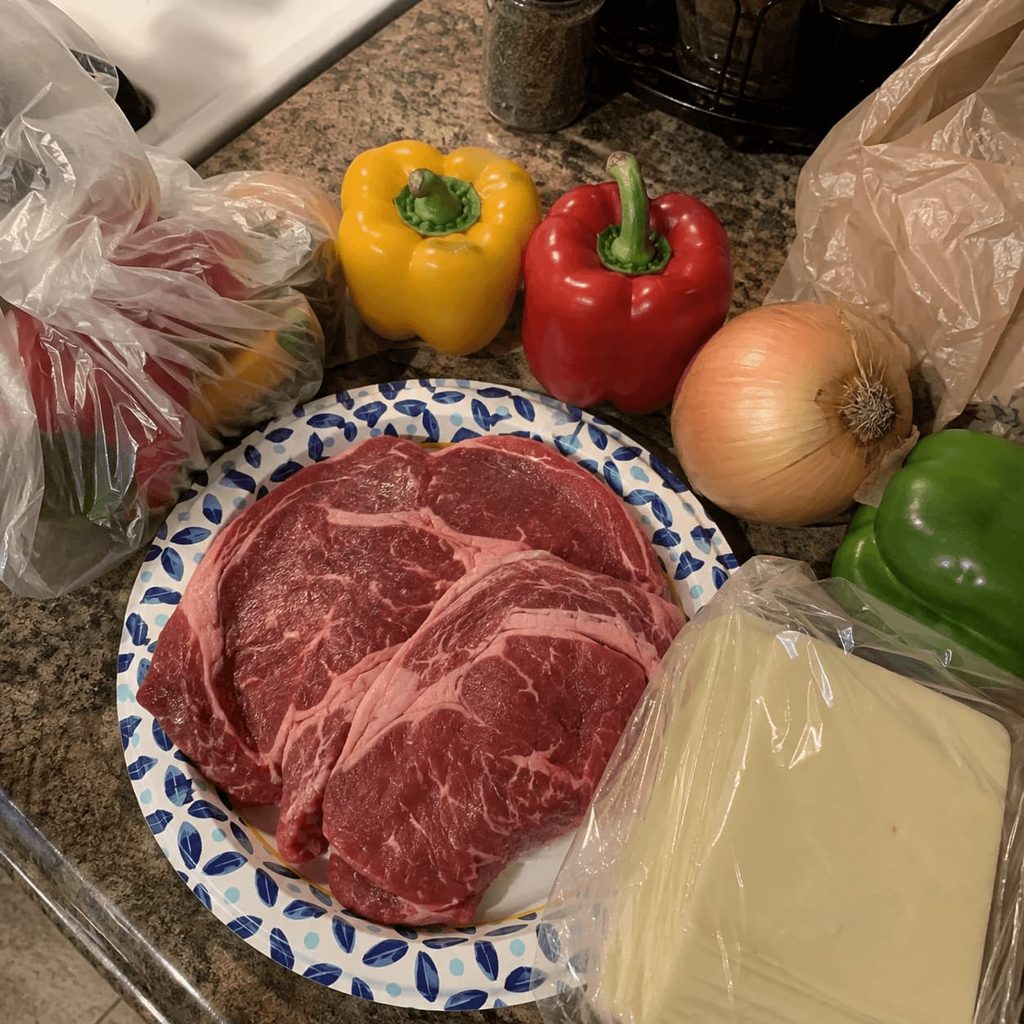
- 1½ lbs ribeye or sirloin, sliced very thin against the grain (freezing the meat for 20 to 30 minutes first makes this much easier to do evenly)
- 1 tbsp neutral oil
- 1 tsp kosher salt
- ½ tsp black pepper
- 1 tsp Worcestershire sauce
For the peppers and onions:
- 1 large yellow onion, sliced into thin half moons
- 2 bell peppers, any color, sliced into thin strips
- 1 tbsp neutral oil
- ¼ tsp kosher salt
For the cheese:
- 8 slices provolone, torn into large pieces (block provolone, sliced yourself, melts more predictably than pre sliced deli cheese, which sometimes includes anti caking additives that affect how smoothly it re melts)
For the bowls:
- 1½ cups long grain white rice, rinsed until the water runs mostly clear
- 2¼ cups water
- ½ tsp kosher salt
What You’ll Cook This In
- A 12 inch skillet, for the steak and the peppers and onions
- A 2 quart saucepan with a lid, for the rice
- An instant read thermometer, for confirming the steak’s doneness
- Four 3 to 4 cup meal prep containers
Slicing the Steak Thin Enough
Partially freeze the steak for 20 to 30 minutes before slicing, until it’s firm but not frozen solid. A soft, room temperature piece of meat is hard to slice thin and even by hand, and thick, uneven pieces cook unevenly in the short window a quick sear allows. Slice against the grain, meaning perpendicular to the visible muscle fibers running through the meat, since slicing with the grain produces chewier pieces regardless of how thin they’re cut.
From Raw Steak to Sealed Containers
Start the rice — 2 minutes to get it going. Bring the rinsed rice and water to a boil in the saucepan, then cover and drop to low. It needs about 15 minutes, timed to finish close to everything else.
Cook the peppers and onions — 10 minutes. Heat the oil in the skillet over medium high. Add the onion and peppers with the salt, and cook, stirring occasionally, until softened and lightly browned at the edges, about 10 minutes. Transfer to a plate.
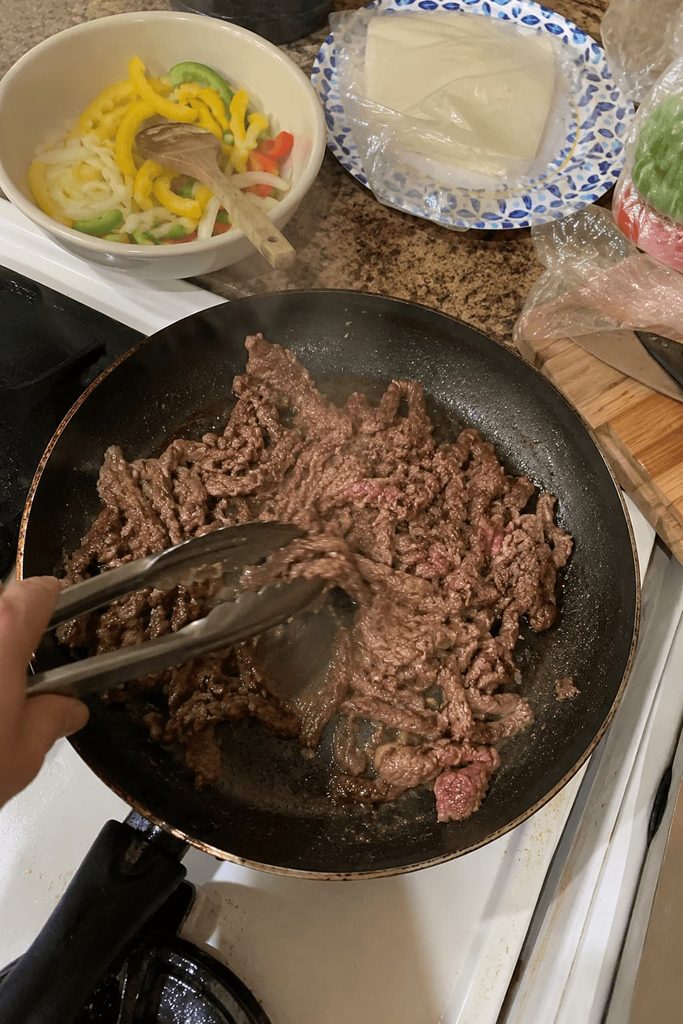
Sear the steak — 4 minutes. Wipe the skillet if needed and heat the oil over high until it’s shimmering. Add the sliced steak in a single layer, working in two batches if the pan is crowded, and sear 60 to 90 seconds per side, until deeply browned and the internal temperature reads 130°F for medium rare, or continue to 145°F if a more well done result is preferred. Thin slices cook fast, so watch closely rather than stepping away.
Combine and season — 2 minutes. Return the peppers and onions to the skillet with the steak. Add the Worcestershire sauce and toss to combine, then remove from heat.
Rest the rice, off heat — 5 minutes. Fluff with a fork once it’s absorbed the water and rested, covered.
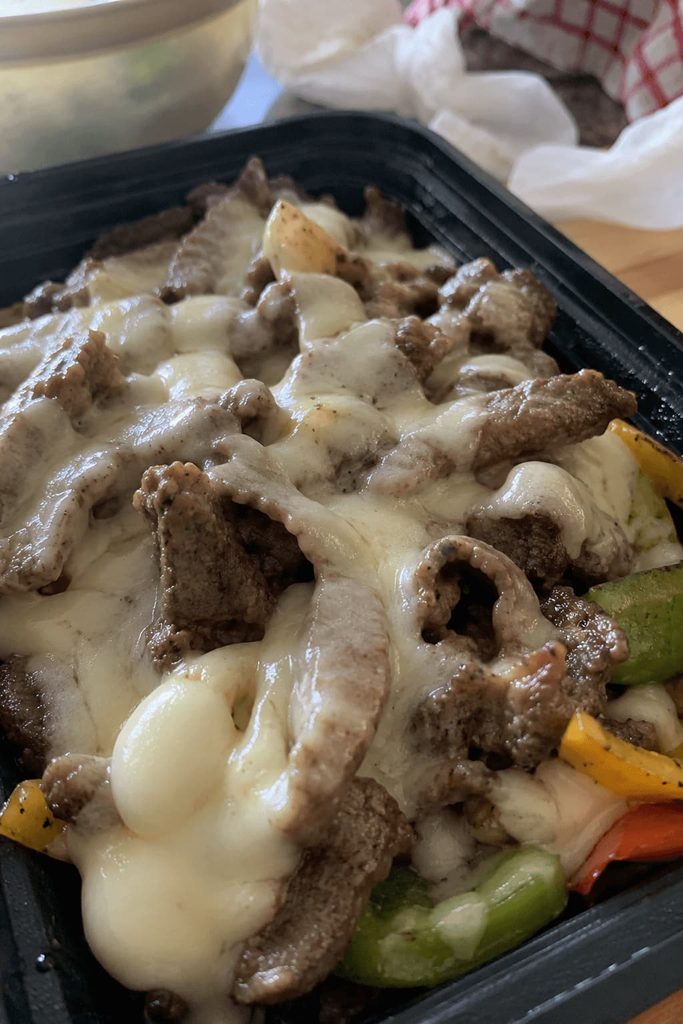
Assemble — 6 minutes. Divide the rice among four containers, top with the steak and pepper mixture, then lay two torn pieces of provolone directly over the warm steak in each container. The residual heat will soften the cheese slightly without fully melting it, which is intentional, since a fully melted layer sealed into a container turns into a solid, hard to reheat mass by day two.
Storing and Reheating Without Losing the Cheese
Cool completely to room temperature before sealing, no more than 2 hours after cooking, per USDA guidance. These bowls keep 3 to 4 days in the refrigerator. For longer storage, freeze the steak and rice together for up to 3 months, adding fresh cheese and peppers when reheating a frozen portion rather than freezing them already assembled.
Reheat from the fridge, in the microwave. Cover and heat at 70% power for 90 seconds, then uncover, lay the cheese slices directly on top if they’ve slid off, and microwave uncovered for a final 20 to 30 seconds just to finish melting the cheese without overcooking the steak underneath.
Reheat from the fridge, on the stove. A skillet over medium low with the steak and rice, covered, for 4 to 5 minutes, then push everything to one side, add the cheese on top of the exposed steak, and cover for another minute just until melted.
Reheat from frozen. Thaw the steak and rice overnight in the fridge and reheat the same way, adding fresh peppers and cheese at that point.
Where This Goes Sideways Between Monday and Friday
The cheese turns into an oily, separated layer. Almost always a full power microwave blast applied for too long in one go. Fix: use the two stage reheat above, gentle power first, then a short, direct final blast just on the cheese.
The steak is tough by the third reheat. Usually means it was sliced with the grain instead of against it, or cooked past medium in the initial sear and then reheated on top of that. Fix: slice against the grain and pull the steak at 130°F for medium rare, letting a slightly gentler reheat finish the rest.
The peppers and onions taste steamed instead of caramelized. The pan was crowded, or the heat dropped too low during the initial cook. Fix: give them the full surface area of the skillet and resist stirring too frequently, which lets the edges actually brown.
Rice underneath tastes greasy. Fat rendered from the steak pooled directly onto the rice during assembly. Fix: let the steak and pepper mixture sit a minute off heat before portioning, and tilt the pan to drain excess fat if there’s a visible pool.
The bowls smell strongly of onion by day three. This is largely unavoidable with raw or lightly cooked onion stored for several days, though a tight seal on the container minimizes how much it carries over to other food in the fridge.
Changing the Bowl
Spicier: Add ¼ teaspoon red pepper flakes to the steak while searing, or top with pickled banana peppers added fresh at serving.
Different cheese: Swap the provolone for the same amount of white American cheese, which melts even more smoothly on reheat, though it moves the flavor away from a classic cheesesteak toward something milder.
Lower carb: Swap the rice for 4 cups riced cauliflower, sautéed 5 to 6 minutes in a dry skillet instead of simmered.
Extra vegetables: Add a cup of sliced mushrooms to the pepper and onion step, cooked the same way — they hold their texture well through a few days of reheating.
Philly Cheesesteak Bowl Questions, Answered
Why does this recipe call for freezing the steak briefly before slicing?
Partially frozen meat holds its shape under a knife far better than room temperature meat, which makes it possible to get consistently thin, even slices by hand without a meat slicer.
Can I use a different cut of beef?
Yes, flank steak or skirt steak both work, sliced thin against the grain the same way. Either is naturally chewier than ribeye, so slicing thin matters even more with those cuts.
Is it safe to reheat rice that’s been sitting with steak and cheese for a few days?
Yes, as long as everything was cooled within 2 hours of cooking and gets reheated until steaming hot throughout, following USDA guidance for cooked beef and grains.
Why does my reheated cheese turn rubbery instead of melting smoothly?
Overheating is the usual cause. Provolone re melts best with gentle, shorter bursts of heat rather than one long blast, which is why the two stage microwave method works better than a single continuous run.
How long does this actually last in the fridge?
Three to four days, refrigerated at or below 40°F, as long as it was cooled and sealed within 2 hours of cooking.
Can I freeze this?
The steak and rice freeze well for up to 3 months. Add fresh cheese and peppers at reheating instead of freezing them already assembled, since both lose texture significantly on thaw.
Can I double this recipe for a bigger household?
Yes — sear the steak in three or four batches rather than crowding the pan, since overcrowded thin slices steam instead of browning, and use a wider skillet or two pans for the peppers and onions.
The Sandwich Was Never Going to Survive the Week
Taking a cheesesteak out of its roll isn’t a compromise, it’s what actually lets it work as meal prep in the first place. The steak stays tender with a quick sear and a gentle reheat, the peppers and onions hold their texture, and the cheese comes back to a real melt instead of a greasy separated mess, as long as it goes on last and gets reheated in two stages rather than one. What’s left after the bread is gone is still recognizably a cheesesteak, just one that actually makes it to Thursday.
