
Teriyaki Salmon Meal Prep Bowls
They cook it past done, not just to done. Salmon is safe at 145°F internal, per USDA guidance, but the difference between 145°F and 155°F is the difference between a fillet that’s still moist after a reheat and one that was already dry before it hit the container. Pulling it a few degrees early and letting carryover heat finish the job is what protects it two days later, not just tonight.
They reheat it the way they’d reheat chicken. Full-power microwave bursts push already-cooked fish protein to keep tightening until it turns tough and stringy — fish has a narrower window than red meat or poultry does, and it punishes overheating faster. A gentler reheat, with a little added moisture and a cover trapping steam, is the actual fix, not avoiding meal prep altogether.
They brush the glaze on too early. Teriyaki’s sugar content means it goes from glossy to burnt in under a minute over real heat. Salmon needs most of its cook time to happen before the glaze ever touches the pan — added at the very end, it sets into a clingy coating instead of a scorched crust.
Ingredients
For the salmon:
- 4 salmon fillets, 5–6 oz each, skin-on or skinless (skin-on holds together better through a reheat, though either works)
- ½ tsp kosher salt
- ¼ tsp black pepper
- 1 tbsp neutral oil (avocado or vegetable), for searing
For the teriyaki glaze:
- ⅓ cup low-sodium soy sauce
- 3 tbsp brown sugar, packed
- 2 tbsp rice vinegar
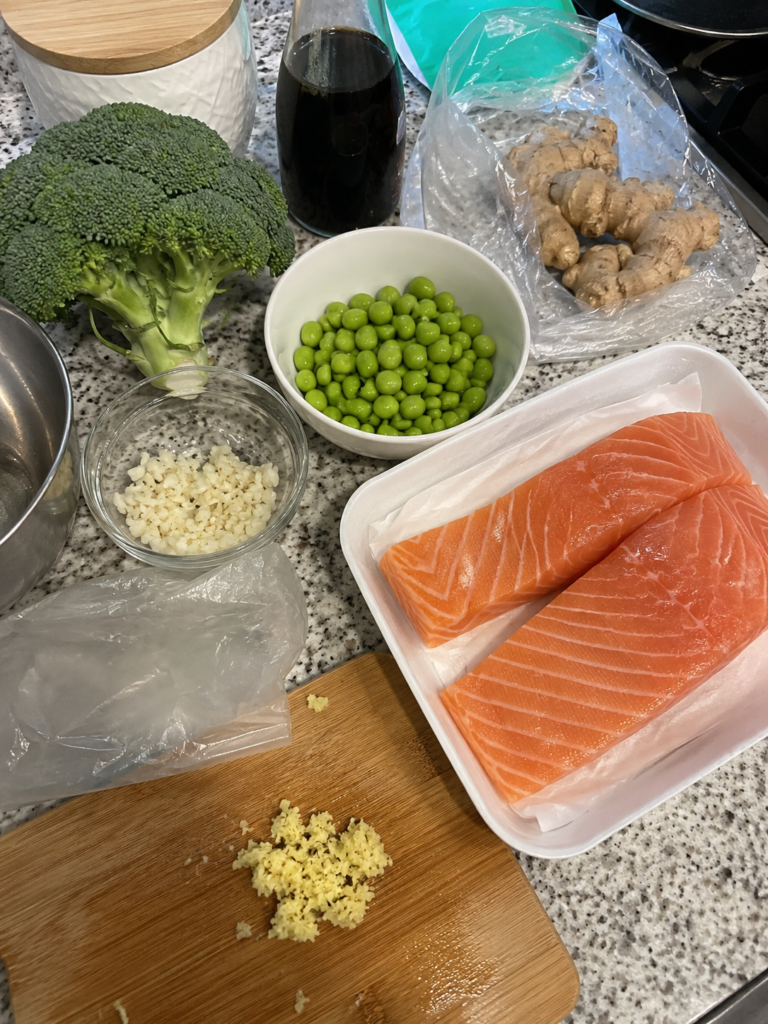
- 2 garlic cloves, minced
- 1 tsp fresh grated ginger
- 1 tsp cornstarch, dissolved in 1 tablespoon cold water before use
For the bowls:
- 1½ cups long-grain white rice, rinsed until the water runs mostly clear
- 2¼ cups water
- 2 cups broccoli florets
- 1 tbsp neutral oil, for the broccoli
- 1 cup shelled edamame, thawed if frozen
- 1 cup shredded carrots
- Sesame seeds, for topping
- 1 avocado, sliced, and ½ cup sliced cucumber — both added fresh the day each bowl is eaten, never prepped ahead
What You’ll Cook This In
- A 12-inch nonstick or well-seasoned skillet, for searing the salmon
- A small saucepan, for the glaze
- A 2-quart saucepan with a lid, for the rice
- A rimmed baking sheet, for the broccoli
- An instant-read thermometer — the single most useful tool here, since salmon’s safe window is narrow enough that color and texture alone aren’t reliable
- Four 3- to 4-cup meal prep containers, ideally with a small separate compartment or lid for the avocado and cucumber
Build the Glaze Before the Pan Gets Hot
Whisk the soy sauce, brown sugar, rice vinegar, garlic, and ginger together in the small saucepan, but don’t put it over heat yet — do this while the oven and skillet are still coming up to temperature. Dissolve the cornstarch in its tablespoon of cold water separately and keep it nearby; it goes in only in the last minute of simmering the glaze, not before.
Pat the salmon fillets completely dry with a paper towel before they touch the pan. A wet surface steams instead of searing, and a steamed fillet never develops the light crust that helps it hold together through a reheat later in the week.
From Raw Fillets to Sealed Containers
Start the rice and the oven — 2 minutes to get both going. Preheat the oven to 425°F. Bring the rinsed rice and water to a boil in the saucepan, then cover and drop to low; it needs about 15 minutes.
Roast the broccoli — 15 minutes, hands-off. Toss the broccoli with the oil on the baking sheet and roast while everything else comes together.
Simmer the glaze — 4 minutes, separately from the fish. Bring the soy sauce mixture to a gentle simmer in the small saucepan. Stir the cornstarch slurry once more, then add it in, stirring until the glaze turns glossy and coats the back of a spoon, about 60 seconds. Pull it off the heat and set it aside — it thickens further as it cools, which is normal.
Sear the salmon — 8 minutes total, no glaze yet. Season the fillets with salt and pepper. Heat the oil in the skillet over medium-high until shimmering. Place the salmon skin-side down if using skin-on fillets, and sear undisturbed for 4 minutes until the skin releases easily from the pan. Flip and cook the second side 3 to 4 minutes more, depending on thickness.
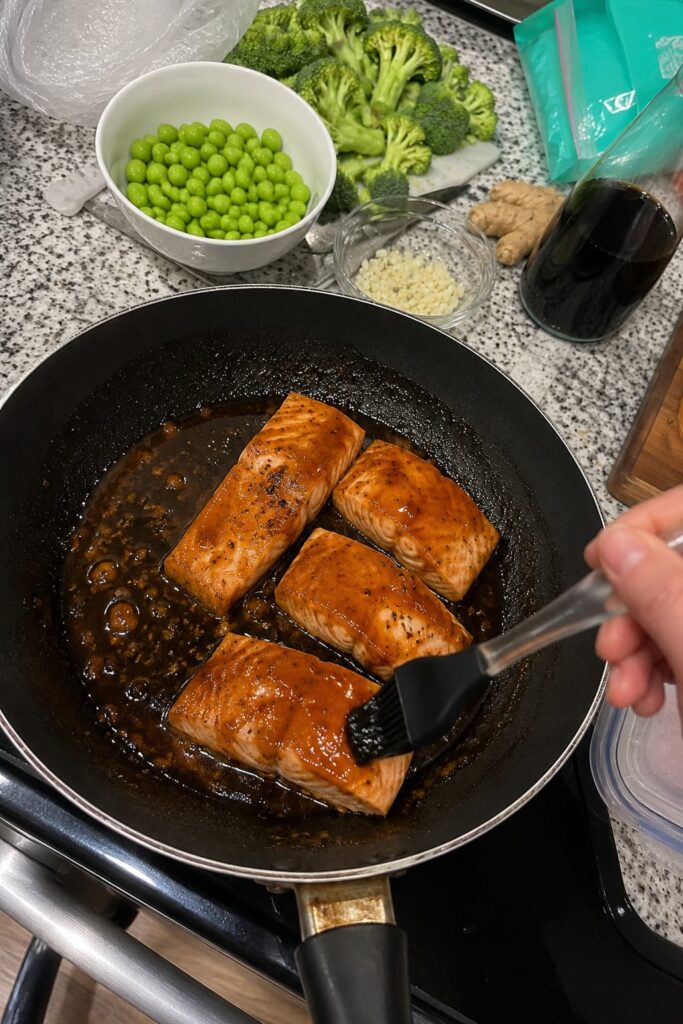
Glaze and finish — 60 to 90 seconds, off the heat’s worst intensity. Reduce the heat to low. Spoon the glaze over the fillets and let it warm through and cling to the surface, basting once or twice — this is the moment the sugar can scorch, so keep the heat low and don’t walk away. Pull the salmon the instant an instant-read thermometer hits 140°F at the thickest point; it will carry over to a safe 145°F while it rests for a minute off the heat.
Rest the rice, off heat — 5 minutes. Once the rice has absorbed the water, turn off the heat and let it sit covered before fluffing.
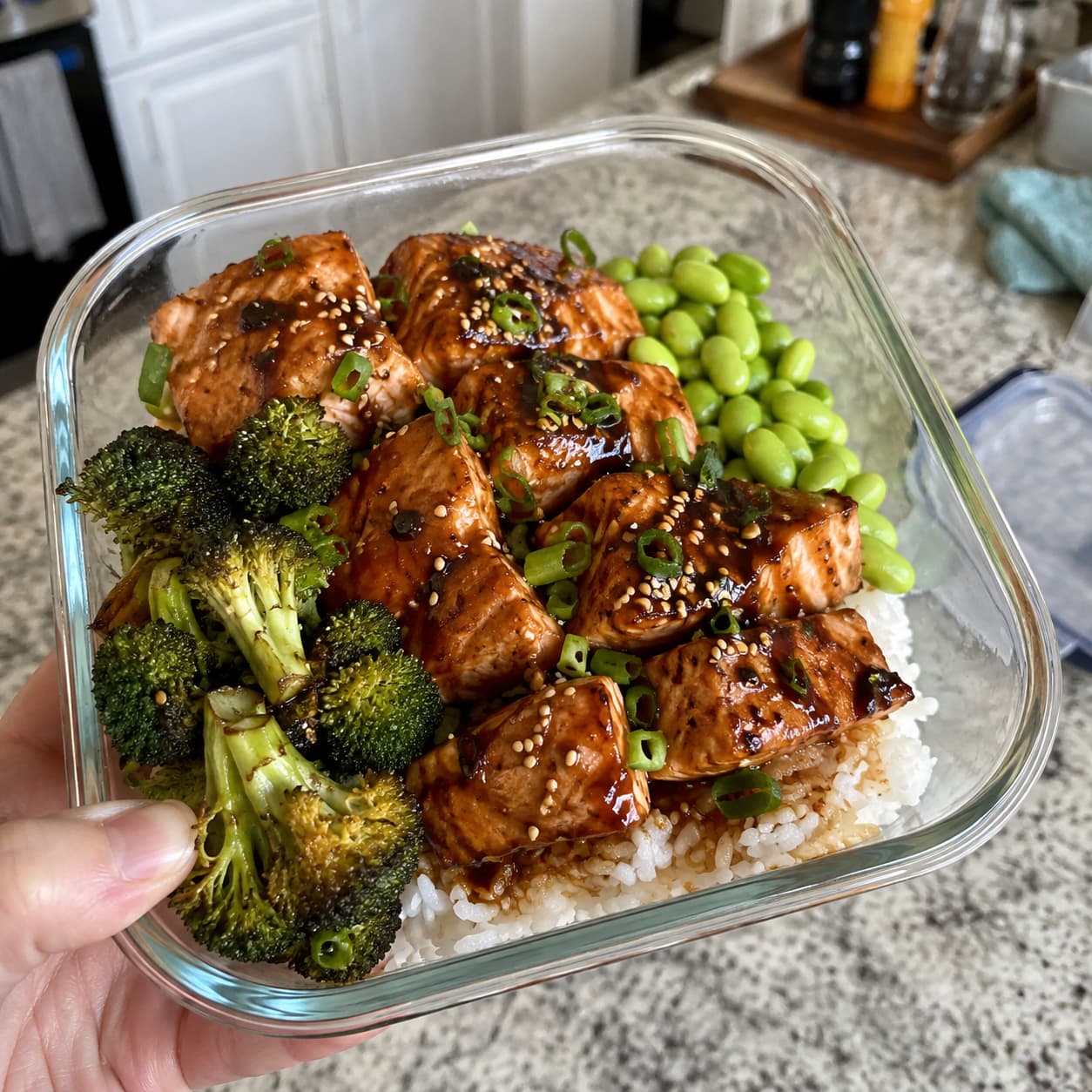
Assemble — 5 minutes. Divide the rice among the four containers, top with broccoli, edamame, and carrots, then set a glazed salmon fillet on top of each. Sprinkle with sesame seeds. Leave a labeled space or a small separate container for the avocado and cucumber — both go in fresh the day of eating, never packed in from the start.
Reheating Without Recreating the Myth
Cool everything to room temperature before sealing, no more than 2 hours after cooking, per USDA guidance — sealing warm fish traps steam that speeds up both texture loss and the smell that gives meal-prepped fish its bad reputation in the first place.
These bowls keep 3 to 4 days in the refrigerator. For longer storage, freeze the salmon and rice together for up to 2 months — skip freezing the broccoli, edamame, avocado, and cucumber, since all four lose their texture badly on thaw, and add fresh versions instead when the frozen portion gets reheated.
Reheat from the fridge, in the microwave. Cover loosely and heat at 50% power in 45-second bursts, checking between each. This is the step that actually prevents the rubbery texture and the strong smell — full power is what pushes already-cooked fish protein past its breaking point and releases more odor in the process.
Reheat from the fridge, on the stove. A skillet over low heat with a teaspoon of water, covered, for 3 to 4 minutes, warms it through gently without the fillet ever hitting hard, direct heat a second time.
Reheat from frozen. Thaw overnight in the fridge and reheat the same way. Salmon reheated straight from frozen tends to overcook at the edges before the center catches up, so thawing first gives a more even result.
Add the avocado and cucumber only after reheating, straight from the fridge, cold and fresh against the warm bowl.
Where the Myth Comes Back If a Step Gets Skipped
The salmon is dry by day two. Almost always means it was cooked past 145°F, or the microwave ran at full power on reheat. Fix: pull it at 140°F next time and reheat at 50% power — both matter, and skipping either one lets the dryness back in.
The glaze tastes burnt instead of glossy. It went on too early, while the pan was still at searing heat. Fix: keep the glaze completely separate until the salmon is nearly done, then finish over reduced heat for under two minutes.
The bowl smells strong even reheated gently. Usually the container wasn’t sealed well, or the fish sat in the fridge closer to day four than day two. Fix: use a container with a tight seal, and reheat closer to the front of the storage window rather than the back.
The avocado turns brown and mushy. It was packed in on Sunday instead of added fresh. Fix: slice it fresh each morning — a whole avocado kept separately holds far better than pre-sliced portions ever will.
The rice under the salmon turns soggy. The fish went onto the rice before it had cooled at all. Fix: let the salmon sit a minute after glazing before it goes into the container, and keep the layer of rice from being directly under the glaze pool if possible.
Four Ways to Change the Bowls
Different protein: Swap the salmon for the same weight of firm white fish like cod or halibut — cut the sear time by about a minute per side, since thinner white fish cooks through faster than salmon.
Spicier: Add ½ teaspoon red pepper flakes to the glaze, or finish the bowls with a drizzle of sriracha mayo added fresh at serving.
Lower-carb: Swap the rice for 4 cups riced cauliflower, sautéed 5 to 6 minutes in a dry skillet instead of simmered.
Extra vegetables: Add a cup of steamed snap peas or shredded red cabbage alongside the broccoli — both hold their texture through several days of reheating.
Teriyaki Salmon Bowl Questions, Answered
Is meal-prepped salmon actually safe to eat after a few days?
Yes, the same as any cooked seafood — 3 to 4 days refrigerated at or below 40°F, per USDA guidance, as long as it was cooled within 2 hours of cooking.
Why does reheated salmon smell stronger than it did fresh?
Overheating is almost always the cause. Fish proteins release more volatile compounds when pushed past their safe temperature a second time, which is exactly why gentle, low-power reheating matters more here than with most other proteins.
Can I use frozen salmon instead of fresh?
Yes — thaw it fully in the fridge overnight first. Searing salmon that’s still partly frozen cooks unevenly, browning the outside before the center comes anywhere near done.
What’s the best way to tell if salmon is done without a thermometer?
It’s harder to judge by eye than most proteins. The flesh should flake easily with a fork and look opaque rather than translucent at the center — but a thermometer pulled at 140°F, with a short rest to 145°F, is far more reliable.
Can this be made without the glaze burning even for a beginner cook?
Yes — the key is sequencing, not skill. Sear the fish completely first, pull the pan heat down, and only then add the glaze for its final minute. Rushing that order is what causes a burnt glaze, not lack of experience.
How long does this last in the freezer?
Up to 2 months for the salmon and rice together. The texture holds up reasonably well; quality just starts to decline gradually after that window, though it stays safe indefinitely at a steady 0°F.
Can I make this with a whole side of salmon instead of individual fillets?
Yes — sear it skin-side down in a large enough pan, or finish it in the oven at 425°F for about 12 minutes after an initial sear, then portion it into four servings after it rests and before it goes into containers.
The Fish Was Never the Problem
Meal-prepped salmon has a bad reputation it mostly earned from two habits: cooking it a little too far and reheating it a little too hard. Neither one is really about the fish — they’re about timing, and both are easy to fix once they’re named. Pull it at 140°F, glaze it in the last minute instead of the first, and reheat it low and slow instead of blasting it, and salmon holds up in a container just as well as anything else in this rotation. The smell everyone warns about mostly comes from doing it wrong, not from doing it at all.
