Sheet Pan Chicken Fajita Meal Prep, Done Right
Most sheet pan fajita recipes fail for one reason: too much food on one pan. Peppers and onions release a surprising amount of liquid as they roast, and if that moisture has nowhere to go, the vegetables steam instead of char and the chicken sits in a puddle instead of browning. The fix isn’t a different seasoning blend or a fancier cut of chicken — it’s giving everything room to breathe, which for this quantity usually means two pans instead of one.
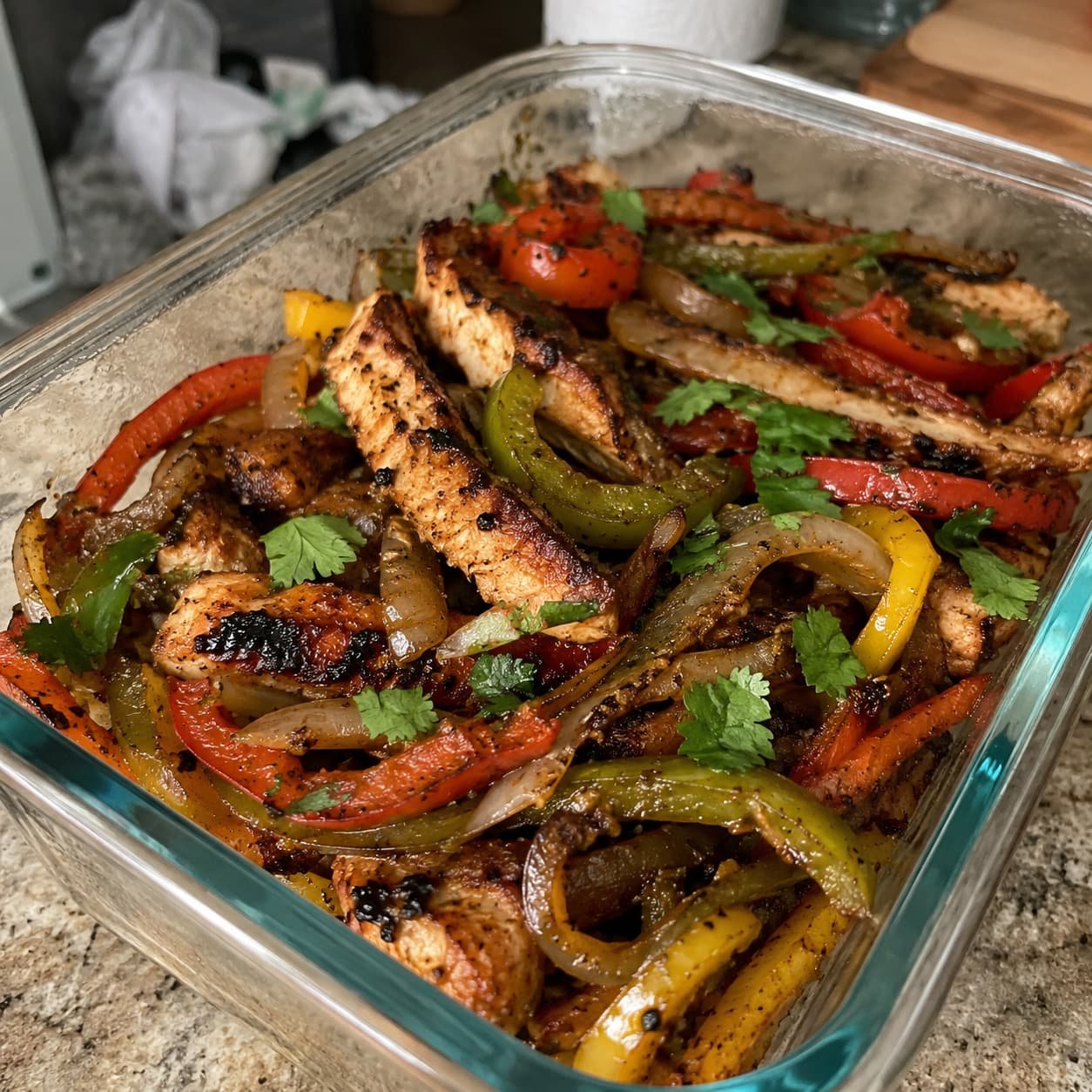
This version splits the load so the ratio of chicken to vegetables stays generous enough for real meal prep — four days of lunches, not a single dinner — while still getting genuine color on the pepper edges and chicken that reheats without turning rubbery. The seasoning blend below makes enough for both trays, with a little extra logic built in for swapping proteins later in the week if you want variety.
Prep Time: 20 minutes
Cook Time: 25 minutes (20 minutes roasting, 5 minutes resting)
Total Time: 45 minutes
Servings: 4
Difficulty: Easy
Storage Life: Up to 4 days refrigerated, up to 3 months frozen
Why This Works
Two things decide whether sheet pan fajitas taste roasted or boiled: surface area and moisture. A half sheet pan (18 by 13 inches) holds about 1½ pounds of chicken or 4 cups of sliced vegetables in a true single layer, with space between pieces. Pack more than that onto one pan and the pieces in the center steam in the liquid the vegetables release instead of browning. Splitting the same amount of food across two pans solves this without changing a single ingredient.
Patting the chicken dry before it goes into the bowl matters more than the seasoning ratio does. Wet chicken can’t brown — the surface needs to reach somewhere around 300°F before the browning reaction that gives fajita chicken its char even starts, and any surface moisture spends that oven energy evaporating first instead. Slicing the chicken to a consistent ½-inch thickness means every piece crosses 165°F internal at close to the same moment, instead of thin ends drying out while thick ends stay underdone.
Ingredients
Chicken and vegetables:
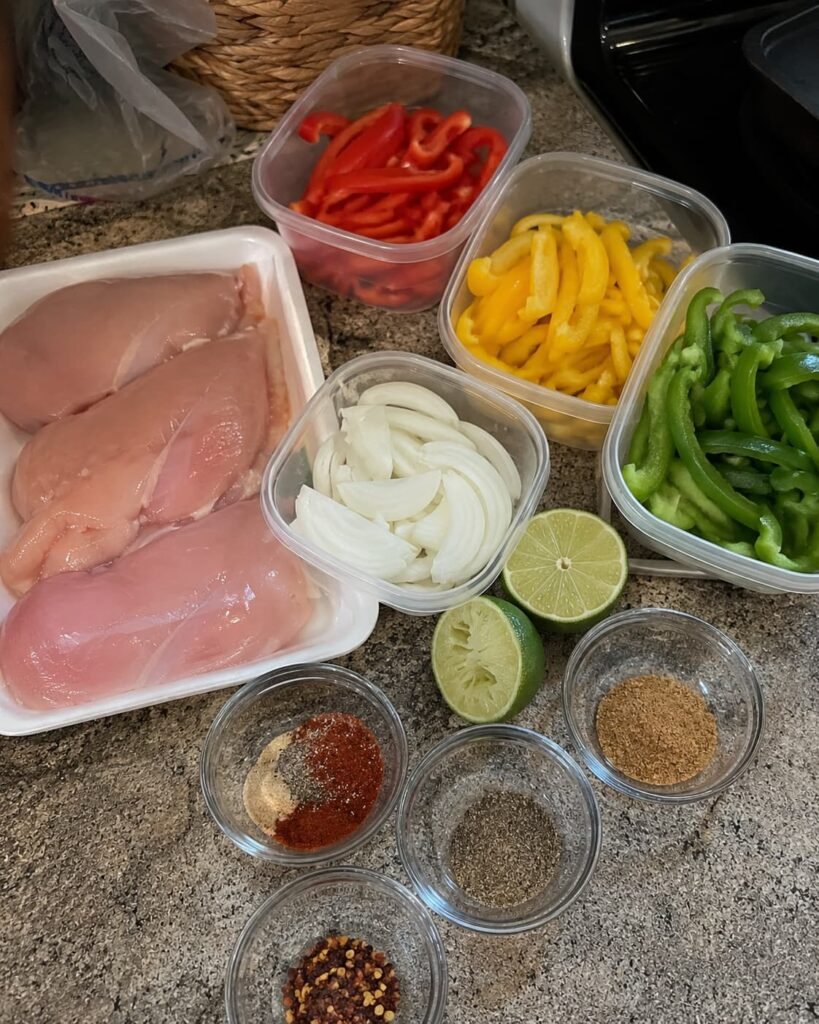
- 1½ lbs boneless, skinless chicken breast, sliced into ½-inch-thick strips
- 3 medium bell peppers (1 red, 1 yellow, 1 green), stemmed, seeded, sliced into ¼-inch strips
- 1 large yellow onion, sliced into ¼-inch half-moons
- 3 tbsp avocado oil or olive oil, divided
- 1 tsp kosher salt, divided
- ½ tsp black pepper, divided
- 1 medium lime, juiced (about 2 tbsp)
- ¼ cup chopped fresh cilantro, for serving (optional)
- 8 small (6-inch) flour or corn tortillas, warmed
Fajita seasoning blend (makes 3 tbsp, divided):
- 4 tsp chili powder
- 2 tsp ground cumin
- 1 tsp smoked paprika
- 1 tsp garlic powder
- 1 tsp onion powder
Chicken breast versus thighs: breast gives a leaner result and reheats fine for this method. Swap in 1½ lbs boneless thighs if you prefer, cut to the same ½-inch thickness, and pull them 2 minutes earlier — thighs hit 165°F faster because their higher fat content moves heat through the meat more efficiently.
Mixed pepper colors aren’t just for looks. Green peppers are less ripe than red or yellow and hold more structure, so they stay slightly firmer at the same roast time — useful if you want some textural variation across the week’s lunches rather than everything the same softness.
Avocado oil has a smoke point around 520°F, well above the 425°F this recipe roasts at, and leaves a cleaner flavor than olive oil, which starts to smoke closer to 375–405°F. Either works here since the pan itself never exceeds the oven’s set temperature.
Equipment
- 2 half sheet pans (18 x 13 inches) — one pan crowds this quantity of food
- Parchment paper, for lining
- Large mixing bowl
- Instant-read thermometer
Before You Start
Pat the chicken strips dry with paper towels before seasoning — this is the step most people skip, and it’s the one that decides whether the chicken browns or steams. Slice everything, chicken and vegetables, before you start heating oil or mixing seasoning, so you can move straight from bowl to hot oven. The vegetables are ready to pull when the pepper edges show black-brown spots and the onion pieces have gone translucent and slightly curled — color is the real cue here, not just the clock, since oven hot spots vary from one machine to the next.
Step-by-Step Method
- Preheat the oven to 425°F and line two half sheet pans with parchment paper.
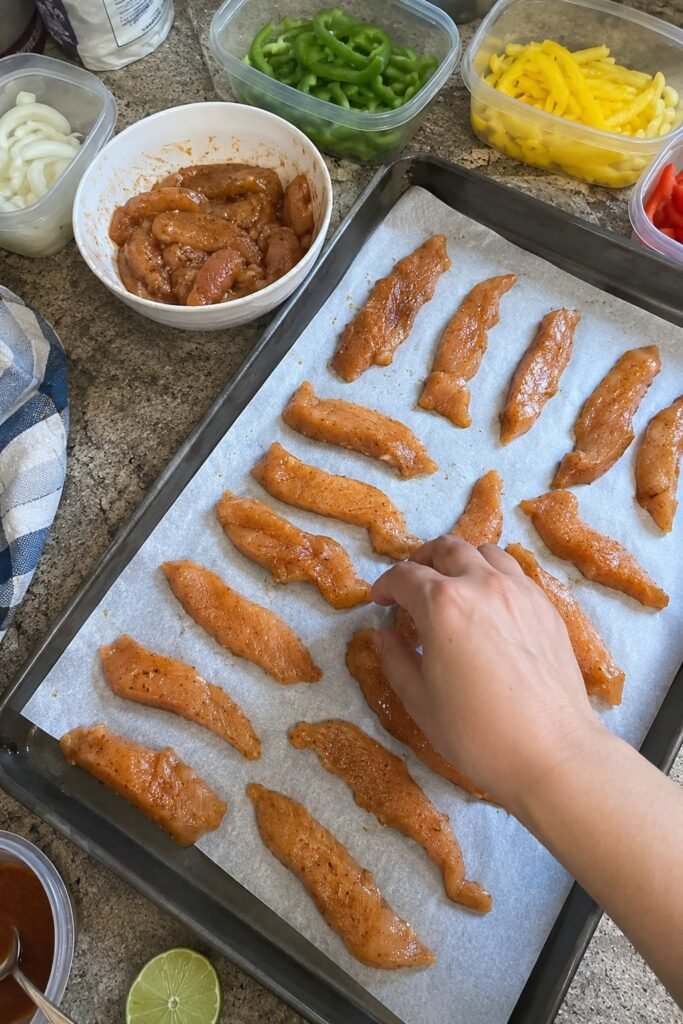
- Slice the chicken. Pat the chicken breast dry, then slice into strips ½ inch thick and about 3 inches long. Thinner strips dry out before the vegetables finish; thicker strips won’t reach 165°F in the time allotted.
- Slice the vegetables. Cut the bell peppers into ¼-inch strips and the onion into ¼-inch half-moons, keeping the pieces close in size so they roast at the same rate.
- Season the chicken. In a large bowl, toss the chicken with 2 tbsp oil, ½ tsp salt, ¼ tsp black pepper, and 2 tbsp of the fajita seasoning blend until every piece is coated.
- Season the vegetables. Using a second bowl (or the same one, wiped out), toss the peppers and onion with the remaining 1 tbsp oil, ½ tsp salt, ¼ tsp black pepper, and 1 tbsp seasoning blend.
- Arrange in a single layer. Spread the chicken on one pan and the vegetables on the other, leaving visible space between pieces. Pieces touching means steaming, not charring.
- First roast — 12 minutes. Roast both pans at the same time on separate racks.
- Stir and rotate. Pull both pans, stir or flip everything, and swap their rack positions so both get even heat exposure for the second half.
- Second roast — 8 minutes. Return to the oven until an instant-read thermometer reads 165°F at the thickest part of a chicken piece and the pepper edges show visible char.
- Rest — 5 minutes. Let both pans sit before combining. This lets the juices settle back into the chicken instead of running out onto the cutting board.
- Finish. Combine everything in one bowl, squeeze the lime juice over the top, and toss.
Meal Prep, Storage and Reheating
Portion into 4 airtight containers, about 1½ cups of the chicken-and-vegetable mix per container. Store tortillas separately at room temperature in their original packaging — refrigerating them makes them go stale faster, not slower.
Refrigerated, the fajita mix holds for up to 4 days, in line with USDA guidance for cooked poultry dishes. To freeze, portion into freezer-safe containers and lay flat; it keeps for up to 3 months. Expect the peppers to soften more after freezing and thawing — the texture leans tender rather than crisp-tender, which still works in a wrap or bowl but is worth knowing ahead of time.
Two reheating methods:
- Skillet: Add a portion to a nonstick skillet over medium heat with 1 tsp oil or a splash of water, stirring occasionally for 3 to 4 minutes, until steaming hot throughout.
- Microwave: Cover the portion and microwave on high for 90 seconds, stir, then add 30 more seconds if the center is still cool.
Don’t prep the tortillas, cilantro, or any cold toppings ahead of time. Warm tortillas fresh each day — 30 seconds wrapped in a damp paper towel in the microwave, or 20 seconds per side in a dry skillet — and add cold toppings right before eating so they don’t turn the whole thing soggy.
Variations
- Steak fajitas: Swap the chicken for 1½ lbs flank steak, sliced against the grain into ¼-inch strips. Cut the second roast to 5 minutes instead of 8, aiming for 130–135°F internal before the rest — steak overcooks past medium quickly at this thickness.
- Shrimp fajitas: Swap the chicken for 1½ lbs peeled, deveined shrimp. Skip the first 12-minute roast for the shrimp entirely and add it to the oven only during the second 8-minute round — shrimp cooks through in that window and turns rubbery past it.
- Low-carb bowls: Skip the tortillas and serve over cauliflower rice. Dropping the two tortillas per serving cuts roughly 30g of carbs from the meal.
- Extra heat: Add 1 diced jalapeño, seeds in, to the vegetable tray before roasting, and bump the black pepper to ¾ tsp total.
FAQ
Can I use chicken thighs instead of breast?
Yes. Use 1½ lbs boneless, skinless thighs cut to the same ½-inch thickness, and pull them at the 6-minute mark of the second roast instead of 8 — thighs reach 165°F slightly faster.
Why did my peppers come out soggy instead of charred?
Almost always overcrowding. If the pan doesn’t have visible space between pieces, the vegetables release enough moisture to steam rather than roast. Split the load across two pans, or roast in two batches on one.
Do I really need two sheet pans?
At this quantity, yes — it’s the difference between charred edges and steamed vegetables. With only one pan, roast the vegetables for about 15 minutes first, set them aside, then roast the chicken separately.
How long does this actually keep in the fridge?
Up to 4 days, based on USDA guidance for cooked poultry dishes. After that, freeze what’s left rather than pushing it further.
Can I freeze the tortillas with the fajita mix already assembled?
Freeze tortillas separately, wrapped in foil and then a freezer bag — they’ll keep 2 to 3 months. Assembled and frozen together, the tortilla turns gummy once thawed.
What’s the best way to reheat without drying out the chicken?
The skillet method, with a splash of water or oil over medium heat for 3 to 4 minutes, keeps more moisture in the chicken than the microwave does.
Is this gluten-free?
Yes, as written, if you use corn tortillas instead of flour. Check individual spice jars if you’re using pre-mixed seasoning, since cross-contact can vary by brand.
Closing
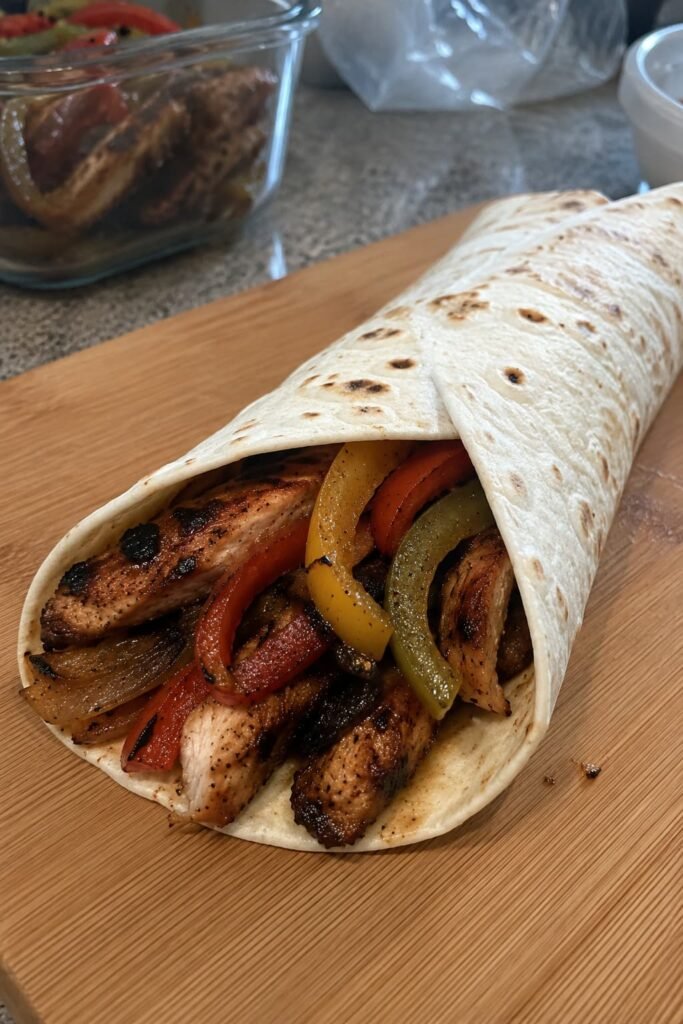
Once the chicken and vegetables are portioned into containers, the rest of the week runs on autopilot — warm a tortilla, reheat the fajita mix, add whatever cold toppings are already in the fridge. The two-pan setup takes a little more oven space than a single tray, but it’s the one change that keeps this from tasting like a Tuesday-night compromise by Wednesday. Double the batch if the household goes through fajitas fast; the seasoning blend scales evenly, and a third sheet pan costs a lot less than a dinner that gets skipped because everything in the fridge went mushy.