Garlic Butter Chicken and Rice Meal Prep Bowls
Open the container on Tuesday morning and there it is — a pale, waxy film set across the top of the rice. That’s usually the moment people decide garlic butter doesn’t survive meal prep.
It isn’t the butter’s fault. Melted butter on its own has nothing holding it together, so at 38°F it hardens exactly the way it would on a cold dinner plate. Add ¼ cup of broth and a tablespoon of lemon juice to that same pan and the sauce stays loose enough to come back together the second it hits heat. No film, no greasy pool at the bottom.
That one change, plus cooling the rice on a sheet pan instead of leaving it in the pot, is what turns this into a bowl you’ll still want on Thursday. What follows is the full method for four bowls: chicken thighs cooked to 165°F, jasmine rice left deliberately firm, and broccoli pulled from the oven two minutes early because the microwave is going to finish it for you.
Quick Facts
| Prep Time | 20 minutes |
| Cook Time | 35 minutes |
| Total Time | 1 hour 20 minutes (includes 25 minutes cooling and packing) |
| Servings | 4 bowls |
| Difficulty | Easy |
| Storage Life | 4 days refrigerated, 2 months frozen |
The Waxy Film Problem, and Three Things That Fix It
The sauce needs water in it. Butter is roughly 80% fat and 16% water. Melt it alone and the fat pools, cools, and sets solid. Whisking in ¼ cup of broth and 1 tablespoon of lemon juice drops the fat concentration enough that the sauce chills into something soft and spoonable instead of a slab. It also re-emulsifies in about 20 seconds of stirring once it’s warm.
Thighs handle a second cooking; breast doesn’t. Boneless thighs carry about twice the fat of breast meat, plus connective tissue that turns to gelatin as the meat passes 165°F. Breast has already squeezed out most of its moisture by the time it hits 165°F, and reheating drives it past that again — which is why prepped chicken breast turns stringy by day two and thighs don’t.
Everything gets cooked a little short. The rice, the broccoli, and the chicken all go through a second round of heat in the microwave. Broccoli that’s perfect out of the oven is olive-drab and limp by Wednesday. Pull it while the stems still have snap.
What Goes in the Bowl
Chicken and seasoning
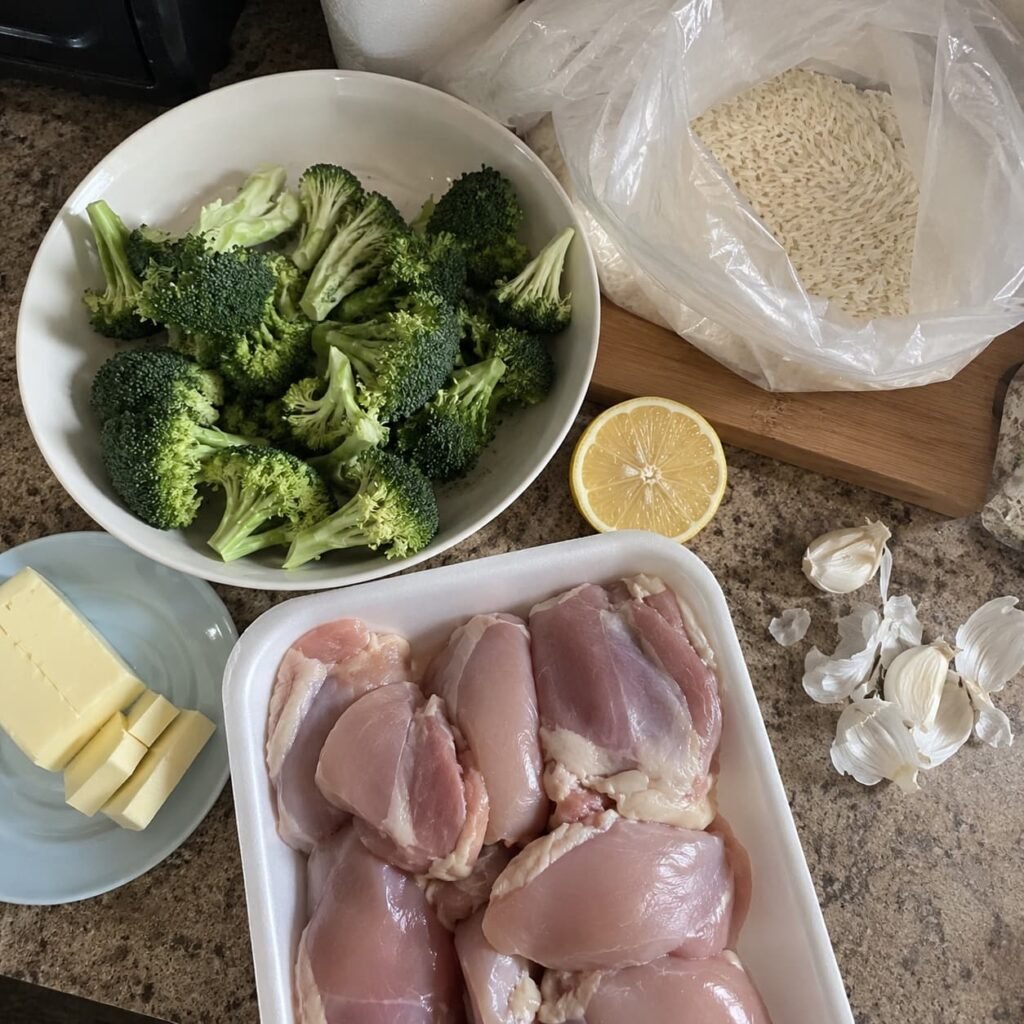
- 2 lb boneless, skinless chicken thighs (about 6 thighs), trimmed of loose fat
- 2½ tablespoons olive oil, divided — 1 tablespoon for the chicken, 1½ tablespoons for the broccoli
- 2 teaspoons kosher salt, divided — 1 teaspoon on the chicken, ½ teaspoon on the broccoli, ½ teaspoon in the rice
- ½ teaspoon black pepper
- 1 teaspoon smoked paprika
- ½ teaspoon onion powder
Rice
- 1½ cups jasmine rice, rinsed
- 2 cups low-sodium chicken broth, divided — 1¾ cups for the rice, ¼ cup for the sauce
Garlic butter sauce
- 5 tablespoons unsalted butter, divided — 4 tablespoons for the sauce, 1 tablespoon stirred into the rice
- 8 garlic cloves, minced (about 2½ tablespoons)
- 1 tablespoon fresh lemon juice (about half a lemon)
- ¼ teaspoon red pepper flakes, optional
- 3 tablespoons chopped fresh parsley
Vegetable
- 1 lb broccoli florets, cut into 1½-inch pieces
A few of these choices matter more than others. Use unsalted butter — you’re already salting in three places, and salted butter runs about 90 mg of sodium per tablespoon, which pushes the sauce over. Use low-sodium broth for the same reason; regular broth plus the seasoning on the chicken lands somewhere near a bouillon cube.
Substitutions that actually work:
- Chicken breast instead of thighs: use 1¾ lb, sliced horizontally into ¾-inch cutlets. Cook 4 minutes on the first side, 3 on the second, and pull at 165°F — roughly 3 minutes less per batch than thighs.
- Brown rice: use 1½ cups with 3 cups broth, simmer 45 minutes, rest 10. Start it 30 minutes before anything else goes on the stove.
- Frozen broccoli: roast straight from frozen at 450°F for 22 minutes. Don’t thaw it — thawed frozen broccoli releases water and steams instead of browning.
- Ghee instead of butter: use 4 tablespoons, but add an extra tablespoon of broth, since ghee is nearly 100% fat and the sauce will be tighter.
Pans and Containers
- 12-inch skillet with a lid — anything smaller and 2 lb of thighs won’t sear, they’ll steam
- 2-quart saucepan with a tight lid
- Two half sheet pans (18×13 inches) — one for the broccoli, one for cooling the rice
- Instant-read thermometer, not optional
- Four 4-cup (32 oz) containers with lids. Each bowl comes to about 3¼ cups, so a 3-cup container won’t close.
Set Up Before the First Burner Goes On
Rinse the rice in a fine-mesh strainer under cold water, stirring with your fingers, through three or four changes of water until it runs mostly clear. This takes about 90 seconds and it’s the difference between separate grains and a solid brick on Wednesday.
Pat the chicken thighs completely dry with paper towels, then season on both sides. Wet chicken doesn’t brown — it sits in its own liquid at around 212°F and turns gray.
Mince the garlic last, right before it goes in the pan, and mince it fine. Garlic cut more than 20 minutes ahead starts developing a sharp, sulfurous edge that carries through the butter.
Cooking It, Start to Finish
1. Start the rice (0:00). Combine the rinsed rice, 1¾ cups broth, and ½ teaspoon salt in the 2-quart saucepan. Bring to a full boil over high heat — about 4 minutes. The surface should be breaking, not just steaming.
2. Cover and drop the heat (0:04). Lid on, heat to low, 12 minutes. Don’t lift the lid to check. Every peek releases steam the rice needs, and you’ll end up with a crunchy layer on top.
3. Broccoli into the oven (0:05). Heat the oven to 425°F. Toss the florets with 1½ tablespoons olive oil and ½ teaspoon salt, spread them on a sheet pan in one layer with space between pieces, and roast 16 minutes. They should have brown edges on the flat cut sides and a stem that still resists a fork. If they’re fully tender, they’ve gone too far.
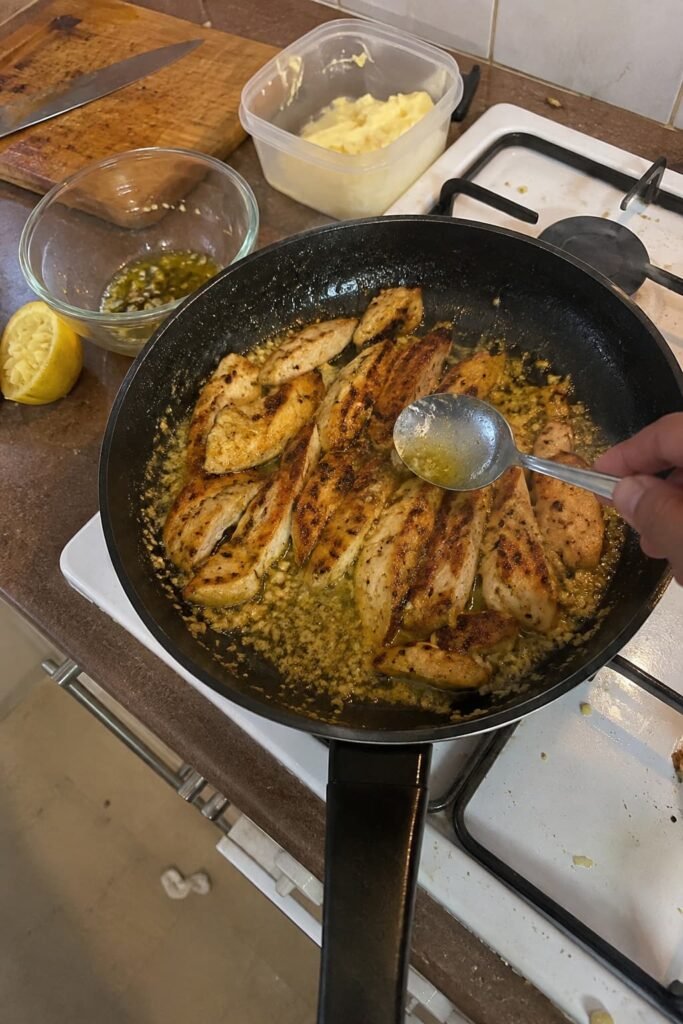
4. Sear the chicken, first batch (0:08). Heat 1 tablespoon olive oil in the 12-inch skillet over medium-high until it shimmers and moves like water when you tilt the pan — about 2 minutes. Lay in half the thighs, smooth side down, and don’t move them. Five minutes on the first side, until the edge you can see has gone from pink to opaque and the underside is deep golden. Flip and cook 4 more minutes.
5. Check the temperature. The thickest part should read 165°F. If you pull them at 160°F they’ll climb to 165°F while resting — check again before you portion. Move to a plate and repeat with the second batch, same times.
6. Rice off the heat (0:16). After 12 minutes covered, slide the pan off the burner and leave the lid on for 10 more minutes. This is when the grains finish absorbing and firm up. Skipping it is why rice ends up gummy at the bottom.
7. Build the sauce (0:26). Take the skillet off the heat and let it cool for 60 seconds — a pan hot enough to sear will burn minced garlic in about 45 seconds, and burnt garlic is bitter all the way through. Return to low heat, add 4 tablespoons butter, and once it’s melted add the garlic and red pepper flakes. Stir 45 seconds, until it smells sweet and nutty and the garlic is pale gold, never brown.
8. Loosen it (0:27). Pour in ¼ cup broth and the lemon juice, scraping up the browned bits. Simmer 2 minutes on low until it thickens slightly and coats a spoon. Keep it below a real boil or the butter will break and separate.
9. Combine and rest (0:29). Cut the rested chicken into 1-inch pieces on a cutting board, then return it and any collected juices to the pan. Toss to coat, off the heat. Fluff the rice with a fork and stir in the last 1 tablespoon of butter — coated grains don’t fuse together in the fridge.
Cooling, Packing, and Getting It Hot Again
This part decides whether the bowls are good or just edible.
Spread the rice in a thin layer on the second sheet pan. Rice left in a covered pot can hold above 70°F for well over an hour, and Bacillus cereus spores survive cooking and multiply between 40°F and 140°F. On a sheet pan it drops under 70°F in about 20 minutes. Same idea for the chicken and broccoli — leave them uncovered on the counter, not sealed in a hot container. Everything should be in the fridge within 2 hours of coming off the heat.
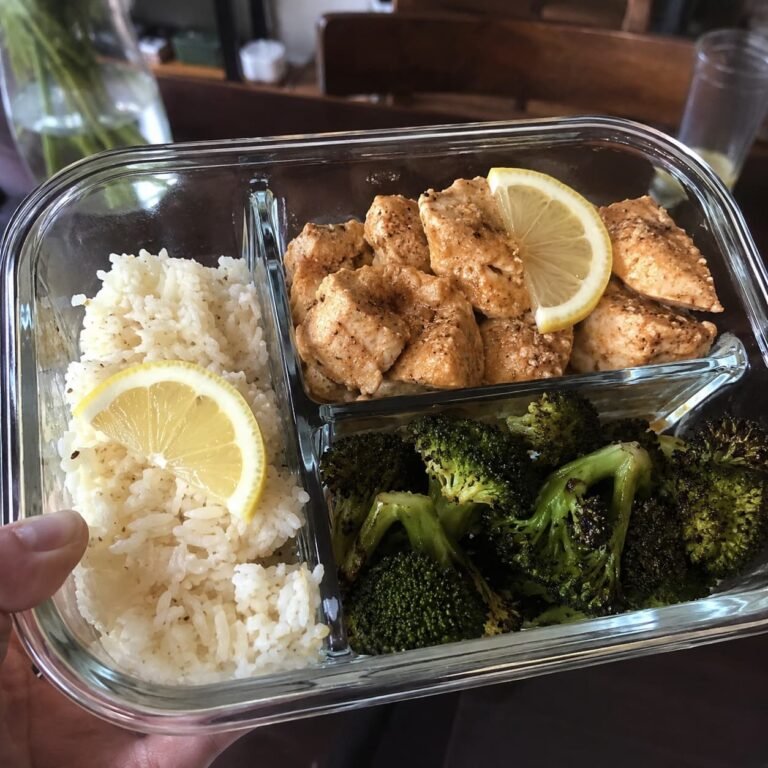
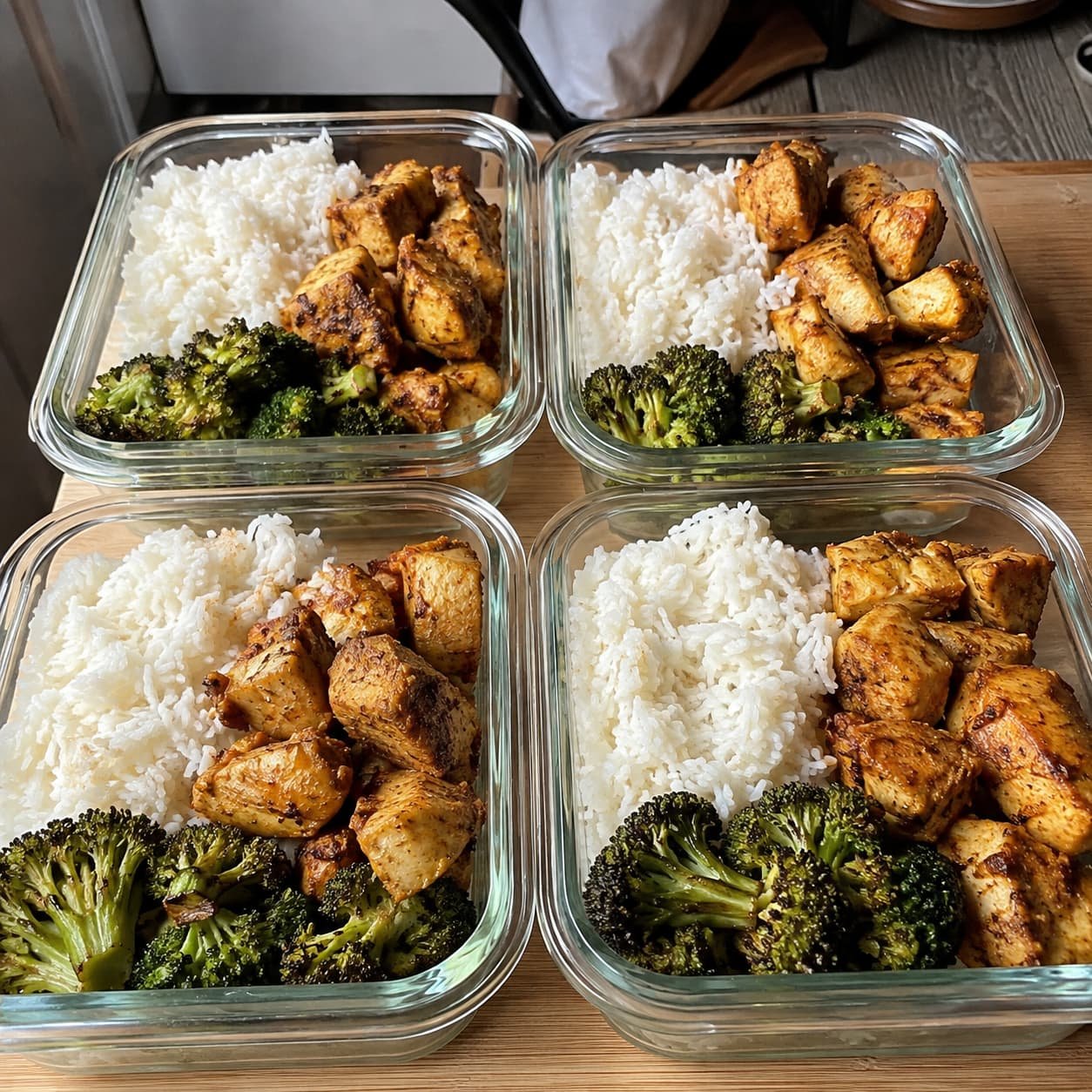
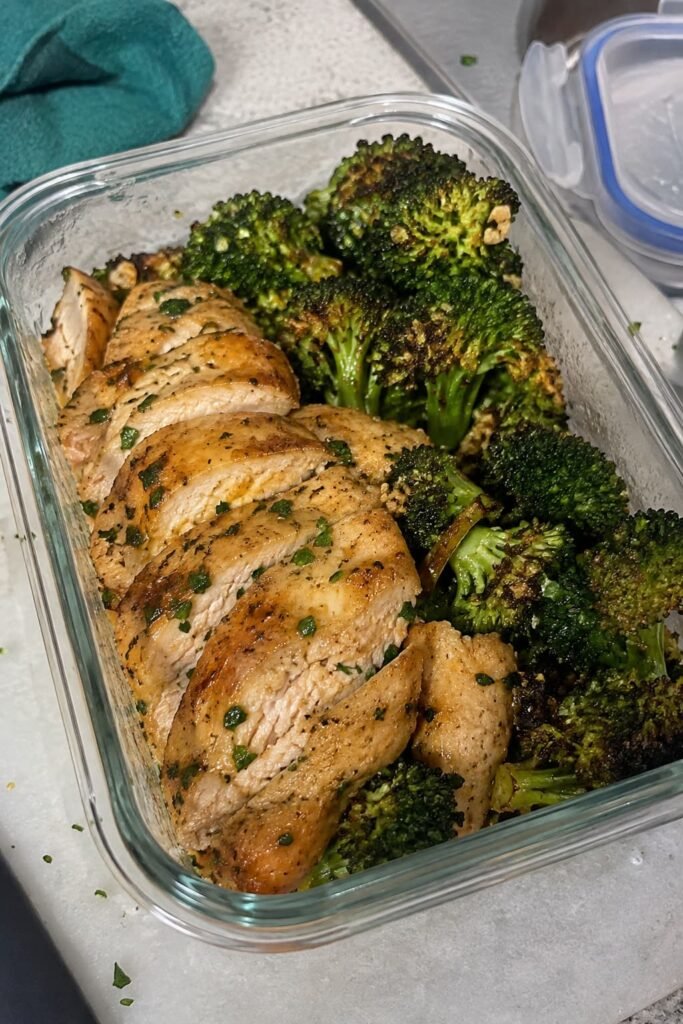
Portion each container: a generous 1 cup of rice, about 6 oz of chicken with its sauce spooned over the chicken only, and a heaping cup of broccoli. Rice sitting in butter for four days goes greasy and the grains weld together — keep the sauce on the meat and let it spread when you reheat.
Lids go on once the food is cool to the touch. Sealing warm food traps condensation, and that water lands on the rice.
Fridge: 4 days. Freezer: 2 months, though the broccoli comes back soft — freeze those bowls without it and add fresh-roasted or steamed broccoli on the day.
Reheating, microwave (1,000 watts): add 1 tablespoon of water or broth, cover loosely, 2 minutes. Stir so the outer rice moves to the center, then 45 to 60 seconds more. Leftovers should reach 165°F.
Reheating, skillet: medium heat, 1 teaspoon butter or water in a nonstick pan, 5 to 6 minutes, stirring every minute. Slower, but the chicken edges crisp again and the rice doesn’t get rubbery spots.
Don’t prep ahead: the lemon juice and parsley, if you want them bright. Both fade to a dull, slightly bitter note by day three. Hold back a lemon wedge and a pinch of parsley and add them at the table.
Four Ways to Change It
- Creamy Cajun. Replace the paprika, onion powder, and 1 teaspoon of the salt with 1 tablespoon Cajun seasoning, and cut the remaining salt to ¼ teaspoon — most blends are salt-forward. Stir ¼ cup heavy cream into the sauce with the broth. It reheats better than the butter version, since cream is already an emulsion.
- Lemon and dill. Double the lemon juice to 2 tablespoons, add 1 teaspoon dried oregano with the garlic, and swap parsley for 3 tablespoons chopped fresh dill.
- Low-carb. Skip the rice and use 1½ lb cauliflower rice, sautéed in a dry skillet over medium-high for 5 minutes until the pan looks dry. Don’t boil or steam it — it holds water and turns to mush in a sealed container by day two.
- Shrimp. Use 1½ lb large peeled shrimp, 90 seconds per side over medium-high, pulled the moment the last one turns opaque. Reheat these for 60 seconds only, or eat the bowl cold — shrimp goes rubbery fast on a second heating.
Questions People Ask About This Bowl
Can I use chicken breast? Yes. Use 1¾ lb, sliced into ¾-inch cutlets so they cook evenly, and pull them at 165°F — around 4 minutes on the first side and 3 on the second. Expect them to be drier by day three than thighs would be. If breast is what you have, plan to eat those bowls first.
How long do these really last? Four days refrigerated, in line with USDA guidance for cooked leftovers. Day five is where the rice starts tasting stale even when it’s still safe. If you’re prepping Sunday for a full week, freeze Thursday’s and Friday’s bowls right away rather than letting them sit.
Why did my rice go hard in the fridge? That’s retrogradation — the starch molecules recrystallize as the rice cools, which happens fastest between 32°F and 50°F. It’s reversible. The tablespoon of water before microwaving plus a loose cover puts the moisture back and softens the grains again.
Is reheating rice actually safe? Yes, as long as it was cooled fast and refrigerated within 2 hours. The risk comes from rice held at room temperature for hours, not from the reheating itself. Get it to 165°F and reheat any single portion once.
Can I make it dairy-free? Use a stick-style plant butter with at least 75% fat. Skip tub spreads — many run around 40% water and the sauce will separate into a thin, watery layer instead of coating anything.
Can I double this for eight bowls? Double everything, but cook the chicken in four batches rather than crowding, and use two sheet pans for the broccoli. A single pan with 2 lb of florets steams instead of roasting, and you lose the browned edges entirely.
What else can I put in the bowl? Roasted green beans (425°F, 14 minutes), halved Brussels sprouts (425°F, 22 minutes), or diced sweet potato (425°F, 25 minutes). Avoid anything raw and crisp — cucumber, shredded cabbage, sliced bell pepper — unless you’re adding it the morning you eat it.
Sunday Night, Four Bowls
The whole thing runs about 80 minutes from the first rinse of rice to four sealed containers, and most of that is the oven and the saucepan working while you do something else. If you remember two things out of all of it, make them these: broth in the sauce, and rice on a sheet pan to cool. Those two moves are what separate a bowl you look forward to from one you push around with a fork on Wednesday. Weekday lunch drops to about three minutes of microwave time, which is roughly the point of doing this on a Sunday in the first place.